
Please note: This website contains affiliate links. As an Amazon Associate, we earn from qualifying purchases at no additional cost to you.
.
If I could keep only one cleaning spray under my sink for the rest of my life, this would be it.
It’s my absolute holy grail—the single bottle I grab to wipe down counters after dinner, tackle sticky mystery spots on the kitchen table, and sanitize crusty door handles.
For years, I relied on commercial sprays, but I got tired of paying premium prices for harsh chemicals, endless plastic waste, and artificial scents that made me hold my breath while cleaning. Switching to a homemade natural cleaner was a total game-changer. It takes under five minutes, costs literal pennies per batch, and cleans just as effectively as the expensive store-bought stuff—without any of the mystery ingredients.
Why You’ll Love Making Your Own All-Purpose Cleaner
- Non-Toxic & Safe: Clean with total peace of mind around kids, pets, and food prep surfaces without inhaling harsh chemical fumes.
- Fraction of the Cost: Mix a full 16 oz bottle for pennies using basic household ingredients you likely already have in your pantry.
- Eco-Friendly: Ditch single-use plastic bottles for good by refilling a reusable glass spray bottle over and over.
- Customizable Scents: Skip artificial, synthetic perfumes and scent your home naturally with your favorite essential oils (or keep it completely fragrance-free!).
- Zero Guesswork: You know exactly what is going onto your home’s surfaces—no hidden fillers, surfactants, or preservatives.
I’m sharing two simple recipes below because when it comes to natural cleaning, one size doesn’t fit all—the right formula depends entirely on the surface you’re tackling!
What You’ll Need
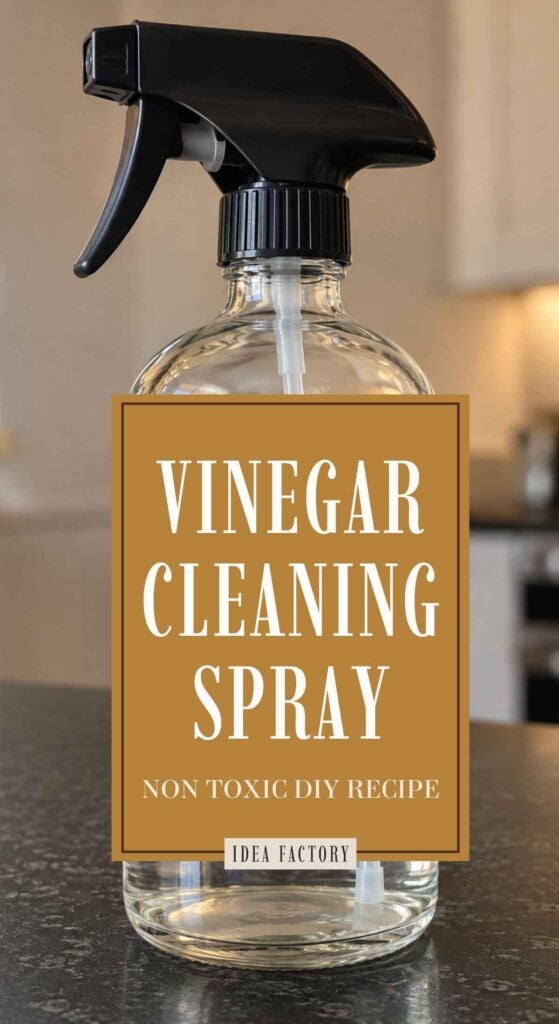
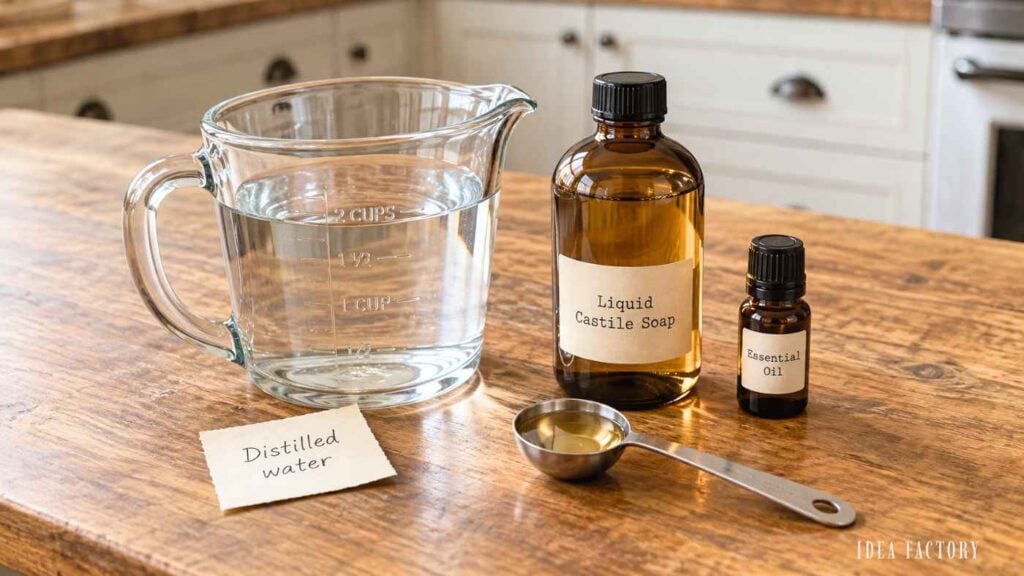
- A 16 oz glass spray bottle (amber or dark glass keeps essential oils from breaking down)
- Distilled water, which helps prevent mineral residue
- White vinegar (for Recipe 1)
- Liquid castile soap (for Recipe 2)
- Optional: lemon, orange, or lavender essential oil
- A funnel and a few microfiber cloths
Recipe 1: Vinegar & Citrus All Purpose Cleaner
This is the classic recipe. Vinegar cuts through grime, soap film, and light grease, and the citrus oil takes the edge off the smell.
Ingredients
- 1 cup white vinegar
- 1 cup distilled water
- 10 to 15 drops lemon or orange essential oil (optional)
Instructions
- Use a funnel to pour the vinegar and water into your spray bottle.
- Add the essential oil, if using.
- Screw on the sprayer and shake gently.
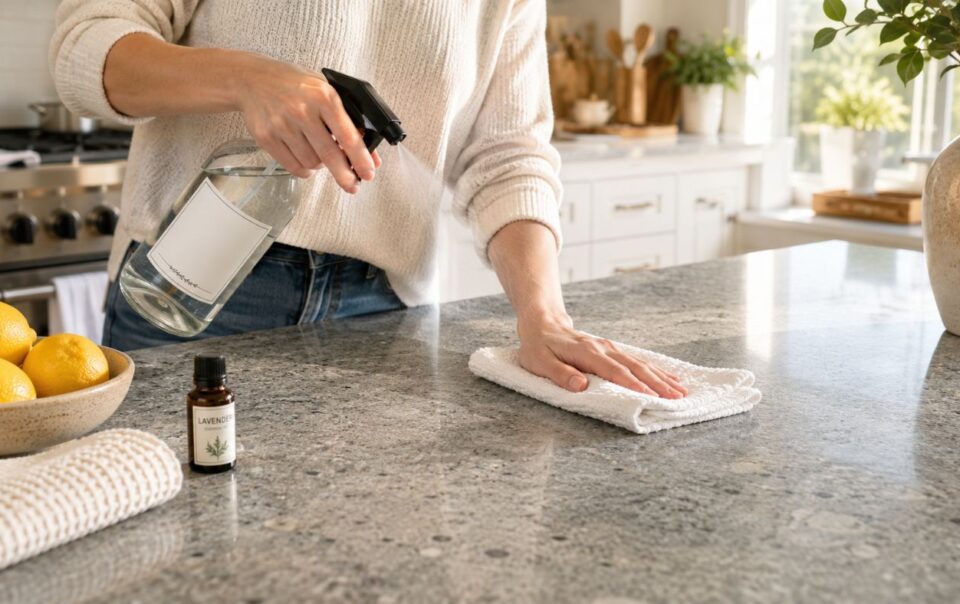
- Spray on the surface, let it sit for 30 to 60 seconds, then wipe clean with a microfiber cloth.
Want a stronger citrus smell? Fill a jar with orange or lemon peels, cover them with white vinegar, and let them sit for two weeks. Strain, then use the infused vinegar in place of plain vinegar above.
Recipe 2: Gentle Castile Soap All Purpose Cleaner
This one skips the vinegar entirely. It’s a good choice when you want something milder, or you’re cleaning a surface that doesn’t get along with acid.
Ingredients
- 2 cups warm distilled water
- 1 tablespoon liquid castile soap
- 10 drops essential oil (optional)
Instructions
- Add the warm water to your spray bottle first.
- Add the castile soap last, so it doesn’t foam up.
- Add essential oil if you like, then gently swirl to combine. Don’t shake hard.
- Spray, wipe, and buff dry.
Important: Don’t combine Recipe 1 and Recipe 2. Vinegar and castile soap cancel each other out, and you end up with a curdled mixture that doesn’t clean well.
Where to Use Your All Purpose Cleaner
- Kitchen counters (sealed, non-stone surfaces)
- Appliance exteriors and cabinet fronts
- Sinks and faucets
- Tables, high chairs, and door handles
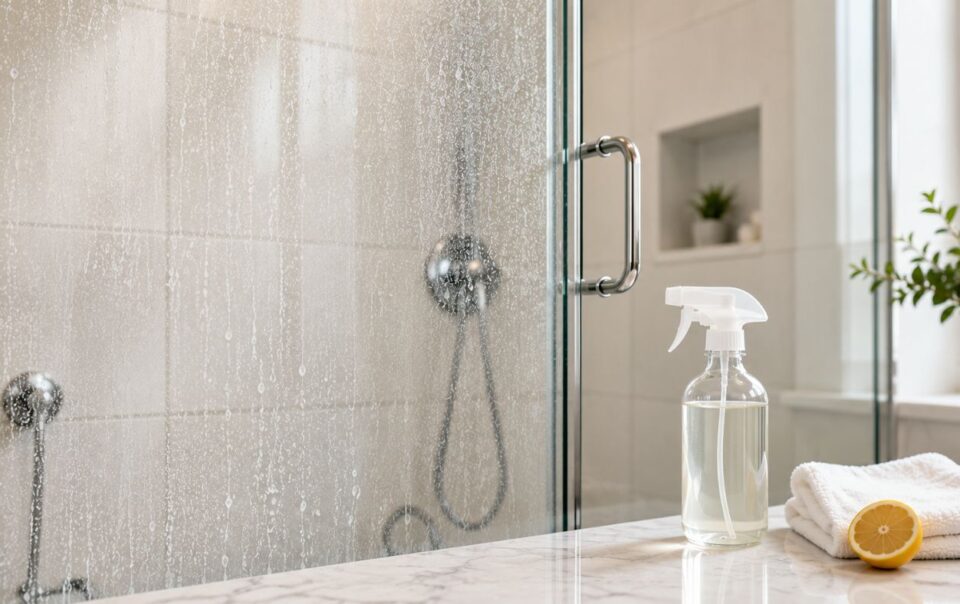
- Bathroom counters and tile
- Light switches (spray the cloth, not the switch)
Where NOT to Use It
Natural doesn’t mean works on everything. Skip the vinegar version on:
- Natural stone like granite, marble, and quartzite, because acid can dull and etch the surface. Use my homemade granite cleaner instead.
- Unsealed or waxed wood
- Hardwood floors, where my natural DIY floor cleaner recipes are a better fit
- Electronics and screens
- Cast iron
Not sure about a surface? Read my guide on what you can and should never clean with vinegar, and always test a small hidden spot first.
Tips for Better Results
- Let it sit. Giving the spray 30 to 60 seconds to work is the difference between wiping and scrubbing.
- Use microfiber. It grabs dirt instead of pushing it around, and it leaves fewer streaks.
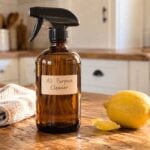
- Label the bottle. Write the recipe name and date on it.
- Make small batches. Mix a fresh bottle every few weeks, especially the castile soap version.
- Be careful with essential oils. Some, like tea tree, can be harmful to pets, so check before using them around animals.
All Purpose Cleaner DIY: Frequently Asked Questions
Can I use tap water instead of distilled?
Yes, but distilled water helps prevent mineral spots and keeps the mixture fresher for longer.
Does an all purpose cleaner DIY recipe disinfect?
No. These recipes clean by removing dirt and grime, but they aren’t registered disinfectants. If you need to disinfect, for example after handling raw meat, follow the directions on a product made for that purpose.
How long does it last?
The vinegar version keeps for a few weeks. The castile soap version is best used within a couple of weeks, so make small batches.
Why does my all-purpose kitchen cleaner leave streaks?
Usually it’s too much soap or hard water. Try distilled water, use less castile soap, and buff dry with a clean microfiber cloth.
More Natural Cleaning Recipes to Try
Once you have your all purpose cleaner, these are the next ones I’d make. You can also browse the full roundup of 15 DIY cleaning products worth making instead of buying.
- DIY kitchen degreaser for stovetops and backsplashes
- DIY glass and mirror cleaner for a streak-free shine
- 7 vinegar cleaning solutions that actually work
- The ultimate natural cleaning starter kit if you’re building your supplies from scratch
One bottle of this and you’ve already replaced several things in your cleaning cabinet.
Please note: This website contains affiliate links. As an Amazon Associate, we earn from qualifying purchases at no additional cost to you.
.