

Please note: This website contains affiliate links. As an Amazon Associate, we earn from qualifying purchases at no additional cost to you.
.
If your once-clear shower doors have turned cloudy, spotted, or covered in stubborn white streaks, we feel your pain!
Those frustrating marks are usually caused by hard water minerals like calcium and magnesium that build up every time water evaporates.
The good news? You don’t need expensive specialty cleaners to make your shower glass sparkle again.
In this guide, I’ll show you the natural cleaning methods that actually work, explain which one is best depending on how bad the buildup is, and share a few simple habits that can keep those stains from coming back.
Why Hard Water Leaves White Stains on Shower Doors
Hard water contains dissolved minerals.
Every shower leaves behind tiny droplets on the glass. As the water evaporates, the minerals stay behind. Over weeks or months, those deposits slowly build into the cloudy film or chalky white spots that make shower doors look dirty even after you’ve cleaned them.
If soap residue mixes with those minerals, the buildup becomes even tougher to remove.
Method 1: The Vinegar and Dawn Shower Cleaner (Best for Most Homes)
This is the most popular homemade solution—and for good reason. The vinegar helps dissolve mineral deposits, while the dish soap cuts through soap scum and body oils.
You’ll Need
- 1 cup white vinegar
- 1 cup Dawn dish soap
- Spray bottle
- Microfiber cloth
- Soft sponge
Instructions
- Warm the vinegar until it’s hot but not boiling.
- Pour it into a spray bottle.
- Add the Dawn dish soap.
- Gently swirl to combine.
- Spray generously over the shower doors.
- Let it sit for 20–30 minutes.
- Wipe with a non-scratch sponge.
- Rinse thoroughly.
- Dry completely with a microfiber cloth.
Method 2: Citric Acid for Heavy Mineral Buildup
If vinegar doesn’t completely remove the stains, citric acid is often the next step before resorting to commercial chemicals.
Citric acid is naturally derived from citrus fruits but is much stronger than lemon juice for dissolving calcium deposits.
Mix
- 2 tablespoons citric acid powder
- 2 cups warm water
Spray the solution onto the glass, let it sit for 10–15 minutes, then gently scrub with a microfiber cloth or non-scratch sponge before rinsing well.
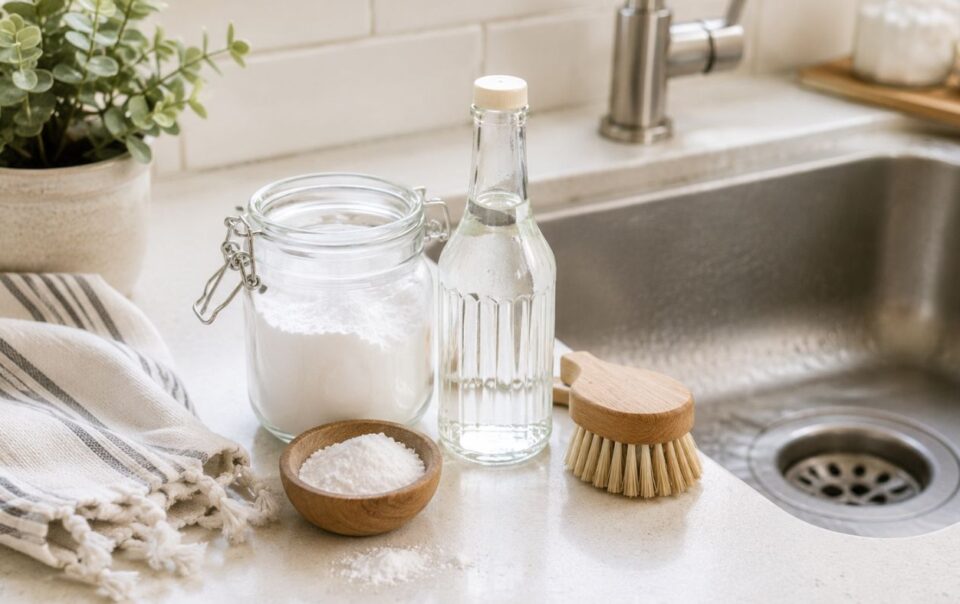
Method 3: Baking Soda Paste for Stubborn Spots
Some areas may need a little gentle abrasion. Mix:
- Baking soda
- Just enough water to form a paste
Apply to stubborn spots and rub gently with a damp microfiber cloth before rinsing.
PRO TIP: Avoid using excessive pressure – even when you are desperate to get that door clean! You don’t want to scratch or damage the glass.
What NOT to Use on Your Shower Doors
Be sure to avoid the following, as they can permanently scratch or damage shower glass.
- Steel wool
- Razor blades on coated glass
- Abrasive scouring powders
- Bleach mixed with vinegar (never mix the two)
- Highly abrasive scrub brushes
Why Your Shower Doors Still Look Cloudy
Sometimes the problem isn’t dirt.
If mineral deposits have been left for years, the minerals can begin to etch the glass itself. Cleaning can remove deposits but cannot repair etched glass.
If the door feels smooth but still appears cloudy after thorough cleaning, permanent etching may be the cause.
How to Prevent Hard Water Stains
The easiest stain to remove is the one that never forms. A few simple habits make a huge difference:
- Squeegee the glass after each shower.
- Wipe remaining droplets with a microfiber towel.
- Spray a daily shower spray a few times each week.
- Improve bathroom ventilation so moisture evaporates faster.
- Deep clean monthly before minerals accumulate.
Other Popular DIY Cleaning Solutions for Your Bathroom
- DIY Bathroom Cleaner: Simple, Non-Toxic & Surprisingly Effective
- DIY Glass & Mirror Cleaner
- DIY All-Purpose Cleaner
- Bathroom Odor Absorber DIY Recipe – Only 2-Ingredients
- Natural Cleaning Starter Kit
Hard Water Stains on Shower Doors: FAQs
Does vinegar damage shower glass?
No. White vinegar is generally safe for standard glass shower doors when used occasionally. However, avoid getting vinegar on natural stone such as marble or travertine surrounding the shower, as the acid can etch those surfaces.
Does Dawn and vinegar really work?
Yes. It’s one of the most effective homemade combinations for removing a mix of soap scum and light-to-moderate hard water buildup. Very heavy mineral deposits may require a stronger solution, such as citric acid.
Can I use lemon juice instead?
Lemon juice can help with light mineral deposits, but it is less concentrated than citric acid and usually requires more effort for established stains.
How often should I clean shower doors?
A quick wipe-down each week and a deeper cleaning about once a month is enough for most homes. If you have particularly hard water, you may need to deep clean every two weeks.
Final Thoughts
Hard water stains may seem impossible to remove, but they’re usually just layers of mineral buildup that respond well to the right cleaning method. Starting with a simple vinegar and Dawn solution is often enough to restore clarity, while citric acid can tackle more stubborn deposits without reaching for harsh commercial chemicals.
The real secret, though, is prevention. A quick swipe with a squeegee after each shower and regular maintenance can keep your shower doors crystal clear and save you from spending hours scrubbing later.
SAVE THIS FOR LATER!
Please note: This website contains affiliate links. As an Amazon Associate, we earn from qualifying purchases at no additional cost to you.
.