
Please note: This website contains affiliate links. As an Amazon Associate, we earn from qualifying purchases at no additional cost to you.
.
If you’ve searched for a homemade granite cleaner, you’ve probably seen the same warning over and over again:
“Never use vinegar on granite.”
That’s good advice—but it doesn’t answer the question most homeowners actually have:
If vinegar is off the table, what should I use instead?
The good news is that keeping granite clean doesn’t require expensive specialty sprays. With a few gentle ingredients and the right cleaning routine, you can safely remove everyday dirt, fingerprints, and grease without risking damage to your countertops.
I have a little more experience with this than most people because my own home has honed granite, honed Carrara marble, and quartz countertops. After living with three different stone surfaces—each with its own cleaning quirks—I’ve become very careful about what I spray on them. When you’ve invested in beautiful countertops, the last thing you want is to dull the finish or accidentally use a cleaner that causes long-term damage. That’s why this simple homemade cleaner has become my go-to for everyday cleaning.
Why Granite Needs a Different Kind of Cleaner
Granite is an incredibly durable natural stone, but that doesn’t mean every household cleaner is safe.
Many common DIY cleaning recipes rely on acidic ingredients like vinegar or lemon juice. While they’re fantastic for removing hard water stains and soap scum in other parts of your home, repeated use on granite can gradually wear down the protective sealer. Over time, that can leave the stone more vulnerable to staining and moisture.
The goal isn’t to disinfect your countertops every day—it’s to clean them gently while protecting the finish you’ve invested in.
The Best Homemade Granite Cleaner Recipe
This simple DIY cleaner is gentle enough for everyday use and leaves countertops clean without streaks.
Ingredients
- 2 cups distilled water
- 1 teaspoon mild liquid dish soap
- 1 tablespoon rubbing alcohol (optional, for faster drying)
- 8–10 drops essential oil (optional, for fragrance)
Optional Essential Oils
- Lemon (fragrance only—use essential oil, not lemon juice)
- Lavender
- Sweet orange
- Grapefruit
INSTRUCTIONS
- Pour the distilled water into a clean spray bottle.
- Add the dish soap.
- Stir in the rubbing alcohol if using.
- Add essential oils if desired.
- Gently swirl to combine.
Avoid shaking vigorously, which can create excess suds.
How to Clean Granite Countertops
- Remove crumbs and loose debris.
- Lightly spray the cleaner over the surface.
- Wipe using a microfiber cloth.
- Buff dry with a second microfiber towel for a streak-free finish.
That’s all most granite countertops need for everyday maintenance.
Is Rubbing Alcohol Safe?
Yes—when diluted properly and used occasionally.
Many granite manufacturers recommend diluted isopropyl alcohol for sanitizing because it evaporates quickly and doesn’t leave residue.
If you prefer, you can simply omit it and use the soap-and-water version.
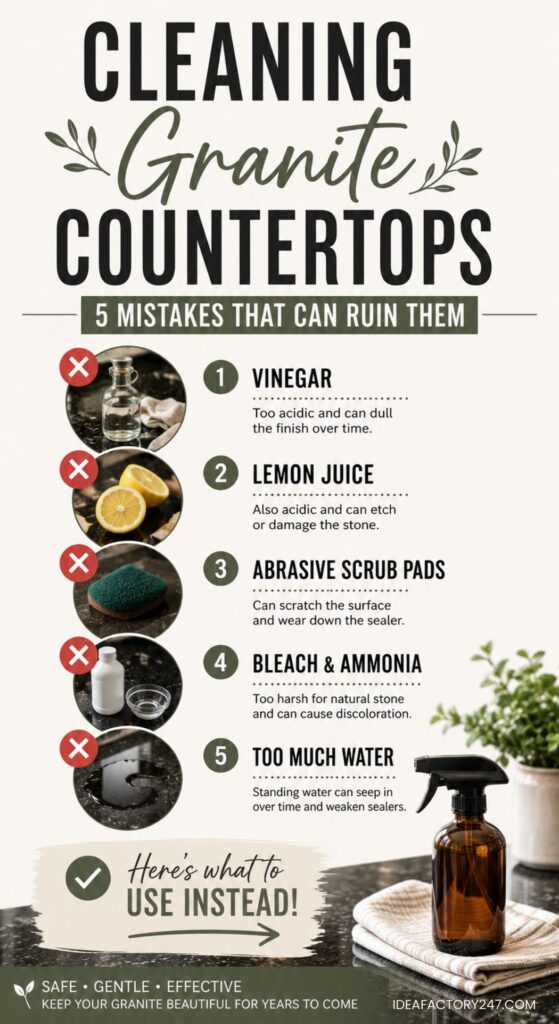
What NOT to Use on Granite Countertops
Avoid these common cleaning mistakes:
- White vinegar
- Lemon juice
- Bleach
- Ammonia
- Abrasive powders
- Steel wool
- Scouring pads
- Harsh acidic bathroom cleaners
These products can gradually damage sealers or dull the stone’s finish.
Is This Homemade Granite Cleaner Safe for Honed Granite, Marble, and Quartz?
Yes—but I wanted to include a quick note because my own home has a mix of honed granite, honed Carrara marble, and honed quartz countertops (in different rooms, of course!), and they don’t all get treated exactly the same.
Honed surfaces have a soft, matte finish that I love, but they tend to show EVERYTHING…. fingerprints, water spots, stains and etching more easily than polished stone. Because of that, I’ve found that keeping the cleaning routine as simple and gentle as possible works best.
What I personally use on my countertops
For everyday cleaning, I actually use the recipe in this article for my bathroom counters that are quartz and honed granite.
For the honed marble, this is the cleaner I reach for most often and it works like a charm:
Ingredients
- 2 cups distilled water
- 1 teaspoon gentle, pH-neutral dish soap (I use a fragrance-free formula whenever possible)
- Mix the ingredients in a reusable amber spray bottle and shake gently before each use
I also recommend spraying onto a microfiber cloth—not directly onto the countertop—then wipe the surface clean. If any soap residue remains, follow with a lightly damp microfiber cloth and dry the countertop with a clean towel.
It’s incredibly simple, but it works beautifully for fingerprints, crumbs, coffee splashes, and everyday kitchen messes.
A Few Tips for Honed Stone
Whether you’re using the simple dish soap cleaner or the homemade granite cleaner from this article, a few habits will help keep your countertops looking their best:
- Always wipe up acidic spills like lemon juice, vinegar, wine, coffee, and tomato sauce as soon as possible.
- Use a soft microfiber cloth instead of abrasive scrub pads.
- Dry the surface after cleaning to reduce water spots.
- Reseal natural stone (granite and marble) as recommended by your installer or manufacturer.
Neither of these gentle daily cleaners is designed to remove etching, deep stains, or heavy hard water buildup. If your countertops already have damage, it’s better to use a product made specifically for that problem or consult a professional stone restoration company rather than reaching for harsh DIY cleaners.
How Often Should You Seal Granite?
Most granite countertops benefit from resealing every one to three years, depending on the type of stone and how heavily the kitchen is used.
A simple water test can help: Place a few drops of water on the countertop. If the water beads up, your sealer is still doing its job. If it quickly darkens the stone, it’s probably time to reseal.
QUICK NOTE: Personally, I haven’t had mine resealed in over 5 years and they still look good. For my honed marble, the wear and tear really starts to show after about 2 to 3 years, so i have those done more often.
Common Granite Cleaning Mistakes
Many countertop problems aren’t caused by the cleaner itself—they’re caused by everyday habits.
Try to avoid:
- Letting spills sit overnight
- Using rough scrub pads
- Leaving standing water around sinks
- Spraying bathroom cleaners on kitchen counters
- Using acidic cleaners repeatedly
Simple habits go a long way toward keeping granite looking beautiful for years.
Other Popular DIY Cleaning Solutions
- DIY All-Purpose Cleaner
- DIY Glass & Mirror Cleaner
- Kitchen Cleaning Hacks
- Ditch the Chemicals: 7 Vinegar Cleaning Solutions That Really Work
- Natural Cleaning Starter Kit
Homemade Granite Cleaner: Frequently Asked Questions
Can I use vinegar on granite?
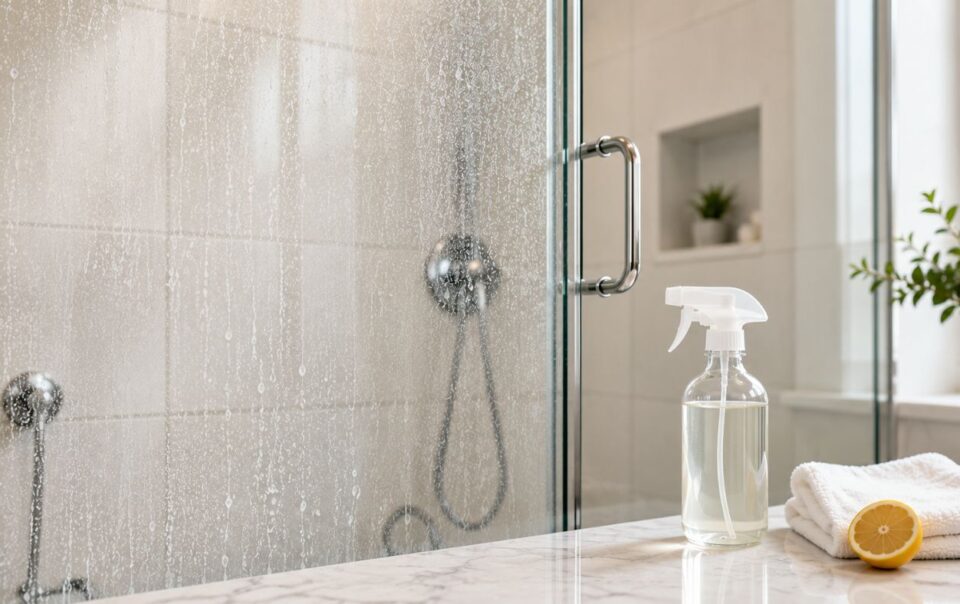
No. Vinegar is acidic and can gradually break down the protective sealer on granite. It’s better suited for glass, shower doors, and other non-stone surfaces.
Is Dawn dish soap safe for granite?
Yes. A small amount of mild dish soap diluted with water is one of the safest ways to clean granite daily.
Does homemade granite cleaner disinfect?
Soap removes dirt and many germs through the cleaning process. If you want additional sanitizing, adding a small amount of diluted rubbing alcohol can help without damaging sealed granite.
Can I use this on quartz countertops?
Yes. This gentle cleaner is generally safe for quartz as well, though you should always follow your countertop manufacturer’s care recommendations.
Final Thoughts
A beautiful granite countertop doesn’t need expensive specialty cleaners—it just needs the right one.
By avoiding harsh acids and sticking with a simple, gentle homemade granite cleaner, you can safely clean everyday messes while helping protect the finish for years to come. Pair that with a microfiber cloth and regular maintenance, and your countertops will continue looking as beautiful as the day they were installed.
Please note: This website contains affiliate links. As an Amazon Associate, we earn from qualifying purchases at no additional cost to you.
.