
Please note: This website contains affiliate links. As an Amazon Associate, we earn from qualifying purchases at no additional cost to you.
.
We’ve all been there: you step into the shower for a relaxing wash, only to end up standing ankle-deep in a lukewarm puddle. Or worse, you’re staring down a kitchen sink that refuses to swallow the dishwater. A slow drain is one of those annoying household issues that’s easy to ignore—until it’s suddenly impossible to.
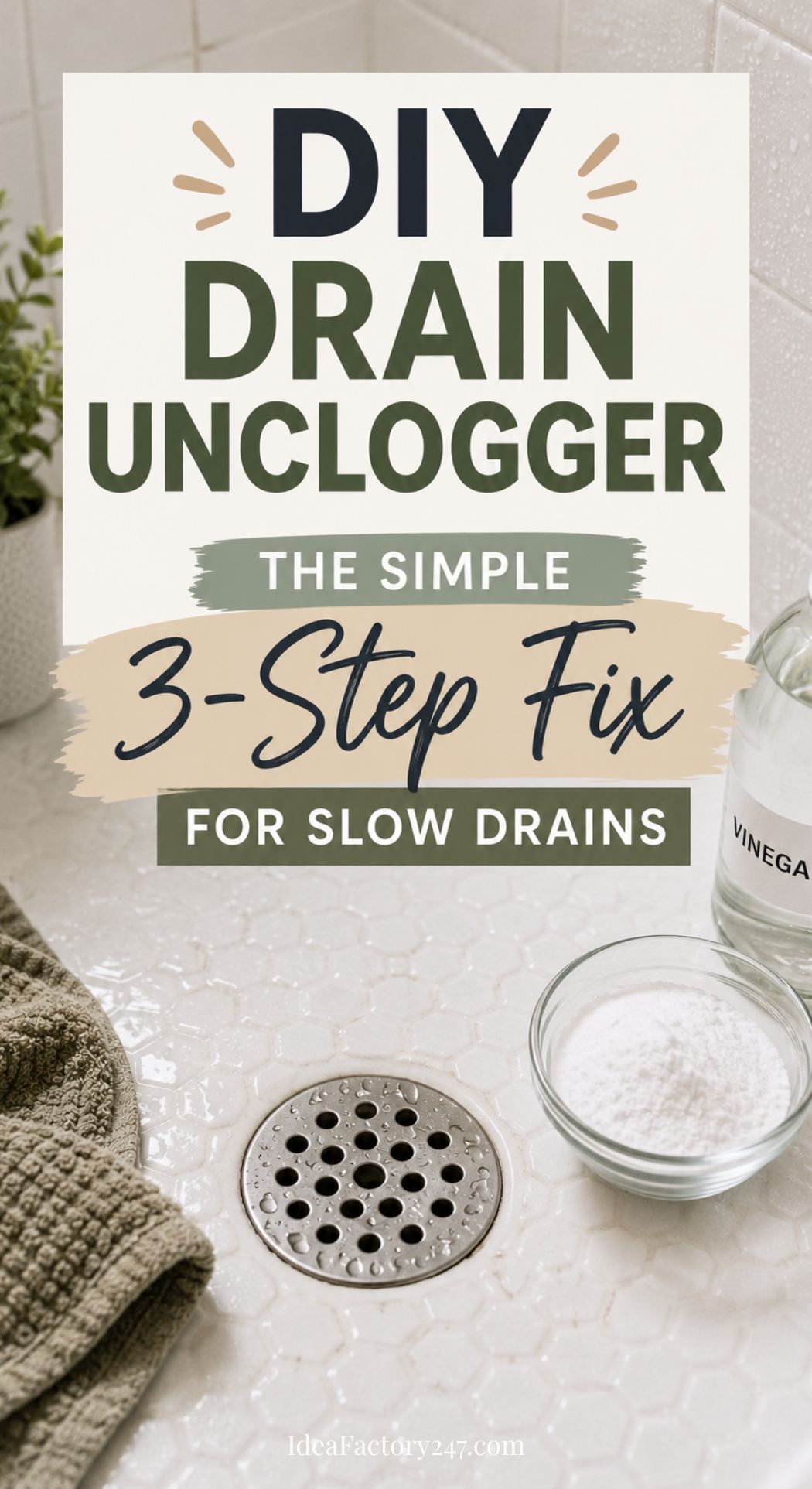
The good news? You don’t need to pour harsh, toxic chemicals down your pipes or shell out hundreds for an emergency plumber. In fact, the ultimate DIY drain unclogger might already be sitting in your pantry. With just a few natural ingredients and five minutes, you can get things flowing freely again.
Here is exactly how to clear the sludge, including the famous baking soda trick and a few other clever hacks.
What’s Causing Your Slow Drain?
Most drain clogs are caused by a buildup of everyday household debris. In bathrooms, the biggest culprits are usually hair, soap scum, and personal care products. In kitchen sinks, grease, food particles, and cooking oils are often to blame.
The good news is that many minor clogs can be cleared naturally without harsh chemicals—as long as you choose the right method for the type of blockage you’re dealing with. Knowing what’s causing the problem can help you choose the most effective DIY drain cleaner.
Which DIY Drain Cleaner Should You Try First?
Not all clogs are created equal. A slow shower drain clogged with hair needs a different approach than a greasy kitchen sink. Before you start pouring ingredients down the drain, it’s helpful to identify what’s causing the blockage. Here’s the best DIY method (and recipe) for each situation….
DIY Drain Unclogger Cheat Sheet
| Problem | Best Solution |
|---|---|
| Slow bathroom sink | Baking soda and vinegar |
| Hair-clogged shower drain | Drain tool + baking soda treatment |
| Slow bathtub drain | Baking soda and vinegar |
| Greasy kitchen sink | Boiling water + baking soda + vinegar |
| Monthly maintenance | Baking soda and vinegar |
For Mild Clogs and Slow Drains: Baking Soda and Vinegar
If water is still draining but moving slowly, start here. This classic baking soda and vinegar method can help loosen soap residue, light grease buildup, and everyday gunk.
What You’ll Need
- ½ cup baking soda
- 1 cup white vinegar
- Hot water
How to Use It
- Remove any standing water if possible.
- Pour the baking soda into the drain.
- Slowly add the vinegar.
- Let the mixture fizz for 15–30 minutes.
- Flush with very hot water.
Best for: Routine maintenance, bathroom sinks, and minor slow drains.
For Shower Drains Clogged With Hair
If you’re standing in several inches of water every time you shower, hair is usually the culprit. In this case, removing the blockage physically is often more effective than any homemade drain cleaner.
How to Fix It
- Remove the drain cover.
- Use a drain tool or bent wire hanger to pull out visible hair.
- Follow with the baking soda and vinegar treatment above.
- Flush with hot water.
Best for: Slow shower drains and bathroom sinks.
For Bathtub Drains
Bathtub drains tend to collect a combination of hair, soap scum, bath oils, and product residue.
How to Fix It
- Remove any visible debris.
- Pour in the baking soda and vinegar mixture.
- Allow it to sit for 30 minutes.
- Flush thoroughly with hot water.
If the tub is still draining slowly, a drain snake may be necessary to reach deeper clogs.
Best for: Bathtubs with moderate buildup.
For Kitchen Sink Clogs
Kitchen drains are different because grease is usually part of the problem.
What You’ll Need
- Boiling water
- ½ cup baking soda
- 1 cup vinegar
How to Fix It
- Pour boiling water down the drain.
- Add the baking soda.
- Follow with the vinegar.
- Wait 20–30 minutes.
- Flush again with boiling water.
Best for: Grease buildup and slow kitchen sinks.
PRO TIP: After you’ve cleaned the drain, try to avoid pouring cooking grease down the drain in the future. Many people just pour hot grease into an old bowl and let it harden in the fridge. After the bowl is full, you can just scrape it out into the trash can.
When a DIY Drain Unclogger Won’t Work
Natural methods work best for minor clogs and routine maintenance. You may need a drain snake or professional plumber if:
- Water won’t drain at all.
- Multiple drains are backing up.
- The clog returns repeatedly.
- You notice foul sewage odors.
- Water backs up into sinks, tubs, or showers.
These can indicate a deeper blockage that household remedies can’t reach.
Natural Drain Cleaner Maintenance Tips
Once your drain is flowing again, these habits can help prevent future problems:
- Use hair catchers in showers and tubs.
- Avoid pouring grease down kitchen drains.
- Flush drains with hot water weekly.
- Clean drain covers regularly.
- Use the baking soda and vinegar treatment monthly.
A little maintenance can prevent many common drain problems before they start.
DIY Drain Unclogger: FAQs
Does baking soda and vinegar really unclog drains?
Baking soda and vinegar can help loosen minor clogs caused by soap scum, grease, and light debris. While it won’t solve every clogged drain, it can be an effective first step before using a drain snake or calling a plumber.
What is the best DIY drain unclogger?
One of the most popular DIY drain unclogger methods combines baking soda, vinegar, and hot water. This natural solution can help break down minor buildup and freshen drains without harsh chemicals.
Can I use a DIY drain unclogger in my shower drain?
Yes. Shower drains are often clogged by hair and soap residue. Removing visible hair first and then using a natural drain unclogger can help improve water flow.
How do I unclog a bathtub drain naturally?
Start by removing any visible hair or debris. Then pour baking soda followed by vinegar into the drain. Let the mixture sit for 20–30 minutes before flushing with hot water.
When should I call a plumber for a clogged drain?
If water won’t drain at all, multiple drains are backing up, or the clog keeps returning, the blockage may be deeper in the plumbing system and require professional help.
Final Thoughts
A homemade drain cleaner can be an easy and inexpensive first step when dealing with a slow drain. Whether you’re trying to unclog a shower drain, bathtub drain, or kitchen sink, simple ingredients like baking soda and vinegar can often help break up minor buildup and keep drains smelling fresh.
While severe clogs may require stronger tools or professional help, regular maintenance can go a long way toward keeping your plumbing flowing smoothly.
Please note: This website contains affiliate links. As an Amazon Associate, we earn from qualifying purchases at no additional cost to you.
.