
If you’ve ever spent an afternoon pulling ticks off your dog after a walk in the woods, you probably understand why homemade tick repellents are so appealing.
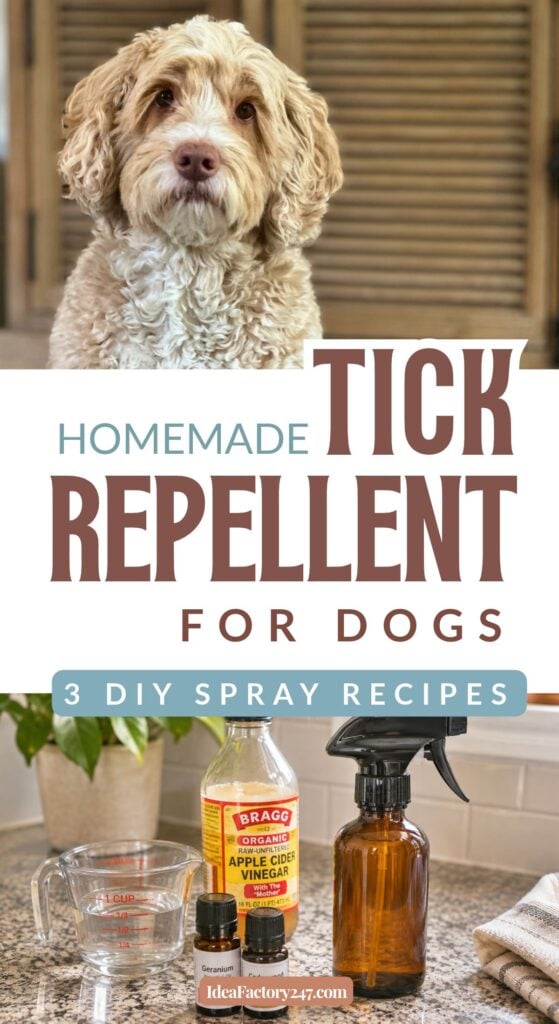
Our Labradoodle, Archie, spends a lot of time with us in northern Michigan during the summer. It’s beautiful up there, but the ticks can be absolutely horrific. And with Archie’s thick, curly coat, finding those little pests isn’t always easy.
I’ve been looking for a more natural way to discourage ticks from attaching to him. Like many dog owners, I’m concerned about the potential side effects of conventional flea and tick medications, and I wondered whether a simple homemade spray might offer some additional protection. Not necessarily something foolproof, but something that could help.
That sent me researching DIY tick repellent recipes using ingredients like cedarwood, geranium, rosemary, and apple cider vinegar. What I discovered is that certain plant-derived compounds really do have tick-repellent properties, but not every homemade mixture is safe or effective for dogs.
Here’s what I learned about popular natural tick sprays, which ingredients show promise, and what to know before trying one on your own dog.
A quick safety note: Homemade essential-oil sprays haven’t been reliably established as safe and effective tick prevention for dogs. Check with your veterinarian before applying a botanical mixture, particularly if your dog has sensitive skin or underlying health conditions.
3 Homemade Tick Repellent Recipes for Dogs
If you’ve searched for DIY tick repellent for dogs, you’ve probably come across recipes using apple cider vinegar, essential oils, and other botanical ingredients. Some of these ingredients have shown repellent properties in research, but the homemade combinations haven’t been established as safe or effective for dogs.
Here are three recipes circulating online, along with what to know before considering them. These are examples for reference, not tested formulations or instructions to apply them to your dog.
Recipe #1 | Apple Cider Vinegar, Geranium & Cedarwood Spray

This popular DIY tick spray combines apple cider vinegar with two botanical oils commonly associated with natural pest control.
Ingredients:
- Approximately 1⅓ ounces apple cider vinegar
- 10 drops geranium essential oil
- 5 drops cedarwood essential oil
- Water to fill a 4-ounce spray bottle
How the recipe is commonly described: Combine the vinegar and essential oils in a four-ounce bottle, top with water, and shake.
What to know: Geraniol, a compound found in certain geranium oils, and some cedarwood-derived ingredients have demonstrated tick-repellent activity. However, this particular recipe hasn’t been validated for canine use. Essential oils don’t dissolve evenly in vinegar or water, and shaking doesn’t guarantee safe dilution.
Recipe #2 | Lavender, Peppermint & Lemongrass Spray
Another commonly shared recipe combines three aromatic essential oils in a water-based spray.
Ingredients:
- 2 cups water
- 2 drops lavender essential oil
- 2 drops peppermint essential oil
- 2 drops lemongrass essential oil
How the recipe is commonly described: Add the oils to water and shake before spraying.
What to know: Although certain plant compounds have insect-repellent properties, this combination hasn’t been established as effective against ticks on dogs. Peppermint oil can be harmful to dogs, and the oils won’t disperse uniformly in plain water. I would avoid using this recipe on a pet.
Recipe #3 | Witch Hazel & Turmeric Oil Spray
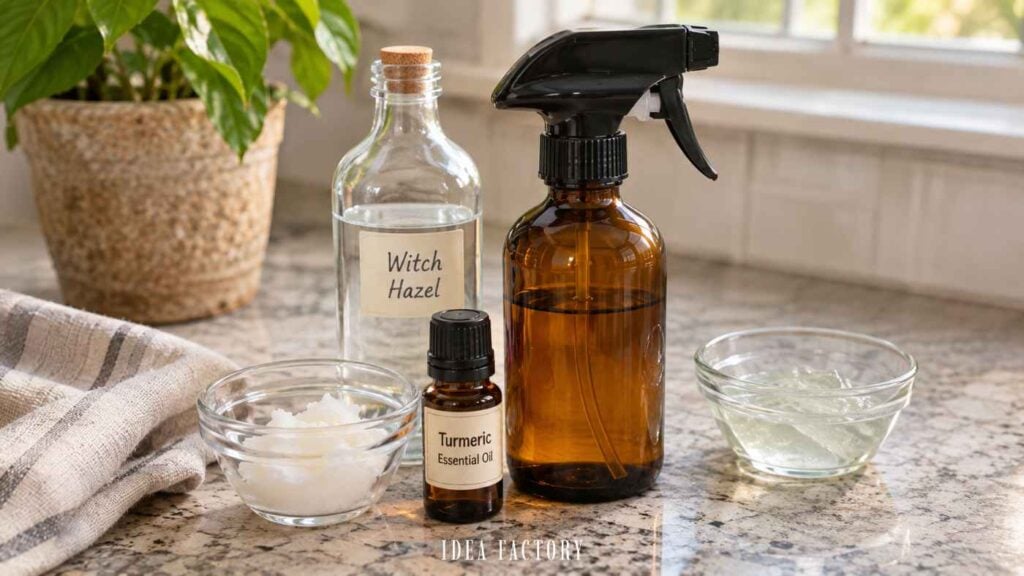
This botanical mixture is another example of a homemade pest spray circulating online.
Ingredients listed in the recipe:
- 4 tablespoons witch hazel
- Aloe vera
- 1 tablespoon melted coconut oil
- 30 drops turmeric essential oil
How the recipe is commonly described: Combine the ingredients in a spray bottle and shake.
What to know: Some research has investigated turmeric-oil formulations for tick repellency, but that doesn’t establish the safety of this homemade mixture. The original recipe also fails to specify the quantity of aloe vera, and its relatively large amount of essential oil raises additional concerns. I would not use this formulation on a dog.
Are These Homemade Tick Sprays Safe?
The biggest problem with these recipes isn’t necessarily the idea of using botanical ingredients. It’s that their exact concentrations, preparation methods, and safety on dogs haven’t been adequately established.
Essential oils can irritate a dog’s skin or cause toxicity, particularly if ingested during grooming. Adding them to water, vinegar, or witch hazel doesn’t automatically make them safe.
If you’re interested in botanical tick repellents, a commercially formulated product specifically labeled for dogs is a better starting point. Your veterinarian can help you evaluate its ingredients, safety, and evidence of effectiveness.
Which Natural Ingredients Actually Repel Ticks?
Several plant-derived ingredients have demonstrated repellent activity against ticks under experimental conditions. However, results depend on the concentration, formulation, tick species, and how the product is applied.
| Natural ingredient | What to know |
|---|---|
| Geraniol | A compound found in certain aromatic plants that has shown tick-repellent activity in research. |
| Cedarwood | Some cedarwood-derived compounds have demonstrated activity against ticks, but formulations vary. |
| Turmeric oil | Certain experimental formulations have shown promise, although homemade mixtures aren’t equivalent to tested products. |
| Rosemary | Contains compounds studied for pest-repellent properties, but evidence for homemade dog sprays is limited. |
| Citronella and lemongrass | Contain aromatic compounds with insect-repellent activity, although effectiveness against ticks varies. |
One thing worth remembering is that an essential oil isn’t necessarily the same as the active compound used in a scientific study. For example, geraniol is a specific compound, while geranium essential oil contains a mixture of substances in varying concentrations.
And even when a botanical ingredient repels ticks in laboratory testing, that doesn’t tell us how long it will work on a dog’s coat or whether it’s safe for repeated use.
Can You Make a DIY Tick Spray That’s Safe for Dogs?
This is where homemade recipes become tricky. Many instructions simply tell you to add a few drops of essential oil to a spray bottle filled with water and shake before using.
Unfortunately, essential oils don’t mix uniformly with water. Without an appropriate formulation, concentrated droplets can remain in the mixture, potentially exposing your dog to more essential oil than intended.
Dogs also lick their coats, which means ingredients applied to their fur may eventually be ingested. That’s why I wouldn’t recommend a specific essential-oil recipe without evidence supporting both its concentration and its safety for dogs.
If you want to make something simple at home, you can prepare a fragrance-free grooming spray using one cup of distilled water in a clean spray bottle. Lightly mist the coat or dampen a grooming brush while checking for ticks after outdoor activities. Make a fresh batch each time and discard leftovers.
This water-based spray is a grooming aid, not a tick repellent. It won’t prevent ticks from attaching, but it can be useful when working through thick or curly fur during inspections.
For actual repellency, a commercially formulated botanical product specifically labeled for dogs is a more practical option to discuss with your veterinarian than experimenting with homemade essential-oil concentrations.
Essential Oils to Avoid in DIY Dog Tick Repellent
Just because an ingredient comes from a plant doesn’t mean it’s harmless. Essential oils are highly concentrated, and some can be toxic to dogs through skin exposure, inhalation, or ingestion.
A few ingredients deserve particular caution:
- Tea tree oil: Can cause serious toxicity, including weakness and poor coordination.
- Pennyroyal oil: Particularly dangerous and associated with severe liver damage.
- Peppermint oil: May cause adverse reactions, especially when concentrated or ingested.
- Eucalyptus oil: Can be harmful if ingested or improperly applied.
- Cinnamon and clove oils: May irritate the skin and cause other adverse effects.
Other essential oils, including lavender, cedarwood, and rosemary, shouldn’t automatically be considered safe either. Their effects depend on the exact product, concentration, and individual dog.
Apple cider vinegar is another popular ingredient, but there’s no convincing evidence that it reliably repels ticks. It can also irritate sensitive or damaged skin, so I wouldn’t rely on it for tick prevention.
If you’re considering a botanical product, check with your veterinarian about the specific formulation rather than assuming it’s safe because the label says natural or organic.
5 Natural Ways to Help Keep Ticks Off Your Dog
Even without a homemade repellent, there are practical ways to reduce your dog’s exposure to ticks. These strategies won’t eliminate the risk, but they’re worthwhile whether or not you use a veterinary tick preventive.
1. Keep Your Yard Maintained
Ticks often thrive in moist, shaded areas with tall grass, brush, and leaf litter. Mow regularly, remove accumulated leaves, and trim overgrown vegetation around the spaces where your dog spends time.
If your property borders woods, consider maintaining a gravel or wood-chip buffer between the lawn and surrounding vegetation. It won’t stop every tick, but it can help separate frequently used areas from tick habitat.
2. Avoid Tall Grass and Dense Brush
When walking your dog through wooded areas, stick to the center of established trails whenever possible. Try to avoid letting your dog wander through tall grass or thick undergrowth, where ticks may be waiting on vegetation.
3. Check Your Dog After Every Outdoor Adventure
This is especially important for dogs with thick coats like Archie. Run your hands through the fur and inspect around the ears, beneath the collar, under the front legs, between the toes, around the groin, and near the tail.
A comb and good lighting can help you find tiny ticks that might otherwise go unnoticed.
4. Remove Attached Ticks Promptly
If you find an attached tick, use fine-tipped tweezers or an appropriate tick-removal tool to grasp it close to the skin. Pull upward with steady, even pressure, then clean the bite area.
Avoid using petroleum jelly, heat, or essential oils to make the tick detach. Prompt removal can reduce the risk of certain tick-borne infections, although transmission times vary.
5. Discuss Prevention Options With Your Veterinarian
If you’re concerned about conventional flea and tick medications, talk with your veterinarian about the different types available and their potential side effects.
Some products are applied topically, while others are given orally or worn as collars. Their active ingredients, benefits, and risks differ, and your veterinarian can help you evaluate what’s appropriate for your dog.
Are Natural Tick Repellents Safer Than Conventional Treatments?
Not necessarily. Plant-derived ingredients can still cause adverse reactions, and some botanical repellents are classified as pesticides because they’re intended to repel or kill pests.
Conventional flea and tick medications also have potential side effects. For example, the FDA has warned about neurological reactions associated with certain isoxazoline medications, including tremors, poor coordination, and seizures in some animals. However, these products have undergone safety and effectiveness evaluations and are considered safe and effective for most animals when used as directed.
For dogs spending time in tick-heavy areas, it’s important to weigh those concerns against the risk of Lyme disease and other tick-borne illnesses. Natural prevention measures can reduce exposure, but they don’t provide the same demonstrated protection as effective veterinary tick preventives.
Tick Repellent: Frequently Asked Questions
There isn’t currently a homemade tick spray recipe with sufficient evidence to recommend it as both safe and reliably effective for dogs. Certain botanical compounds have shown promise, but homemade mixtures haven’t necessarily undergone canine safety testing.
Some cedarwood-derived compounds have demonstrated tick-repellent activity. However, that doesn’t mean every cedarwood essential oil or homemade cedarwood spray is safe or effective for dogs.
There’s insufficient evidence that apple cider vinegar reliably repels ticks. It may also irritate sensitive skin, particularly when applied to scratches or other irritated areas.
Some essential oils contain compounds with repellent properties, but concentrated oils can be harmful to dogs. Consult your veterinarian before using any essential-oil formulation on your pet.
Yes. Daily inspections and prompt removal help reduce risk, but they can’t guarantee that every tick will be found before disease transmission occurs.
Final Thoughts
My search for a homemade tick repellent started with Archie and our summers in northern Michigan. I wanted something natural that might help discourage ticks without relying entirely on conventional flea and tick medications.
And while certain botanical ingredients show promise, I’ve learned that a natural ingredient with repellent properties isn’t necessarily the same thing as having a safe, effective homemade spray.
For now, I’m focusing on reducing Archie’s exposure, checking his coat carefully after outdoor adventures, and discussing prevention options with our veterinarian.
If you’re hoping to take a more natural approach, I hope this guide helps you understand which ingredients are worth investigating, which DIY recipes deserve caution, and how to make informed choices about protecting your own dog.