If Pinterest has taught us anything lately, it’s that people are craving simple, at-home self-care that actually feels doable. Enter: DIY hair masks. No salon appointment. No complicated routines. No mystery ingredients you can’t pronounce.
DIY hair masks are one of those quiet glow-up habits — the kind you do on a Sunday afternoon, while the laundry’s running, and suddenly your hair feels softer, shinier, and a little more cooperative. Whether your hair is dry, dull, frizzy, or just tired from everyday life, a homemade hair mask can be a gentle way to give it some extra love.
This guide breaks down what DIY hair masks are, which ingredients actually make sense, easy recipes to try, and affiliate-friendly tools that make the whole process easier (and less messy).

What Is a DIY Hair Mask?
A DIY hair mask is a deep conditioning treatment made with simple, nourishing ingredients — often things you already have at home. Unlike regular conditioner, hair masks are meant to sit on your hair longer, allowing moisture and nutrients to soak in.
People love DIY hair masks because they:
- Feel like a mini spa moment at home
- Help hydrate dry or damaged hair
- Are customizable based on hair needs
- Use simple, natural ingredients
- Cost far less than salon treatments
Think of them as self-care for your hair, not a miracle fix.
Who DIY Hair Masks Are Great For
DIY hair masks can work well if you:
- Have dry, brittle, or frizzy hair
- Use heat tools regularly
- Color your hair
- Deal with dullness or breakage
- Want a low-effort self-care routine
If your scalp is sensitive or you have a known condition, it’s always smart to patch-test first.
Best Ingredients for DIY Hair Masks (Beginner-Friendly)
You don’t need a long ingredient list. These are some of the most popular (and gentle) DIY hair mask staples:
- Coconut oil – Adds moisture and shine
- Olive oil – Helps soften dry hair
- Avocado – Rich and nourishing for dry strands
- Honey – A natural humectant that helps retain moisture
- Plain yogurt – Adds softness and manageability
- Eggs – Often used for protein support (best for very dry hair)
You can mix and match depending on your hair’s needs.
Easy DIY Hair Mask Recipes to Try at Home
You don’t need a lot of product for a DIY hair mask to work — in fact, using too much is what usually makes hair feel greasy or heavy afterward. These amounts are intentionally small and adjustable, depending on hair length and thickness.
A good rule of thumb:
👉 Start small. You can always add more.
1. Coconut Oil Moisture Mask (Best for Dry or Frizzy Hair)
This is one of the most popular DIY hair masks, but it works best when used sparingly.
How much to use:
- Short or fine hair: ½–1 teaspoon
- Medium-length hair: 1–2 teaspoons
- Long or thick hair: 1 tablespoon
Warm the oil between your palms until it melts, then apply to the mid-lengths and ends only. Avoid the roots unless your scalp is very dry.
Leave on for 20–30 minutes, then shampoo thoroughly.
2. Honey + Olive Oil Shine Mask (For Dull or Rough Hair)
This combo adds softness and shine without being overly heavy.
How much to use:
- 1 tablespoon honey
- 1 teaspoon olive oil
Mix until smooth. Apply to damp hair, focusing on dry areas and ends.
If your hair is fine, use ½ tablespoon honey + ½ teaspoon oil instead.
Leave on for 15–20 minutes, then rinse and shampoo well.
3. Avocado Hair Mask (For Very Dry or Brittle Hair)
Avocado is rich, so a little goes a long way.
How much to use:
- ¼ ripe avocado for short to medium hair
- ½ ripe avocado for long or thick hair
Mash until completely smooth (no chunks!), then apply evenly through damp hair, concentrating on the ends.
Leave on for 20–30 minutes, then rinse thoroughly and shampoo.
4. Yogurt Softening Mask (Lightweight & Beginner-Friendly)
This one is great if your hair needs softness without heavy oils.
How much to use:
- Short or fine hair: 2 tablespoons plain yogurt
- Medium to long hair: ¼ cup plain yogurt
Apply to damp hair and gently comb through for even coverage.
Leave on for 15–20 minutes, then rinse and shampoo as usual.
Optional Add-Ins (Use Sparingly)
If you want to customize your mask, small additions are plenty:
- Extra oil: 3–5 drops (not teaspoons!)
- Honey: 1 teaspoon added to another mask
- Egg (protein boost): 1 egg, mixed thoroughly (best for very dry hair only)
More ingredients ≠ better results. Keep it simple.
Quick Measurement Cheat Sheet
Most DIY hair mask “fails” happen because people use too much product. Starting with these amounts helps hair feel soft and nourished — not greasy or weighed down.
- Teaspoon = lightweight moisture
- Tablespoon = heavy moisture
- Drops = finishing boost
- Roots need less than ends
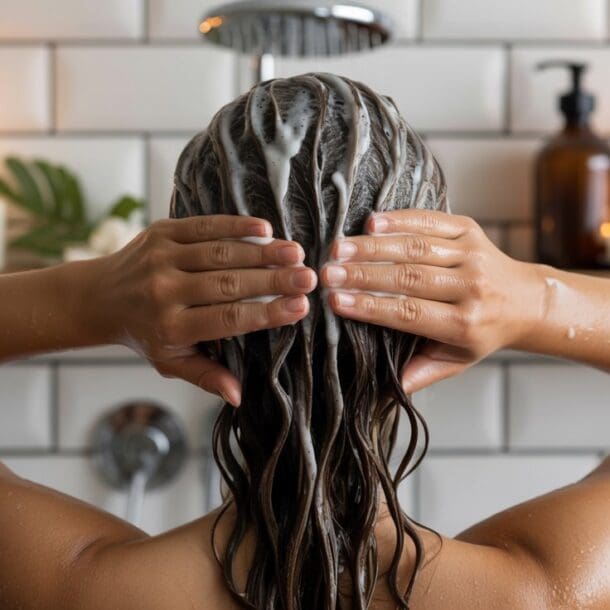
How to Apply a Hair Mask (Without Making a Mess)
A few small tools can make a big difference here, so we’ve highlighted our favorites as well as quick links to shop online.
Helpful Tools for DIY Hair Masks
- Hair dye applicator brush – Helps apply masks evenly
👉 Check pricing on Amazon - Wide-tooth comb – Distributes product gently
👉 Amazon search - Shower cap or reusable hair mask cap – Keeps everything contained
👉 Search bestsellers on Amazon - Microfiber hair towel – Reduces frizz and breakage
👉 Shop on Amazon
How Often Should You Use a DIY Hair Mask?
More isn’t always better.
For most people:
- Once a week is plenty
- Very dry or damaged hair may enjoy twice weekly
- Fine hair may prefer every other week
If your hair feels weighed down, scale back.
Common DIY Hair Mask Mistakes to Avoid
DIY hair masks should help — not frustrate you.
Avoid:
- Using too much oil (less is more)
- Applying heavy masks to roots if hair gets oily
- Skipping a thorough rinse
- Leaving masks on overnight unless you know your hair tolerates it
- Trying too many ingredients at once
Simple routines tend to work best.
Who Should Be Careful with DIY Hair Masks
DIY hair masks aren’t one-size-fits-all.
Use caution if you:
- Have a sensitive scalp
- Are prone to buildup
- Have very fine or low-porosity hair
- Have known allergies to ingredients
Always patch test new ingredients.
Turning DIY Hair Masks Into a Cozy Self-Care Ritual
Hair masks aren’t just about hair — they’re about slowing down.
Try pairing your mask with:
- A cozy robe or towel wrap
- A warm shower afterward
- A podcast or quiet music
- A no-rush afternoon
It’s self-care that fits real life.
Frequently Asked Questions About DIY Hair Masks
Do DIY hair masks actually work?
Many people find DIY hair masks helpful for moisture and softness. Results depend on hair type and consistency.
Should hair be wet or dry when applying?
Most masks work best on damp hair so ingredients spread evenly.
Can I leave a DIY hair mask on overnight?
It’s generally best to stick to 20–30 minutes unless you know your hair responds well.
Do I still need conditioner after?
Usually yes — conditioner helps seal the hair cuticle after rinsing.
Final Thoughts
DIY hair masks are one of those simple self-care habits that feel both comforting and practical. They don’t require a perfect routine or expensive products — just a little time and intention. Whether you use them once a week or whenever your hair feels extra dry, they’re a gentle way to care for yourself at home.
If it feels nourishing and fits your life, keep it. If not, let it go. The best hair care routines are the ones that feel easy enough to actually stick with.