Please note: This website contains affiliate links. As an Amazon Associate, we earn from qualifying purchases at no additional cost to you.
.
Making your own mouthwash might sound like one of those DIY projects that requires a chemistry degree and a cabinet full of mysterious ingredients. Thankfully, it’s much simpler than that.
In fact, some DIY mouthwash recipes require just two or three ingredients you probably already have in your kitchen.
Whether you’re looking for a natural mouthwash to freshen your breath, an alcohol-free alternative to commercial rinses, or simply a way to save a little money, there are plenty of reasons to try making your own.
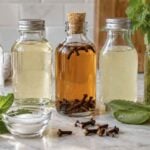
And the best part? You can customize these DIY mouthwash recipes with ingredients like fresh mint, whole cloves, chamomile, and xylitol.
Below, you’ll find five easy homemade mouthwash recipes, along with optional flavor variations, tips for storing your homemade rinses, and a few important things to know before adding them to your oral care routine.
Why Make Your Own Mouthwash?
Walk down the oral care aisle at almost any store, and you’ll find dozens of mouthwashes promising everything from fresher breath to healthier gums.
So why bother making your own? For starters, homemade mouthwash gives you more control over the ingredients you’re putting in your mouth. And depending on the recipe, it can be surprisingly inexpensive.
Here are a few reasons you might want to give DIY mouthwash a try:
- Save money. Basic homemade mouthwash recipes made with baking soda, salt, or herbs can cost just pennies per batch.
- Use fewer ingredients. Some recipes require only two or three everyday ingredients.
- Skip the alcohol. If you dislike the burning sensation of alcohol-based mouthwash, homemade alcohol-free rinses offer another option.
- Avoid unnecessary additives. You can skip artificial colors, strong flavorings, and concentrated essential oils.
- Customize the flavor. Prefer fresh mint over cloves? Want something slightly sweeter? You can experiment with different ingredients.
- Reduce packaging waste. Making small batches in a reusable glass bottle can help reduce your reliance on disposable mouthwash containers.
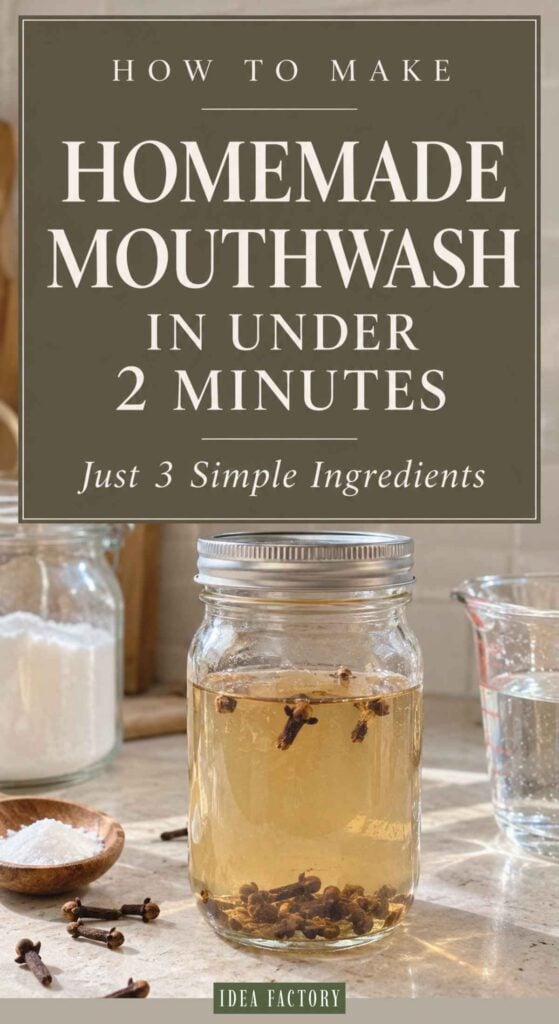
- Keep things simple. Several of these recipes take less than two minutes to prepare.
There’s also something satisfying about making an everyday household product yourself, especially when the ingredient list is so short.
Is Homemade Mouthwash Really Non-Toxic?
If you’re interested in non-toxic living, homemade mouthwash may appeal to you because you can choose exactly which ingredients go into it.
But there’s an important distinction: natural doesn’t automatically mean non-toxic or safer. Even familiar ingredients like cloves, mint, and baking soda can cause irritation when used incorrectly or too frequently. For that reason, these recipes use relatively simple ingredients and avoid concentrated essential oils, which can be irritating and aren’t necessarily appropriate for homemade oral rinses.
It’s also important to remember that homemade mouthwash isn’t a replacement for fluoride toothpaste, flossing, or professionally recommended therapeutic mouthwash.
What You’ll Need to Make These DIY Mouthwash Recipes
One of the nice things about making natural mouthwash is that you don’t need much equipment. Most of these recipes can be made with a few things you already have:
- A clean glass jar or bottle
- Measuring cups and spoons
- A small saucepan or kettle for herbal recipes
- A fine-mesh strainer
- A small drinking cup for rinsing
For the recipes that require water, use freshly boiled water that has been allowed to cool. Distilled water is another option, although it doesn’t make a homemade mixture sterile.
Now, let’s get to the recipes.
Easy Baking Soda Mouthwash
Best For: A Cleaner-Feeling Mouth and Neutralizing Acids
Prep Time: Under 2 minutes
Ingredients: 3
If you’re looking for the easiest homemade mouthwash recipe, this is a great place to start.
Baking soda, also known as sodium bicarbonate, helps neutralize acids in the mouth. It’s inexpensive, readily available, and doesn’t have the intense minty flavor of many commercial mouthwashes.
This simple recipe is also ideal when you want a quick DIY mouthwash without steeping herbs or preparing special ingredients.
Ingredients
- 1 cup lukewarm drinking water
- ¼ teaspoon baking soda
- ⅛ teaspoon salt
Instructions
- Pour the water into a clean glass.
- Add the baking soda and salt.
- Stir until completely dissolved.
- Swish a small amount gently around your mouth for approximately 15–30 seconds.
- Spit out the rinse and discard any leftovers.
Why You Might Like This Recipe
Baking soda helps neutralize acids, while the salt gives the rinse a familiar, slightly saline flavor. It’s an especially convenient option because you can mix it in under two minutes. This is also one of the most budget-friendly recipes in our collection!
Optional Variation: Prefer a milder taste? Leave out the salt and make a simple baking soda rinse using only water and baking soda.
Xylitol Mouthwash
Best For: A Mild, Slightly Sweet Rinse Without Sugar
Prep Time: Under 2 minutes
Ingredients: 2
If you prefer mouthwash that doesn’t taste salty or strongly herbal, this homemade xylitol mouthwash might be more your style.
Xylitol is a sugar alcohol commonly used in sugar-free gum and oral care products. Unlike regular sugar, xylitol isn’t readily fermented by cavity-causing oral bacteria. Research suggests that xylitol may offer some dental benefits, although the evidence varies depending on the product, amount, and frequency of use.
Ingredients
- 1 cup drinking water
- ¼ teaspoon food-grade xylitol
Instructions
- Pour the water into a clean glass.
- Add the xylitol.
- Stir until completely dissolved.
- Swish a small amount gently around your mouth.
- Spit out the rinse and discard the remainder.
Why You Might Like This Recipe
The biggest advantage is the flavor. Xylitol has a naturally sweet taste without the addition of regular sugar, making this rinse appealing if you dislike salty or bitter mouthwash. It’s also incredibly easy to prepare.
Optional Mint Variation
For a little extra flavor, replace the plain water with freshly prepared, cooled mint tea. Simply steep a few fresh mint leaves in hot water, strain, and allow the tea to cool before adding the xylitol. This gives the rinse a lightly sweet, minty flavor without using peppermint essential oil.
Important: Xylitol is extremely toxic to dogs, even in small quantities. Keep xylitol and anything containing it securely away from pets.
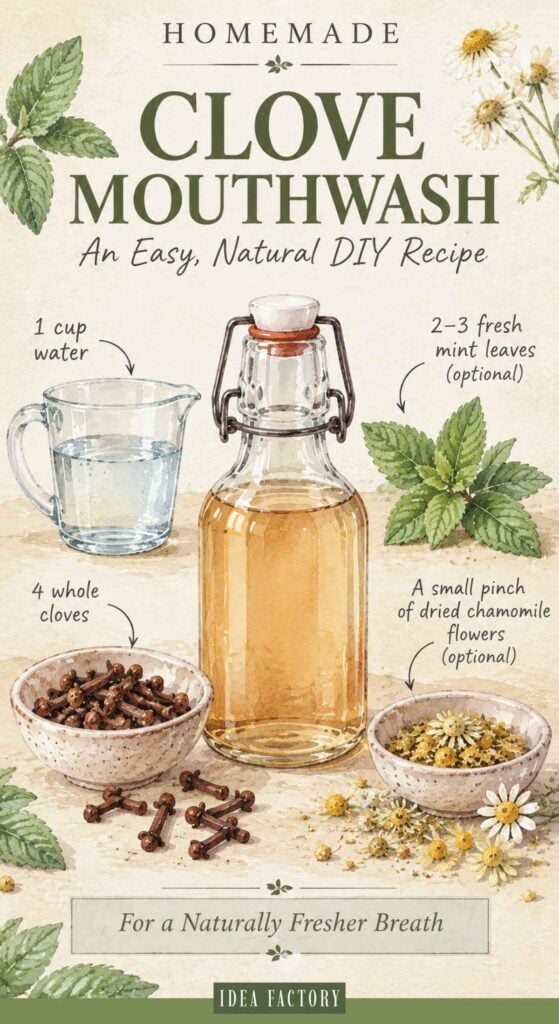
Clove Mouthwash With Optional Mint & Chamomile
Best For: Temporarily Freshening Breath With a Warm, Herbal Flavor
Prep Time: Approximately 15 minutes, plus cooling time
Ingredients: 2 basic ingredients, plus optional additions
If you’ve been exploring homemade mouthwash recipes on Pinterest, you’ve probably come across clove mouthwash. Cloves have a distinctive warm, spicy aroma that makes them popular in homemade herbal preparations. They also contain eugenol, a naturally occurring compound that has been studied for its antimicrobial and other biological properties.
For this recipe, we’re using a small amount of whole cloves rather than concentrated clove essential oil.
Ingredients
- 1 cup water
- 4 whole cloves
Optional Flavor Additions:
- 2–3 fresh mint leaves
- A small pinch of dried chamomile flowers
Instructions
- Bring 1 cup of water to a boil in a small saucepan.
- Remove the saucepan from the heat.
- Add the whole cloves.
- If desired, add the fresh mint leaves or dried chamomile flowers.
- Cover and allow the mixture to steep for approximately 10 minutes.
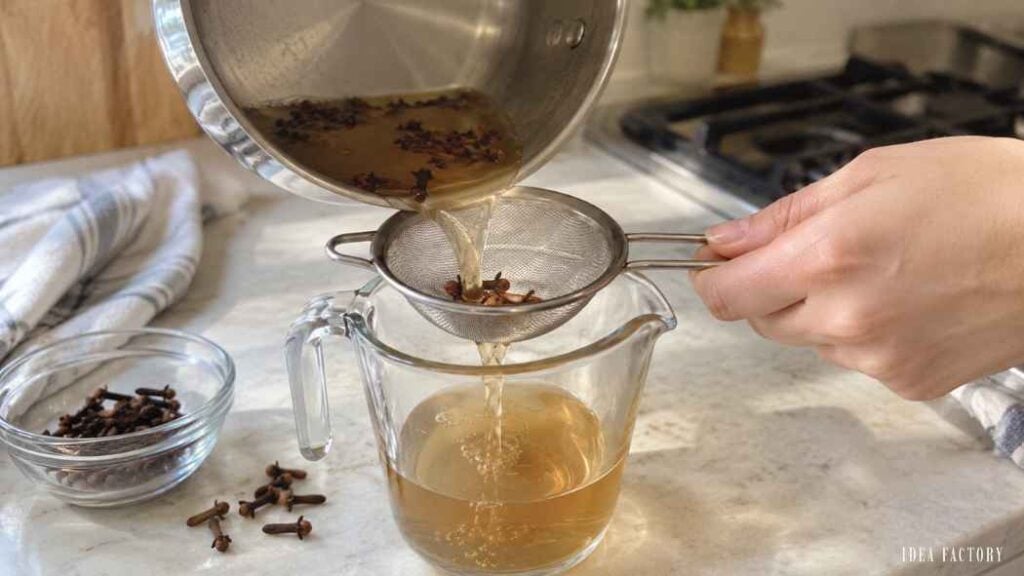
- Strain thoroughly to remove all cloves and herbs.
- Allow the liquid to cool completely.
- Pour a small amount into a clean cup, swish gently, and spit it out.
Prepare this rinse fresh and discard any leftovers.
Can You Add Cinnamon to Clove Mouthwash DIY recipe?
You may have seen homemade mouthwash recipes that combine cloves with cinnamon sticks. While cinnamon is a popular flavoring, I wouldn’t recommend adding it to this recipe. Cinnamon contains cinnamaldehyde, a compound that can cause irritation or allergic reactions in the mouth. Cloves also contain compounds that can irritate sensitive oral tissues, so combining the two isn’t necessarily a good idea.
For a gentler flavor variation, I’d stick with a small amount of fresh mint. And if the rinse causes burning, tingling, soreness, or irritation, stop using it.
Homemade Aloe Vera Mouthwash
Best For: A Mild, Alcohol-Free Oral Rinse
Prep Time: Under 2 minutes
Ingredients: 2
Aloe vera is probably best known for its use in skincare, but it’s also an ingredient in some commercially formulated oral care products. If you’re interested in natural mouthwash recipes, this is another option worth exploring.
The important thing is choosing the right type of aloe vera. For this recipe, you’ll want a commercially prepared, food-grade aloe vera inner-leaf juice specifically labeled as suitable for consumption. Avoid cosmetic aloe vera gels, whole-leaf extracts containing aloe latex, and products with added fragrance.
Ingredients
- 2 tablespoons food-grade, decolorized aloe vera inner-leaf juice
- 2 tablespoons drinking water
Instructions
- Combine the aloe vera juice and water in a clean glass.
- Stir until thoroughly mixed.
- Swish a small amount gently around your mouth.
- Spit out the rinse.
- Discard any remaining mixture.
Why You Might Like This Recipe
- This recipe is simple and doesn’t require strong mint flavors or alcohol.
- Some clinical studies have investigated aloe vera mouthwash for plaque and gum inflammation, but those findings don’t establish that a homemade diluted aloe rinse will produce the same results.
- For everyday DIY use, its main appeal is its mild flavor and short ingredient list.
Optional Chamomile Variation
If you’d like a more herbal flavor, replace the water with freshly brewed, completely cooled chamomile tea. Use plain chamomile without added sweeteners.
A note about allergies: Chamomile can trigger reactions in people allergic to ragweed, chrysanthemums, daisies, or related plants And because aloe products vary considerably, check the product label before using one as an oral rinse.
Homemade Fresh Mint Mouthwash
Best For: Temporarily Freshening Breath Without Strong Artificial Flavors
Prep Time: Approximately 10 minutes, plus cooling time
Ingredients: 3 basic ingredients, plus optional lemon balm
There’s something about fresh mint that just feels so crisp and clean. And if you enjoy the flavor of traditional mint mouthwash but don’t love the intense burning sensation of some commercial products, this homemade version offers a simple alternative.
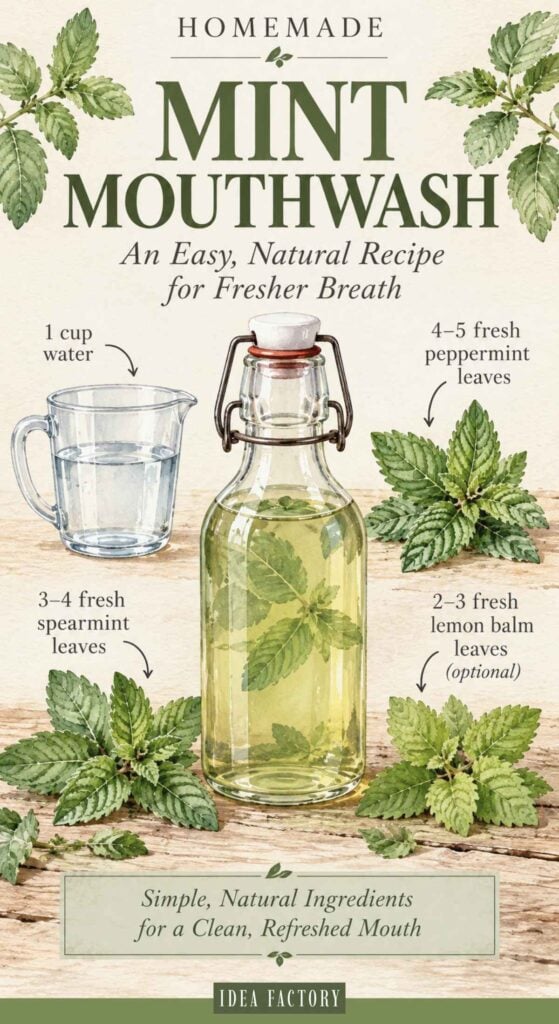
Instead of using concentrated peppermint essential oil, we’re using actual mint leaves. For this recipe, I like combining peppermint and spearmint. Peppermint provides the familiar cool, minty flavor, while spearmint has a slightly sweeter, softer taste.
Ingredients
- 1 cup water
- 4–5 fresh peppermint leaves
- 3–4 fresh spearmint leaves
Optional Addition:
- 2–3 fresh lemon balm leaves
Instructions
- Bring the water to a boil.
- Remove from heat.
- Add the peppermint and spearmint leaves.
- If desired, add the lemon balm.
- Cover and steep for 5–10 minutes.
- Strain thoroughly to remove the herbs.
- Allow the liquid to cool completely.
- Swish a small amount gently around your mouth and spit it out.
Prepare fresh and discard leftovers.
Why You Might Like This Recipe
This is probably the most familiar-tasting recipe in the collection. The combination of peppermint and spearmint creates a pleasant herbal flavor without the need for artificial colors, alcohol, or concentrated essential oils. It’s also easy to adjust depending on which herbs you have available.
Optional Lemon Balm Variation
Lemon balm is a member of the mint family with a mild, lemony aroma. Adding a couple of fresh lemon balm leaves gives this recipe a slightly different flavor without using acidic lemon juice. That’s an important distinction because acidic ingredients such as lemon juice and vinegar aren’t good additions to homemade mouthwash.
Side note: Repeated exposure to acidic rinses can contribute to tooth enamel erosion. For this recipe, fresh herbs are a better choice than citrus juice.
Homemade Mouthwash Flavor Variations
One of the fun things about making your own mouthwash is experimenting with different flavors. You don’t need a long ingredient list to create something a little different. Here’s a quick guide to the optional additions we’ve discussed.
| Mouthwash Recipe | Optional Addition | Flavor |
|---|---|---|
| Baking Soda | Omit the salt | Mild, slightly alkaline |
| Xylitol | Cooled fresh mint tea | Lightly sweet and minty |
| Aloe Vera | Cooled chamomile tea | Mild and floral |
| Clove | 2–3 fresh mint leaves | Warm and minty |
| Clove | Pinch of dried chamomile | Warm with floral notes |
| Fresh Mint | 2–3 lemon balm leaves | Fresh mint with a lemony note |
| Fresh Mint | Extra spearmint leaves | Sweeter, softer mint |
My favorite combinations?
- For something quick and practical, I’d choose the baking soda rinse.
- For a more interesting herbal flavor, the clove and mint combination is worth trying.
- And for a familiar minty taste, the peppermint, spearmint, and lemon balm combination is a lovely option.
Just remember that these are flavor variations, not medically tested formulations. Use small amounts of herbs and discontinue any rinse that causes discomfort.
How Much Does Homemade Mouthwash Cost?
One of the biggest advantages of making homemade mouthwash is that some recipes cost very little. For example, baking soda and salt are inexpensive pantry staples.
A batch containing ¼ teaspoon baking soda, ⅛ teaspoon salt, and a cup of water may cost only a few cents, depending on the prices you pay. Fresh herbs, aloe vera juice, and xylitol can cost more, particularly if you’re buying them specifically for these recipes.
Here’s a general comparison:
| Recipe | Estimated Ingredient Cost Per Batch |
|---|---|
| Baking Soda & Salt | Under $0.05 |
| Xylitol | $0.05–$0.15 |
| Aloe Vera | $0.20–$0.60 |
| Clove | $0.05–$0.20 |
| Fresh Mint | $0.10–$0.50 |
These are rough ingredient-cost estimates, not verified retail prices. Actual costs depend on where you shop, package sizes, and whether you grow your own herbs.
How to Store Your DIY Mouthwash Safely
Because these recipes contain water and don’t use commercial preservatives, storage is an important consideration. It’s tempting to make a big batch and keep it on the bathroom counter, but that isn’t something I’d recommend.
Water-based homemade products can become contaminated with bacteria, yeast, or mold, even when they look and smell perfectly fine.
For the safest approach:
- Make only the amount you need immediately before use.
- Use clean utensils and containers.
- Strain herbal ingredients thoroughly.
- Allow heated mixtures to cool completely before using.
- Pour your portion into a separate cup rather than drinking or rinsing directly from a storage bottle.
- Discard leftover mouthwash after use.
- Never share a rinse cup between people.
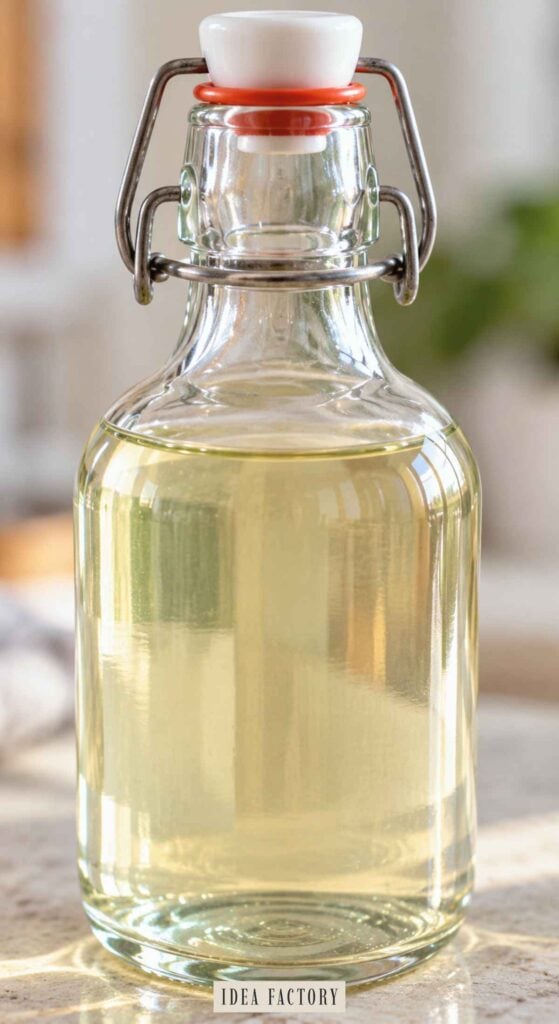
If you enjoy using a decorative glass bottle, you can certainly use one for photographing your DIY project or briefly holding a freshly prepared mixture. Just don’t assume a sealed glass bottle makes an unpreserved mouthwash safe for extended storage.
Can You Refrigerate Homemade Mouthwash?
Refrigeration may slow microbial growth, but it doesn’t sterilize a homemade rinse or guarantee its safety. Without validated preservation testing, there’s no reliable shelf life for these recipes. That’s why I recommend making small, fresh batches rather than storing them for several days.
Ingredients to Avoid in Homemade Mouthwash
Not every ingredient that appears in a DIY oral care recipe is a good idea. In fact, some popular homemade mouthwash ingredients deserve extra caution.
Lemon Juice and Vinegar
These ingredients are acidic and can contribute to tooth enamel erosion with repeated exposure. Even though they’re common in natural cleaning and DIY beauty recipes, I’d leave them out of homemade mouthwash.
Concentrated Essential Oils
Peppermint, tea tree, cinnamon, and clove essential oils are sometimes recommended in DIY oral care recipes. However, essential oils are highly concentrated and don’t mix evenly into plain water. That can expose sensitive oral tissues to concentrated droplets. Some essential oils can also be harmful if swallowed. For these recipes, I prefer using fresh or dried culinary herbs instead.
Hydrogen Peroxide
Hydrogen peroxide is used in certain commercially formulated oral care products, but concentration and proper use matter. I wouldn’t recommend experimenting with homemade peroxide mouthwash without guidance from a dental professional.
Sugar and Honey
Although these ingredients might make a homemade rinse taste better, adding fermentable sugars isn’t a good idea for oral health. For a sweeter flavor, food-grade xylitol is an alternative, provided it can be stored securely away from pets.
Do DIY Mouthwash Recipes Actually Work?
That depends on what you expect it to do. If your goal is to temporarily freshen your breath or rinse away loose food particles, a simple homemade mouthwash may provide a pleasant addition to your routine. Some ingredients also have properties that make them interesting for oral care. For example:
- Baking soda: Helps neutralize acids.
- Xylitol: Doesn’t provide the same fermentable sugar source as regular sugar.
- Mint: Provides a fresh flavor and aroma.
- Cloves: Contain naturally occurring compounds that have been studied for antimicrobial activity.
- Aloe vera: Has been investigated in commercially formulated oral rinses.
However, there’s a difference between an ingredient showing promising properties in research and a homemade recipe being proven effective. These DIY recipes haven’t been clinically tested as finished formulations. They shouldn’t be relied on to prevent cavities, treat gum disease, whiten teeth, or eliminate persistent bad breath.
Frequently Asked Questions About Homemade Mouthwash
What Is the Easiest Homemade Mouthwash Recipe?
The baking soda and salt rinse is one of the easiest options. It requires just three ingredients and takes less than two minutes to mix. You can also make a two-ingredient version using only baking soda and water.
Can Homemade Mouthwash Help With Bad Breath?
Some homemade rinses may temporarily freshen your breath or help remove loose debris. Mint and cloves provide noticeable flavors and aromas, but they don’t necessarily address the underlying cause of bad breath. Persistent bad breath can be associated with gum disease, tooth decay, dry mouth, or other health concerns and should be evaluated by a dentist.
Can I Make Natural Mouthwash Without Essential Oils?
Absolutely. All five recipes in this collection avoid concentrated essential oils. Instead, they use ingredients such as baking soda, xylitol, aloe vera juice, whole cloves, and fresh mint leaves.
Is Homemade Mouthwash Better Than Store-Bought Mouthwash?
Not necessarily. Homemade mouthwash offers control over ingredients and may be less expensive, but commercial therapeutic mouthwashes often contain clinically tested active ingredients. For example, fluoride mouthwash can help prevent cavities when used appropriately. A homemade herbal rinse shouldn’t be considered an equivalent replacement.
How Long Does Homemade Mouthwash Last?
Because homemade mouthwash doesn’t contain tested preservatives, there’s no reliable shelf life. The safest approach is to make small batches immediately before use and discard leftovers.
Can Kids Use Homemade Mouthwash?
I wouldn’t recommend these homemade recipes for young children. Children may accidentally swallow mouthwash, and some ingredients may be inappropriate for them. The American Dental Association generally advises against mouthwash use in children younger than six unless directed by a dentist. For older children, ask a pediatric dentist which oral rinse, if any, is appropriate.
Final Thoughts: Simple Homemade Mouthwash Recipes Worth Trying
Making your own mouthwash doesn’t have to be complicated. Whether you’re interested in a quick baking soda rinse, a lightly sweetened xylitol recipe, or a fresh herbal combination of mint and lemon balm, there are several ways to experiment with simple ingredients.
And if you’re trying to incorporate more natural DIY projects into your everyday routine, homemade mouthwash is certainly an interesting place to start. Personally, I think the biggest appeal is the simplicity.
You don’t need a dozen ingredients, complicated equipment, or an entire afternoon. Just remember that homemade mouthwash is best treated as an occasional supplemental rinse, not a replacement for proven dental care.
Looking for more easy DIY projects? Explore our collection of homemade bath products, natural home ideas, and simple recipes you can make with everyday ingredients.
SAVE OR SHARE THIS ARTICLE!
Please note: This website contains affiliate links. As an Amazon Associate, we earn from qualifying purchases at no additional cost to you.
.