
Please note: This website contains affiliate links. As an Amazon Associate, we earn from qualifying purchases at no additional cost to you.
.
I’ll be honest — most room sprays are just too much.
They smell great for about thirty seconds… and then you’re left with a heavy, artificial scent that lingers longer than you want it to. I wanted something different. Something I could use lightly, without worrying that my whole house would suddenly smell like perfume.
This DIY room spray is my answer to that.
It’s simple, natural, and intentionally subtle. It doesn’t try to take over a room — it just gives the air a quick refresh when you need it. Perfect for everyday use, especially if you prefer your home to smell clean and calm, not heavily scented.
Why Make Your Own Room Spray?
Room spray works best as a supporting player, not the main event.
Unlike odor absorbers or sachets that work constantly, room spray is great for:
- Quick refreshes
- After cooking
- Before guests arrive
- Lightly freshening a space
Making your own means you can:
- Control how strong it is
- Avoid artificial fragrance
- Customize scents by room
- Keep things gentle and non-overwhelming
A Quick Note on “Subtle & Clean” Scenting
This recipe is intentionally light.
If you’re used to store-bought sprays, this will feel softer — and that’s the point. You can always add more sprays, but you can’t easily undo a scent that’s too strong.
The Base DIY Room Spray Recipe
This base recipe works for any scent blend you want to use.
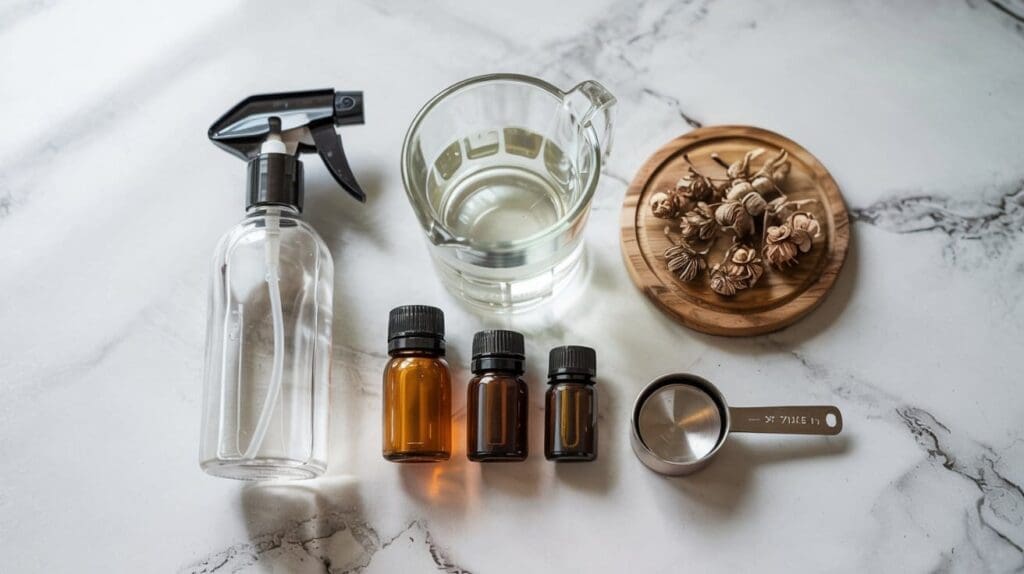
What You’ll Need
- 4 oz glass spray bottle
- 3 oz distilled water
- 1 tbsp vodka or witch hazel (helps oils disperse)
- 15–25 drops essential oil (total)
How to Make It
- Add the vodka or witch hazel to the spray bottle.
- Add essential oils.
- Fill the rest of the bottle with distilled water.
- Shake gently before each use.
That’s it. No heating, no steeping, no curing time.
Clean & Gentle Essential Oil Blends (Beginner-Friendly)
These blends are designed to feel fresh, not floral-heavy.
Clean & Fresh
- Lemon + eucalyptus
- Lemon + tea tree
Calm & Cozy
- Lavender + cedarwood
- Lavender + bergamot
Light & Airy
- Bergamot + sweet orange
- Grapefruit + lemon
Spa-Inspired
- Eucalyptus + lavender
- Rosemary + lemon
Stick to 2 oils max when starting — simpler always smells cleaner.
How (and Where) to Use DIY Room Spray
Room spray works best when used lightly and intentionally.
Best Places to Use It
- Living rooms
- Bathrooms
- Entryways
- Bedrooms (lightly)
How to Use
- 1–2 sprays into the air
- Avoid spraying directly on furniture
- Shake before each use
This isn’t meant to replace odor absorbers — it complements them.
Room Spray vs. Other Natural Scent Options
Think of room spray as your quick fix, not your all-day solution.
- Odor absorbers: work continuously
- Sachets: scent fabrics and storage
- Clay diffuser stones: subtle, long-lasting
- Room spray: instant refresh
Each has a role, and they work best together.
How Long DIY Room Spray Lasts
- Shelf life: about 2–3 months
- Store in a cool, dark place
- Shake before each use
- Discard if scent smells off or separates excessively
If you prefer longer storage, make smaller batches more often.
DIY Room Spray FAQs
Why do I need vodka or witch hazel?
It helps the essential oils mix evenly with water and prevents separation.
Can I skip the alcohol entirely?
You can, but the oils will float — you’ll need to shake very well before each use.
Is this safe around kids and pets?
Use lightly and choose gentle oils. Avoid spraying near faces or bedding.
Can I use this as a linen spray?
Yes — test on a small area first and spray lightly.
Final Thoughts
DIY room spray isn’t about making your home smell “strong.”
It’s about having a simple way to refresh the air when you need it — without overpowering the space or adding more chemicals to your routine. Used lightly, it’s one of the easiest, most flexible tools in a natural home scent setup.
Sometimes one small spray is all it takes.
Please note: This website contains affiliate links. As an Amazon Associate, we earn from qualifying purchases at no additional cost to you.
.