
Please note: This website contains affiliate links. As an Amazon Associate, we earn from qualifying purchases at no additional cost to you.
.
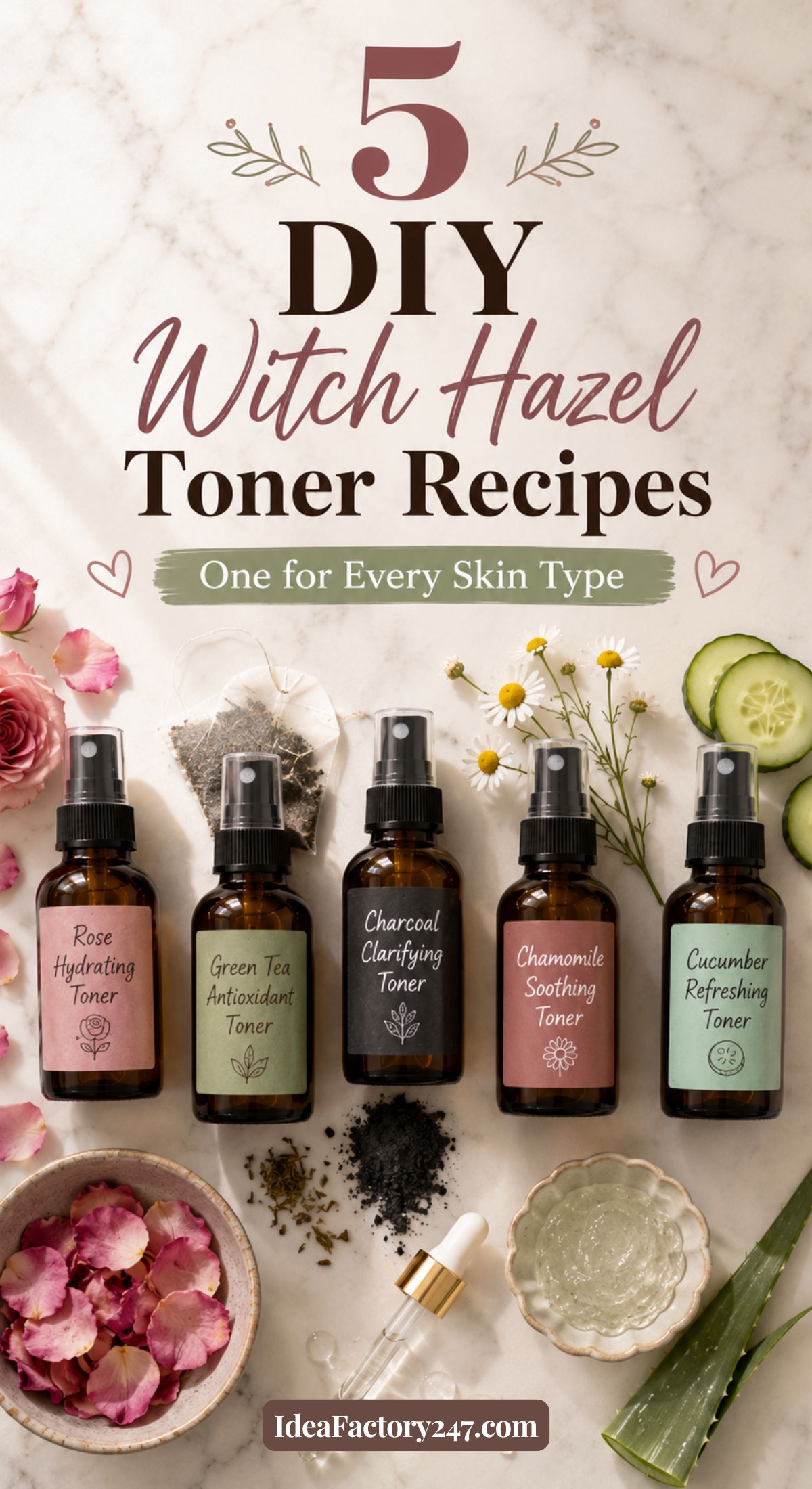
Thayers is beloved for a reason — but at $12 a bottle for mostly witch hazel and aloe vera, it’s also one of the easiest skincare products to replicate at home. These DIY witch hazel toner recipes give you the same clean, skin-balancing results for a fraction of the cost, fully customized for your skin type.
⏱ 5 min to make 🌿 All Natural 💧 5 Recipe Variations
Why We’re Talking About Thayers
Thayers Witch Hazel Toner is one of the most-saved skincare products on Pinterest — and its ingredient list is refreshingly short: witch hazel, aloe vera, rose petal water, and glycerin. This article shows you how to make essentially the same thing at home, plus four variations that go further than Thayers does for specific skin concerns.
Want the real thing? Thayers is available here — but you might not need it after reading this.
Jump To Where You’d Like to Go:
- Why Witch Hazel Works
- The Base Recipe
- 5 Toner Variations
- How to Use Your Toner
- Which Recipe for Your Skin Type
- DIY vs Buying Thayers
- Storage & Shelf Life
- FAQs
I made my first batch of DIY toner after reading the Thayers ingredient list and realizing I could pick up everything at the natural grocery store for about $8 — and make four bottles worth.
That was the beginning of the end of buying toner.
These recipes are what I’ve landed on after a lot of experimenting. The base recipe is genuinely as good as Thayers. The variations go further. And all of them take five minutes to make.
Why Witch Hazel Is Worth Your Attention
Witch hazel is one of the few skincare ingredients with genuine clinical research behind it. It’s a natural astringent derived from the bark and leaves of the Hamamelis virginiana plant, and it works through a few distinct mechanisms…
- It tightens pores temporarily by causing skin proteins to contract slightly — the “pore minimizing” effect people notice immediately.
- It reduces inflammation via tannins, which have documented anti-inflammatory properties helpful for acne and redness.
- It removes excess oil without stripping the skin barrier — provided you use alcohol-free witch hazel, which all the recipes below call for.
Important: Always Use Alcohol-Free Witch Hazel Many witch hazel products contain 14–15% isopropyl alcohol as a preservative. That alcohol causes the dryness and irritation people sometimes associate with witch hazel toner. For all these recipes, look for alcohol-free witch hazel specifically — the bottle should say so clearly. Thayers, Dickinson’s Original, and several store brands all make alcohol-free versions.
The Base Recipe: Your DIY Thayers Dupe
This is the closest you can get to homemade Thayers — same core ingredients, same philosophy, fully customizable. Make this first, use it for a week, then decide if you want to move toward one of the variations below.
| Ingredient | Amount | Purpose |
|---|---|---|
| Alcohol-free witch hazel | ½ cup (4 oz) | The active base — astringent, anti-inflammatory, pore-tightening |
| Rose water | ¼ cup (2 oz) | Hydrating and soothing; gives the toner its gentle character |
| Aloe vera gel | 1 tablespoon | Calms irritation, adds slip, prevents any tight feeling after use |
| Vegetable glycerin | 1 teaspoon | Humectant — draws moisture to the skin so toner doesn’t dry you out |
| Essential oil (optional) | 5–8 drops | Scent and targeted skin benefit depending on which oil you choose |
Instructions: Combine all ingredients in an 8 oz glass spray or flip-cap bottle. Tip gently 3–4 times to combine — don’t shake vigorously. Label with the date. Use within 4–6 weeks.
You’ll need: An 8 oz glass bottle (spray top preferred), a small funnel, and labels. Amber glass is ideal if adding essential oils.
5 Witch Hazel Toner Variations
Each recipe starts from the base and adds targeted ingredients for a specific skin goal. Choose the one that matches what your skin needs most right now — or make two and alternate by season.
Rose Petal Glow Toner
For: Normal to dry skin · The closest Thayers dupe · Everyday use
Ingredients
- ½ cup alcohol-free witch hazel
- ¼ cup real distilled rose water
- 1 tbsp pure aloe vera gel
- 1 tsp vegetable glycerin
- 5 drops geranium essential oil
- 3 drops rose absolute (optional)
Why It Works
- Rose water calms and hydrates
- Geranium balances oil production
- Glycerin prevents any tightness
- Smells like a genuine spa product
- Essentially identical to Thayers Rose
How to Make It
- Add witch hazel first, then rose water.
- Add aloe vera gel using a dropper or small funnel.
- Add glycerin, then essential oils last.
- Tip gently 3–4 times to combine. Label and date.
- Store at room temperature or refrigerate for a refreshing cool application.
💡 Use real distilled rose water — not rose-scented water. Real rose water contains actual plant compounds; scented water is just fragrance. Look for “100% Rosa Damascena hydrosol” on the label.
Green Tea Antioxidant Brightening Toner
For: Dull skin · Anti-aging · Sun-damaged skin · Morning use
Ingredients
- ½ cup alcohol-free witch hazel
- ¼ cup brewed green tea (cooled)
- 1 tbsp aloe vera gel
- 1 tsp vegetable glycerin
- ½ tsp vitamin C powder (optional)
- 5 drops frankincense essential oil
Why It Works
- Green tea is packed with EGCG antioxidants
- Frankincense promotes cell turnover
- Vitamin C fades dark spots over time
- Brighter skin with consistent daily use
- Best morning toner in this collection
How to Make It
- Brew 1 bag of green tea in ¼ cup of boiling water. Steep 5 minutes, then cool completely.
- If using vitamin C powder, dissolve it in the cooled green tea first before adding anything else.
- Combine all ingredients in bottle, tip gently to blend, label.
- Because of the fresh tea, refrigerate and use within 3 weeks.
💡 Vitamin C powder is optional but genuinely worth adding — it’s one of the most evidence-backed ingredients for brightening and fading hyperpigmentation. Use L-ascorbic acid powder and dissolve it fully before bottling.
Tea Tree & Niacinamide Acne-Fighting Toner
For: Oily skin · Acne-prone · Clogged pores · Breakout prevention
Ingredients
- ½ cup alcohol-free witch hazel
- ¼ cup distilled water
- 1 tbsp aloe vera gel
- 1 tsp vegetable glycerin
- 10 drops tea tree essential oil
- 5 drops lavender essential oil
- ½ tsp niacinamide powder (optional)
Why It Works
- Tea tree is clinically antimicrobial
- Witch hazel tightens pores and cuts oil
- Niacinamide shrinks pores long-term
- Lavender prevents over-drying
- Fights active breakouts + prevents new ones
How to Make It
- Dissolve niacinamide powder in distilled water before combining with anything else.
- Add witch hazel, then aloe, then glycerin.
- Add tea tree and lavender last. Tip gently.
- Apply with a cotton round — let fully absorb before moisturizer.
💡 If you have sensitive skin, start with every other day and patch test first. Tea tree at this dilution is effective but manageable for most skin types — the lavender actively counterbalances the drying potential.
Hyaluronic Acid Hydrating Toner
For: Dry or dehydrated skin · Winter use · Mature skin · Maximum moisture
Ingredients
- ¼ cup alcohol-free witch hazel
- ¼ cup rose water
- ¼ cup distilled water
- 2 tbsp aloe vera gel
- 2 tsp vegetable glycerin
- ¼ tsp hyaluronic acid powder
- 5 drops rosehip seed oil
Why It Works
- Lower witch hazel ratio is gentler overall
- HA powder holds 1000x its weight in water
- Rosehip adds natural vitamin C and A
- Extra glycerin for deep hydration
- Skin feels plump, not tight — ever
How to Make It
- Dissolve hyaluronic acid powder in distilled water first — stir gently and let sit 5 minutes until fully clear. Don’t rush this step.
- Combine with all other ingredients. Tip gently to blend.
- This toner has a slightly thicker feel than the others — that’s normal and expected.
- Apply while skin is still slightly damp from cleansing for maximum absorption.
💡 This one functions almost more like a hydrating essence than a traditional toner. It’s the recipe to reach for in winter or whenever your skin feels tight and parched after washing.
Cucumber & Aloe Cooling Toner
For: Sensitive skin · Redness · Post-sun · Hot weather · Calming
Ingredients
- ¼ cup alcohol-free witch hazel
- ¼ cup cucumber water (blended & strained)
- ¼ cup distilled water
- 2 tbsp aloe vera gel
- 1 tsp vegetable glycerin
- 5 drops chamomile essential oil
- 3 drops peppermint essential oil
Why It Works
- Cucumber is naturally anti-inflammatory
- Chamomile soothes redness and irritation
- Peppermint delivers real cooling sensation
- Lowest witch hazel ratio — gentlest formula
- Refrigerate for maximum soothing effect
How to Make It
- Blend ½ a cucumber with ¼ cup distilled water until smooth. Strain through a fine mesh sieve or cheesecloth — liquid only, no pulp.
- Combine cucumber water with all other ingredients in bottle. Tip gently.
- Because of the fresh cucumber, refrigerate and use within 2 weeks.
- Apply chilled — straight from the fridge — for maximum benefit on reactive skin days.
💡 This is the most perishable recipe in the collection. Make it in smaller batches and keep refrigerated. It’s worth it — this toner applied cold on hot summer skin or after sun exposure is genuinely one of the best feelings in DIY skincare.
How to Use Your Witch Hazel Toner
Toner goes right after cleansing and before any serums or moisturizer. The application method matters more than most people think:
CLEANSE: Wash your face as normal. Pat dry gently — don’t rub.
TONE: Apply to a cotton round and sweep across face, or spritz directly and press in with palms.
WAIT: Let toner fully absorb — 30 to 60 seconds. Don’t rush to the next step.
MOISTURIZE: Apply serum or moisturizer while skin is still slightly tacky for best absorption.
Quick Tip on spraying vs using a cotton round:
A cotton round provides light physical exfoliation and removes residual cleanser. Spraying and pressing in with palms wastes less product and is gentler — better for dry or sensitive skin. For the acne toner (Recipe 03), use a cotton round so the active ingredients make direct contact.
Which Recipe Is Right for Your Skin Type?
🌸Dry SkinRecipe 04 (Hyaluronic Acid) or Recipe 01 with extra glycerin
🌿Oily SkinRecipe 03 (Tea Tree) — full witch hazel base, skip extra glycerin
🍃Sensitive SkinRecipe 05 (Cucumber) — lowest witch hazel ratio, most calming formula
✨CombinationRecipe 01 daily; Recipe 03 on oily T-zone days only
DIY Witch Hazel Toner vs. Buying Thayers: Honest Comparison
Thayers is a genuinely good product — we’re not here to trash it. Here’s the honest side-by-side:
DIY Witch Hazel Toner
- Fully customizable for your skin
- No preservatives needed for fresh use
- Costs approximately $2–3 per batch
- Can target specific concerns precisely
- Choose exactly which oils go in
- Shorter shelf life (4–6 weeks)
vs
Thayers Witch Hazel Toner
- Convenient — available everywhere
- Long shelf life (12–18 months)
- Costs $10–14 per bottle
- Consistent formula every time
- Great for travel
- Less flexible for targeted skin needs
Honest take: make your own for daily home use, keep a travel-sized Thayers in your bag. Best of both worlds.
Storage, Shelf Life & Tips
How long does DIY witch hazel toner last? Most recipes last 4–6 weeks at room temperature. Recipes with fresh ingredients (green tea, cucumber) should be refrigerated and used within 2–3 weeks. If your toner starts smelling off or changes color unexpectedly, make a fresh batch.
Best bottles to use. Glass is strongly preferred over plastic for toners containing essential oils. Amber glass spray bottles in 4–8 oz are ideal — they protect light-sensitive ingredients and allow direct application without a cotton round.
Should I refrigerate my toner? Not required for most recipes, but it extends shelf life and makes application more refreshing. The cucumber (Recipe 05) and green tea (Recipe 02) versions should always be refrigerated.
Can I apply near my eyes? Avoid the immediate eye area — the skin there is too delicate for astringent ingredients. Stop about half an inch below the lower lash line.
Frequently Asked Questions
Is witch hazel toner good for acne?
Yes — witch hazel has genuine clinical support for acne-prone skin. Its tannins provide anti-inflammatory and antimicrobial action that reduces active breakouts and calms surrounding redness. For best results pair it with tea tree oil (Recipe 03), another clinically studied antimicrobial. The combination is more effective than either ingredient alone.
Can I use witch hazel toner every day?
Yes, provided you’re using alcohol-free witch hazel. Alcohol-based versions used daily can disrupt the skin barrier and cause dryness over time. Alcohol-free versions are gentle enough for twice-daily use for most skin types. If you have sensitive or reactive skin, start with once daily (evening is ideal) and observe how your skin responds.
Does witch hazel actually minimize pores?
Temporarily, yes — witch hazel causes a mild contraction of skin proteins that makes pores appear smaller for a few hours. It doesn’t permanently change pore size (nothing does — pore size is largely genetic), but consistent use keeps pores cleaner which makes them appear smaller over time. For longer-term pore reduction, the niacinamide in Recipe 03 has stronger evidence specifically for that outcome.
What’s the difference between witch hazel and rose water toner?
They work in opposite ways — witch hazel is an astringent that tightens and removes oil; rose water is a hydrosol that softens, hydrates, and soothes. Together (as in Recipes 01 and 04), they balance each other beautifully. On their own, rose water is better for dry or sensitive skin while witch hazel alone is better for oily or acne-prone skin.
Can I use this toner if I’m pregnant?
The base recipe without essential oils is generally considered safe during pregnancy. However, several essential oils used in these recipes — including peppermint — are commonly advised against during pregnancy, particularly in the first trimester. Make the base recipe without essential oils and always consult your healthcare provider before adding any back in.
Why does my toner look cloudy?
Cloudiness usually means essential oils aren’t fully dispersed — completely normal since oil and water don’t mix without an emulsifier. Tip the bottle gently before each use. If cloudiness is accompanied by an off smell or unusual color change, that’s a sign the batch has turned and should be discarded. Cloudiness alone with a normal scent is nothing to worry about.
Found Your New Face Toner Recipe?
Save this to your skincare or DIY beauty board so you can find it again — and share it with anyone who’s been overpaying for Thayers.
Other Popular DIY Toners + Skin Care Recipes
- DIY Face Toner: Simple At-Home Recipes for Every Skin Type
- Rice Toner Recipe: A Simple DIY Rice Water Toner for Face
- Puffy Eyes? This DIY Caffeine Under Eye Serum Helps You Look More Awake Fast
- DIY Anti-Aging Face Serum: Simple, Natural, and Glow-Boosting!
Please note: This website contains affiliate links. As an Amazon Associate, we earn from qualifying purchases at no additional cost to you.
.