Please note: This website contains affiliate links. As an Amazon Associate, we earn from qualifying purchases at no additional cost to you.
.
Store-bought body lotion is mostly water. Whipped body butter is mostly butter — and the difference on your skin is immediate, dramatic, and completely worth the five minutes it takes to make. This is your complete guide to making it at home, with 6 recipes for every skin type and scent preference.
⏱ 15 min to make ✦ 6 recipes 🌿 No water, no fillers 🎁 Great for gifting
In This Article
- Why Whipped Body Butter
- Your Base Oils Explained
- The Classic Base Recipe
- 6 Recipe Variations
- How to Make It Non-Greasy
- Troubleshooting Guide
- Gifting & Packaging
- FAQs
The first time I made whipped body butter I genuinely couldn’t believe how different it felt compared to anything I’d ever bought.
Not greasy. Not waxy. Just soft, rich, and absorbed in a way that lasted. My skin felt moisturized hours later without reapplying.
The secret is what’s not in it. Commercial lotions are typically 60–80% water, which means they evaporate quickly and require synthetic emulsifiers and preservatives to hold together. Body butter skips all of that — it’s just whipped oils and butters. Nothing to evaporate. Nothing to preserve. Just ingredients your skin actually recognizes and knows what to do with.
This guide covers everything: the base recipe, six variations for different skin types and scents, how to make it non-greasy (the question everyone asks), and troubleshooting for the most common mistakes.
Why DIY Whipped Body Butter Beats Regular Lotion (All day long!)
It comes down to concentration. A typical drugstore body lotion lists water as its first ingredient — meaning the majority of what’s in that bottle is water plus emulsifiers to keep oil and water blended. When water evaporates off your skin (which it does within minutes), you’re left with a thin film of the actual moisturizing ingredients.
Whipped body butter contains zero water. Every single ingredient goes directly onto and into your skin. You use less, it lasts longer, and the skin-feel is incomparably richer. It’s the difference between drinking a glass of water and eating a piece of fruit — one is mostly water in a container, one delivers the real thing concentrated.
The whipping matters too. Whipping incorporates air into the butter mixture, transforming what would otherwise be a dense, waxy block into something light, fluffy, and spreadable. It also changes the temperature and texture in ways that make application dramatically easier and more even.
The Non-Greasy Question
The most common concern about body butter is that it’ll feel heavy or greasy. The good news: this is entirely controllable through your oil choices and a few simple techniques. The key is the ratio of hard butters to liquid oils, and the addition of arrowroot powder — which absorbs excess surface oil and leaves skin feeling silky rather than slick. All of that is covered in detail in the non-greasy section below.
Your Base Oils: What They Do and How to Choose
Body butter is built from two types of ingredients: hard butters that give it structure and richness, and liquid carrier oils that determine how it spreads and absorbs. Understanding what each one does lets you customize any recipe for your skin.
| Ingredient | Type | Best For |
|---|---|---|
| Shea butter | Hard butter (base) | The most popular base — deeply moisturizing, anti-inflammatory, works for all skin types. Unrefined is richer; refined has a neutral scent. |
| Cocoa butter | Hard butter (base) | Rich, solid, and chocolatey-scented. Excellent for dry and mature skin. Adds firmness — use less if you want a softer result. |
| Mango butter | Hard butter (base) | Lighter than shea or cocoa, absorbs faster, and has a softer, creamier texture. Great for non-greasy formulas and sensitive skin. |
| Coconut oil (fractionated) | Liquid carrier | Lightweight, odorless, absorbs quickly. Fractionated stays liquid at room temperature — the best all-purpose carrier oil for body butter. |
| Sweet almond oil | Liquid carrier | Deeply moisturizing, softening, and slightly nutty scent. Excellent for dry and sensitive skin. Extends spreadability. |
| Jojoba oil | Liquid carrier | Technically a wax, chemically similar to skin’s sebum. Balancing for oily skin and long-lasting on dry skin. Odorless. |
| Arrowroot powder | Texture modifier | The secret weapon for non-greasy body butter. Absorbs surface oil and creates a silky, powdery finish without affecting moisture. |
The Six Base Oils at a Glance
| Ingredient | What It Does |
|---|---|
| Shea Butter | The universal base. Rich, creamy, works on every skin type. Start here if you’re new. |
| Cocoa Butter | Firmer, richer, smells like chocolate. Best for very dry or mature skin. |
| Mango Butter | Lighter and faster-absorbing than shea. The non-greasy butter of choice. |
| Fractionated Coconut | Weightless liquid carrier. Odorless. Stays liquid. The easiest to work with. |
| Sweet Almond | Silky and softening. Adds slip. Best for dry and sensitive skin types. |
| Arrowroot Powder | The non-greasy secret. Add 1–2 tsp per batch for a silky, powdery finish. |
The Classic Whipped Body Butter Base Recipe
This is the foundation. Master this one and you can build any of the variations below — or go completely off-script with your own scent combinations once you understand the ratios.
Classic Whipped Shea Body Butter
All skin types · The foundational recipe · Start here
Ingredients
- ½ cup unrefined shea butter
- ¼ cup coconut oil (fractionated)
- 2 tbsp sweet almond oil
- 1–2 tsp arrowroot powder
- 20–25 drops essential oil of choice
Equipment
- Stand or hand mixer
- Medium mixing bowl
- Double boiler or microwave-safe bowl
- 4–6 oz glass jars with lids
- Labels
How to Make It
- Melt the shea butter. Using a double boiler or microwave (in 20-second intervals), melt the shea butter until just liquid. You want it barely melted — not hot.
- Add liquid oils. Stir in the fractionated coconut oil and sweet almond oil while the shea is still warm and liquid. Combine well.
- Cool until semi-solid. This is the most important step. Place the bowl in the refrigerator for 20–30 minutes, or on the counter for 1–2 hours, until the mixture is firm but not hard — like soft butter from the fridge. It should hold an indent when you press it.
- Whip it. Using a hand mixer or stand mixer, whip the semi-solid butter on medium-high for 3–5 minutes until fluffy, light, and pale — it should look like whipped cream.
- Add arrowroot and essential oils. With the mixer on low, blend in arrowroot powder and essential oils. Whip for another 30 seconds to fully incorporate.
- Transfer to jars. Spoon into glass jars, cap, label with the date and scent. Use within 3–4 months.
💡 The cooling step is non-negotiable. If you whip the mixture while it’s still liquid or too warm, it won’t hold air and you’ll end up with a greasy pool rather than a fluffy whip. When in doubt, cool it longer rather than shorter.
Love Body Butter? Here Are Our Flavored Recipes →
- Wellness · Sleep Whipped Magnesium Body Butter Sleep support + muscle recovery in a fluffy whipped butter
- Summer · Glow Summer Shimmer Body Butter A glowy, luminous body butter for warm weather skin
- Energizing · Morning DIY Coffee Body Butter Energizing coffee scent with natural skin-firming benefits
- Holiday · Fall Gingerbread Body Butter Warm spiced holiday scent — a classic fall gifting recipe
- Holiday · Winter Peppermint Mocha Body Butter Coffee and peppermint — the most festive butter on the site
- Holiday · Gift Gingerbread Latte Body Butter Sweet and spiced — perfect for holiday gift sets
6 DIY Whipped Body Butter Recipes
Each variation below uses the same base technique as Recipe 01 but swaps or adds ingredients for different skin goals and scent profiles. The instructions are the same — melt, cool until semi-solid, whip, add extras, jar.
Lavender & Vanilla Calming Butter
Sensitive skin · Bedtime · Stress relief
Ingredients
- ½ cup shea butter
- ¼ cup fractionated coconut oil
- 2 tbsp sweet almond oil
- 1 tsp arrowroot powder
- 20 drops lavender essential oil
- 10 drops vanilla essential oil
- 5 drops chamomile essential oil
Why It Works
- Lavender is clinically calming
- Vanilla adds warmth and sweetness
- Chamomile soothes irritated skin
- Apply before bed for best effect
- Works on children 3+ (reduce EOs by half)
Notes
- Follow the base recipe technique exactly.
- Add essential oils during the final whip — lavender first, then vanilla, then chamomile.
- Apply to pulse points (inner wrists, back of knees, neck) before bed for aromatherapy benefit beyond just skin moisture.
💡 This is the most universally beloved recipe in the collection — gentle enough for sensitive skin, smells incredible, and the lavender-vanilla combination is one of the best-performing scent profiles on Pinterest for saves and shares.
Mango & Coconut Lightweight Butter
Non-greasy · Normal to oily skin · Summer use
Ingredients
- ½ cup mango butter
- ¼ cup fractionated coconut oil
- 2 tbsp jojoba oil
- 2 tsp arrowroot powder
- 15 drops sweet orange essential oil
- 10 drops coconut fragrance oil
- 5 drops ylang ylang essential oil
Why It Works
- Mango butter is lightest of all base butters
- Jojoba balances without clogging pores
- Extra arrowroot = silky, not slick
- Tropical scent is summer-perfect
- Absorbs in under 60 seconds
Notes
- Mango butter melts faster than shea — watch it carefully and remove from heat the moment it’s liquid.
- Use 2 tsp arrowroot (double the base recipe) for the most non-greasy finish possible.
- This one benefits from an extra 5 minutes of whipping — mango butter whips up especially light and airy with time.
💡 If the “body butter is too greasy” objection has kept you from making it before, start with this recipe. The mango butter + extra arrowroot combination produces the lightest, fastest-absorbing result of any recipe here.
Rose & Frankincense Anti-Aging Butter
Mature skin · Firming · Luxurious · Gifting
Ingredients
- ½ cup shea butter
- 2 tbsp cocoa butter
- ¼ cup rosehip seed oil
- 1 tbsp sweet almond oil
- 1 tsp vitamin E oil
- 1 tsp arrowroot powder
- 15 drops frankincense essential oil
- 10 drops geranium essential oil
- 5 drops rose absolute
Why It Works
- Rosehip is rich in natural vitamin A & C
- Frankincense promotes skin cell turnover
- Vitamin E is a potent antioxidant
- Cocoa butter adds extra firmness
- Smells like a $90 boutique body cream
Notes
- Melt shea and cocoa butter together — cocoa butter is harder and takes slightly longer.
- Add rosehip oil after removing from heat (it’s delicate and shouldn’t be heated).
- This butter is slightly firmer than the base recipe due to the cocoa butter — it softens the moment it touches warm skin.
💡 This is the recipe to package for gifting — rose absolute, frankincense, and a beautiful amber jar makes it look and smell genuinely expensive. Rosehip seed oil gives it a very faint natural gold tint that’s gorgeous in a clear jar.
Citrus Glow Body Butter
Brightening · Energizing · Morning use · Summer
Ingredients
- ½ cup shea butter
- ¼ cup fractionated coconut oil
- 2 tbsp sweet almond oil
- 1 tsp arrowroot powder
- ½ tsp mica powder (optional — gold)
- 15 drops sweet orange essential oil
- 10 drops grapefruit essential oil
- 5 drops bergamot essential oil
Why It Works
- Triple citrus is bright and energizing
- Gold mica adds subtle body glow
- Bergamot rounds out sharp citrus edges
- Uplifting morning mood boost
- Incredible summer scent
Notes
- Add mica powder along with the arrowroot at the end — whip briefly to distribute evenly.
- Citrus essential oils are photosensitive — apply to areas that won’t receive prolonged direct sun, or rinse skin before going out for extended periods.
- This butter smells most vibrant in the first 4–6 weeks; make smaller batches to keep it fresh.
💡 The gold mica is optional but worth it — it gives skin a subtle luminous glow that looks incredible in summer. Use cosmetic-grade mica only (not craft mica). A little goes a long way — start with ½ tsp and adjust to your preference.
Unscented Sensitive Skin Butter
Eczema-prone · Reactive skin · Babies · Fragrance-free
Ingredients
- ½ cup unrefined shea butter
- ¼ cup fractionated coconut oil
- 2 tbsp jojoba oil
- 1 tsp vitamin E oil
- 1 tsp arrowroot powder
- No essential oils
Why It Works
- Zero fragrance — zero irritation risk
- Unrefined shea retains all natural vitamins
- Jojoba mimics skin’s natural sebum
- Safe for eczema, psoriasis, reactive skin
- Gentle enough for babies 6 months+
Notes
- Use unrefined shea butter here specifically — the refining process removes some of the natural vitamins and fatty acids that make it so effective for sensitive skin conditions.
- This is the recipe to make for anyone with skin sensitivities, eczema, psoriasis, or for use on children.
- Vitamin E acts as a natural preservative here as well as a skin benefit — don’t skip it.
💡 Unrefined shea butter has a natural nutty scent that some people find strong at first — it mellows significantly as it absorbs into skin and fades completely after a few minutes. If it’s a concern, use refined shea butter instead (slightly less nutritive but still effective).
How to Make Body Butter Non-Greasy
This is the question that comes up every single time body butter is mentioned, and the answer is simple once you understand the three levers you can pull:
1. Choose lighter base butters. Mango butter absorbs significantly faster than shea butter, and both absorb faster than cocoa butter. If greasiness is your main concern, make mango butter your primary base (Recipe 03 is built exactly for this).
2. Add arrowroot powder. This is the single most effective technique for a non-greasy finish. Arrowroot is a fine white powder that absorbs surface oil and creates a silky, almost powdery skin feel without reducing moisture. Start with 1 tsp per batch and increase to 2 tsp if you want an even drier finish. You can go up to 1 tablespoon if you have very oil-averse skin — beyond that it starts to affect spreadability.
3. Use less. Body butter is highly concentrated — a pea-sized amount covers an arm. Most greasy experiences happen because people apply too much at once. Warm a tiny amount between your palms and apply to slightly damp skin (right after a shower before fully drying) for the fastest, most even absorption.
Troubleshooting Your Whipped Body Butter
It didn’t whip up fluffy
The mixture was too warm when you started whipping. Return it to the fridge for another 20–30 minutes until it’s firm like cold butter, then try again.
It melted in the jar
Body butter melts above 75°F — totally normal in summer. Store in a cool spot or the fridge. It re-solidifies without losing quality. Stir or re-whip if needed.
It feels grainy or gritty
This happens when shea butter is cooled too slowly. Next time, cool it faster (ice bath or freezer for 10 minutes) before whipping. Graininess doesn’t affect performance — just texture.
It’s too greasy on my skin
Add more arrowroot powder (up to 1 tbsp), switch to mango butter as your base, or simply use a smaller amount. Apply to slightly damp skin for fastest absorption.
It’s not moisturizing enough
Add more liquid carrier oil (sweet almond or rosehip) and reduce arrowroot. Also try applying to damp skin — the butter seals in existing moisture and dramatically extends the effect.
The scent is fading fast
Essential oils dissipate over time. Add a few drops of a base note oil (cedarwood, frankincense, patchouli) which acts as a natural fixative and helps top notes last longer.
Gifting & Packaging Ideas
Whipped body butter is one of the best DIY gifts you can make — it looks beautiful, works beautifully, and costs a fraction of comparable products. Here’s how to package it so it feels intentional:
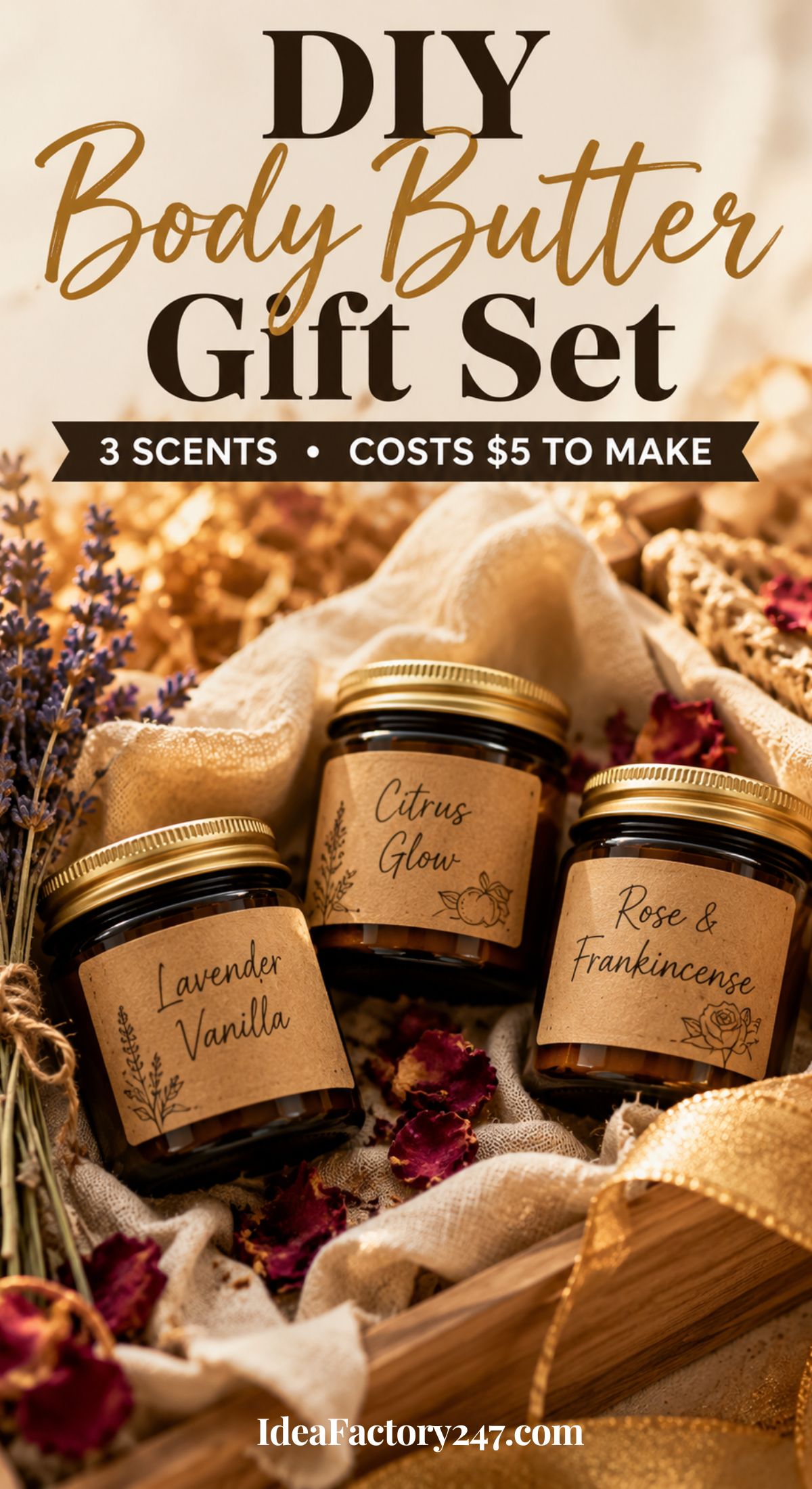
Glass jars are the move. 4 oz amber glass jars with gold lids are widely available on Amazon and look significantly more elevated than plastic containers. A Kraft label with the butter name, key ingredients, and date tied with a piece of twine takes it from homemade to handcrafted.
Bundle by scent family. Three jars — lavender vanilla (calming), citrus glow (energizing), and unscented (sensitive) — packaged in a small wooden crate or linen-lined box make a genuinely thoughtful gift set that works for almost anyone.
Season your scents. Warm, spiced butters (gingerbread, peppermint mocha, vanilla) are perfect for fall and holiday giving. Check out our Gingerbread Body Butter, Peppermint Mocha Body Butter, and Gingerbread Latte Body Butter for holiday-specific recipes already on the site.
Shelf life note for gifting: Always label your jars with the date made and a “use within 3 months” note. It’s an honest, helpful detail that also signals the product is genuinely fresh and handmade — which adds to its value rather than detracting from it.
DIY Whipped Body Butter: Frequently Asked Questions
What’s the difference between body butter and body lotion?
The main difference is water content. Body lotion is typically 60–80% water, which requires emulsifiers and preservatives to keep the oil and water blended — and evaporates quickly off skin. Body butter contains zero water — it’s 100% oils and butters, which means every ingredient stays on your skin and the moisturizing effect lasts significantly longer. You also use far less of it per application.
How long does homemade body butter last?
Properly made and stored, whipped body butter lasts 3–6 months at room temperature. The limiting factor is the carrier oils, which can go rancid over time — adding vitamin E oil extends shelf life naturally. Keep your butter away from direct sunlight and heat, and always use clean hands or a spatula to scoop from the jar (water and bacteria from wet hands shortens shelf life significantly).
Can I use body butter on my face?
With caution. Body butter is richer than most facial moisturizers and can clog pores for acne-prone or oily skin types. For dry or mature skin, a small amount of the unscented Recipe 06 or the rose and frankincense Recipe 04 can work beautifully as an overnight face treatment. Avoid any recipe with fragrance on the face, and always patch test first.
Why did my body butter turn grainy?
Graininess in shea butter happens when it’s cooled too slowly — the fatty acids crystallize unevenly as they solidify. It doesn’t affect the skin benefit, just the texture. To prevent it, cool your melted butter quickly using an ice bath or freezer, then whip while still cool. If your butter is already grainy, you can re-melt, re-cool quickly, and re-whip to fix it.
Can I use fragrance oils instead of essential oils?
Yes — fragrance oils work well in body butter and are significantly cheaper than essential oils for scenting large batches. Use skin-safe fragrance oils specifically (not candle or craft fragrance oils, which aren’t formulated for skin contact). Reduce the drop count slightly compared to essential oils since fragrance oils tend to be more concentrated aromatically.
Is homemade body butter safe during pregnancy?
The base recipe without essential oils is generally considered safe. However, several essential oils are contraindicated during pregnancy — including clary sage, rosemary, and some citrus oils in high concentrations. The unscented Recipe 06 is the safest choice during pregnancy. If you want a scented version, consult your healthcare provider about which specific oils are appropriate for your trimester.
Found Your New Body Butter Recipe?
Save this to your DIY Beauty or Natural Skincare board — and share it with anyone who’s been buying $30 body lotion when they could be making something better for $5
Please note: This website contains affiliate links. As an Amazon Associate, we earn from qualifying purchases at no additional cost to you.
.