Please note: This website contains affiliate links. As an Amazon Associate, we earn from qualifying purchases at no additional cost to you.
.
I used to think it was obvious what dogs shouldn’t eat.
Chocolate? Obviously no.
Grapes? Maybe?
That one bite of whatever I’m eating? Surely fine… right?
Turns out, a lot of foods that feel harmless — or even healthy for humans — can be dangerous for dogs. And some of them are sitting in your kitchen right now.
This guide breaks down foods dogs should never eat, why they’re unsafe, and what to do if your dog accidentally gets into something he shouldn’t. No fear-mongering, no overcomplication — just clear, helpful info every dog owner should know.
Why Some Human Foods Are Dangerous for Dogs
Dogs don’t process food the same way humans do. Their bodies handle toxins, fats, and certain compounds very differently, which means foods that are perfectly safe for us can cause serious problems for them.
Some foods are:
- Toxic even in small amounts
- Dangerous when eaten repeatedly over time
- Risky depending on a dog’s size, age, or health
And unfortunately, dogs are very confident eaters.
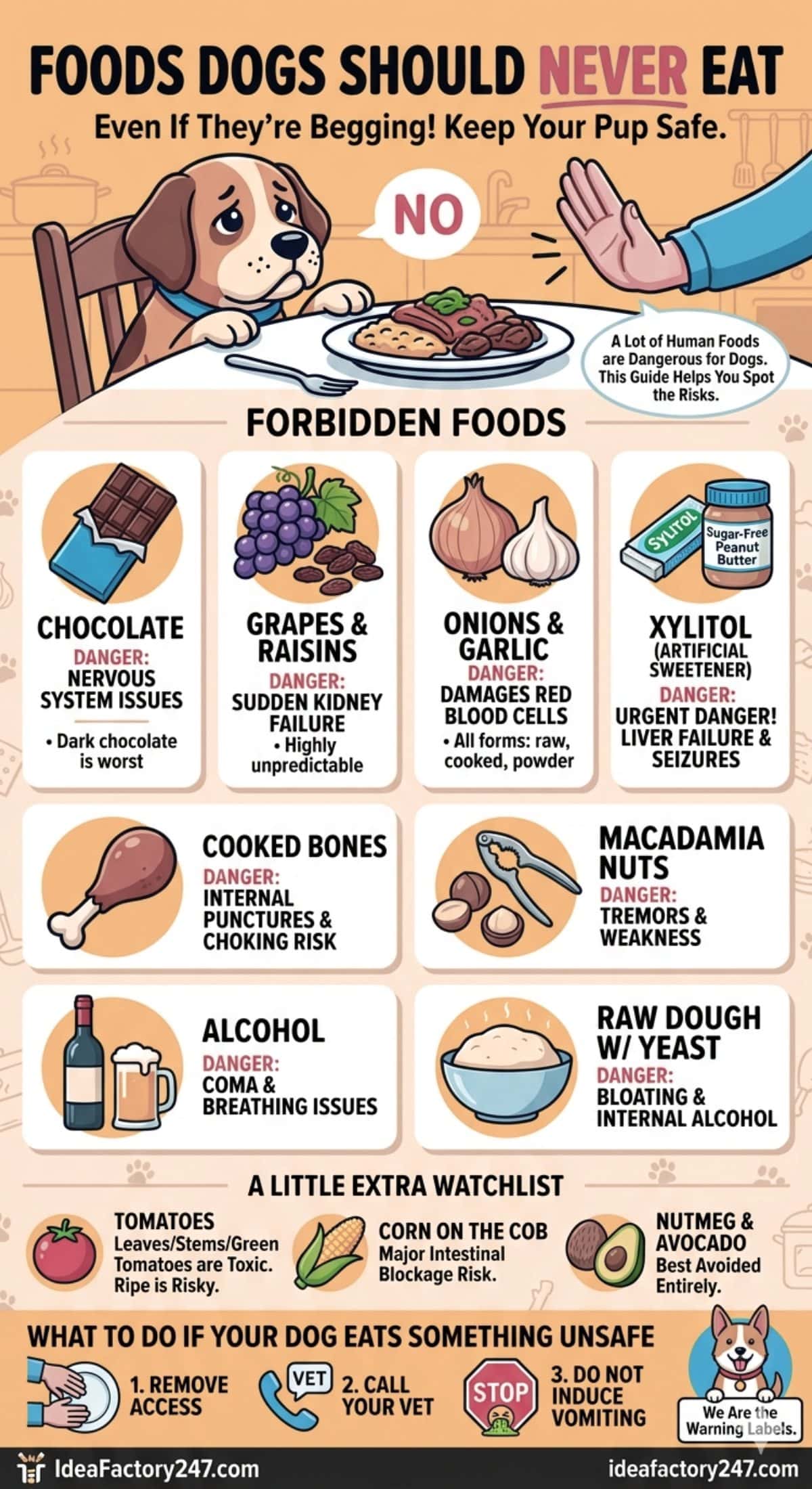
Foods Dogs Should Never Eat (Ever)
Chocolate
Chocolate contains theobromine and caffeine, which dogs can’t metabolize properly. Why it’s dangerous:
- Can cause vomiting, tremors, seizures, heart issues
- Dark chocolate and baking chocolate are especially toxic
Even small amounts can be dangerous, particularly for small dogs.
Grapes and Raisins
This one surprises many dog owners.
Why they’re dangerous:
- Can cause sudden kidney failure
- Toxicity is unpredictable — even one or two grapes can be serious
There is no known safe amount.
Onions, Garlic, and Chives (All Forms)
These are part of the allium family and are always unsafe. This includes:
- Raw or cooked onions
- Onion or garlic powder
- Foods seasoned with them (soups, sauces, takeout)
Why they’re dangerous:
- Damage red blood cells
- Can lead to anemia
- Toxicity can build over time
There is no safe amount — even small exposures add up.
Xylitol (Artificial Sweetener)
Found in sugar-free gum, candy, baked goods, peanut butter, and toothpaste.
Why it’s dangerous:
- Causes rapid insulin release
- Leads to dangerous drops in blood sugar
- Can cause liver failure
This is one of the most urgent food-related emergencies for dogs.
Alcohol
Our sweet fur babies are EXTREMELY sensitive to alcohol. Why it’s dangerous:
- Causes vomiting, coordination problems, breathing issues
- Can lead to coma or death
Even a small amount is too much.
Macadamia Nuts
These are toxic to dogs, even though the exact mechanism isn’t fully understood.
Why they’re dangerous:
- Can cause weakness, vomiting, tremors, fever
- Symptoms can appear within hours
Other nuts aren’t ideal, but macadamia nuts are especially dangerous.
Cooked Bones
This includes chicken, turkey, pork, and beef bones. Why they’re dangerous for your pup:
- Can splinter and cause choking
- Risk of internal punctures or intestinal blockages
Cooked bones are always unsafe.
Fatty and Greasy Foods
Think bacon, sausage, fried foods, and table scraps. Why they’re dangerous:
- Can trigger pancreatitis
- Cause vomiting, diarrhea, and abdominal pain
Even “just a bite” can cause issues for some dogs.
Caffeine
Coffee, tea, energy drinks, chocolate, and pre-workout supplements all contain caffeine. Why it’s dangerous for your dog:
- Affects the nervous system and heart
- Can cause restlessness, tremors, seizures
Best Way to Remember: If it perks you up, it’s not dog-safe.
Raw Dough with Yeast
Raw dough continues to rise in a dog’s stomach.
Why it’s dangerous:
- Causes bloating and pain
- Fermentation produces alcohol internally
This can quickly become an emergency.
What About Tomatoes and Onions?
These two foods cause a lot of confusion.
Onions: Always unsafe. No exceptions.
Onions damage red blood cells in dogs and can lead to anemia. This includes raw, cooked, powdered, and foods made with onions.
Bottom line: Never share onions or onion-containing foods.
Tomatoes… are more complicated.
The tomato plant itself (leaves, stems, and unripe green tomatoes) contains solanine, which is toxic to dogs. Ripe red tomatoes contain much lower levels and aren’t considered highly toxic, but they can still cause stomach upset and are often eaten as part of foods that contain unsafe ingredients like onion and garlic.
Bottom line: A tiny piece of ripe tomato likely won’t cause harm, but tomatoes aren’t worth the risk. There are much safer veggie options.
Other Foods Dogs Should Never Eat (Often Overlooked)
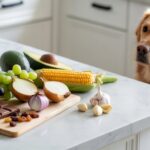
Avocado
Contains persin (a fungicidal toxin) and poses choking risk from the pit. Best avoided entirely.
Corn on the Cob
Corn itself isn’t toxic, but the cob can cause serious intestinal blockages. Always a hard no.
Mushrooms (Wild or Unknown)
Wild mushrooms can be extremely toxic, and it’s nearly impossible to tell which are safe.
Skip mushrooms unless a vet confirms safety.
Nutmeg
Contains compounds that can cause neurological symptoms and seizures.
Especially common in holiday foods.
Raw Potatoes and Green Potato Skins
Contain solanine, which is toxic to dogs.
Cooked potatoes are different — raw is unsafe.
Fruit Pits and Seeds
Pits and seeds from cherries, peaches, plums, and apples pose risks of cyanide exposure, choking, and blockages.
Never allow access.
Salty Snacks
This was a surprising one for the dog-lovin’ team at Idea Factory! But chips, pretzels, salted popcorn, and processed snacks can cause sodium toxicity.
Plain, air-popped popcorn without salt or butter is sometimes okay — most snack versions are not.
Raw Eggs
Pose salmonella risk and may interfere with nutrient absorption. Cooked eggs are safer.
Raw Fish and Raw Meat Scraps
Can contain parasites and harmful bacteria.
Raw diets should only be done under veterinary guidance.
“But My Dog Ate This Once and Was Fine…”
This is common — and misleading.
Some toxic foods don’t cause immediate symptoms. Others affect dogs differently depending on size or health. Just because nothing happened last time doesn’t mean it’s safe.
Dogs don’t get warning labels. We are the warning labels.
What to Do If Your Dog Eats Something Unsafe
If you suspect your dog ate something toxic:
- Remove access immediately
- Call your vet or an emergency clinic
- Contact a pet poison helpline if needed
Do not induce vomiting unless directed by a professional.
FAQ: Quick Answers Dog Owners Ask Late at Night
Can dogs eat table scraps at all?
Some human foods are safe, but many aren’t. It’s best to know what’s safe before sharing anything.
Is peanut butter safe for dogs?
Only if it does not contain xylitol. Always check the label.
What’s the most dangerous food for dogs?
Xylitol, grapes/raisins, onions, and chocolate are among the most serious.
Should I keep a list of toxic foods handy?
Yes — especially if you have kids, guests, or a counter-surfing dog.
Foods Dogs Should NEVER Eat
Here’s a quick summary of everything we covered. All of these foods are unsafe for dogs:
Toxic Foods (Always a No)
- Chocolate (especially dark & baking chocolate)
- Grapes & raisins
- Onions (raw, cooked, powdered)
- Garlic & chives
- Xylitol (sugar-free gum, candy, peanut butter, toothpaste)
- Alcohol
- Caffeine (coffee, tea, energy drinks, pre-workout)
- Macadamia nuts
Dangerous Foods That Cause Blockages or Injury
- Cooked bones (any kind)
- Corn on the cob
- Fruit pits & seeds (cherries, peaches, plums, apples)
- Avocado pit
Foods That Can Cause Serious Illness
- Fatty or greasy foods (bacon, sausage, fried foods)
- Raw dough with yeast
- Raw eggs
- Raw fish or raw meat scraps
Plants & Produce to Avoid
- Tomato plant parts (leaves, stems, unripe green tomatoes)
- Raw potatoes or green potato skins
- Wild or unknown mushrooms
High-Risk Snacks
- Salty snacks (chips, pretzels, salted popcorn)
- Foods heavily seasoned with onion/garlic powders
- Holiday foods with nutmeg
PIN THIS FOR LATER:
Final Thoughts
Most dog owners don’t feed dangerous foods on purpose. Accidents happen because the rules aren’t always obvious — and dogs are extremely convincing.
Knowing what not to feed your dog is just as important as knowing what’s healthy. Once you’ve got this list down, everything else — treats, recipes, snacks — becomes easier and safer.
Please note: This website contains affiliate links. As an Amazon Associate, we earn from qualifying purchases at no additional cost to you.
.