

Please note: This website contains affiliate links. As an Amazon Associate, we earn from qualifying purchases at no additional cost to you.
.
(And how to “spice it up” without walking farther)
I used to think walks were simple.
Leash on.
Same route.
Same pace.
Same fire hydrant that Archie insists needs a full investigation every single time.
But then I noticed something.
Some days, Archie trots happily along like this is the highlight of his life.
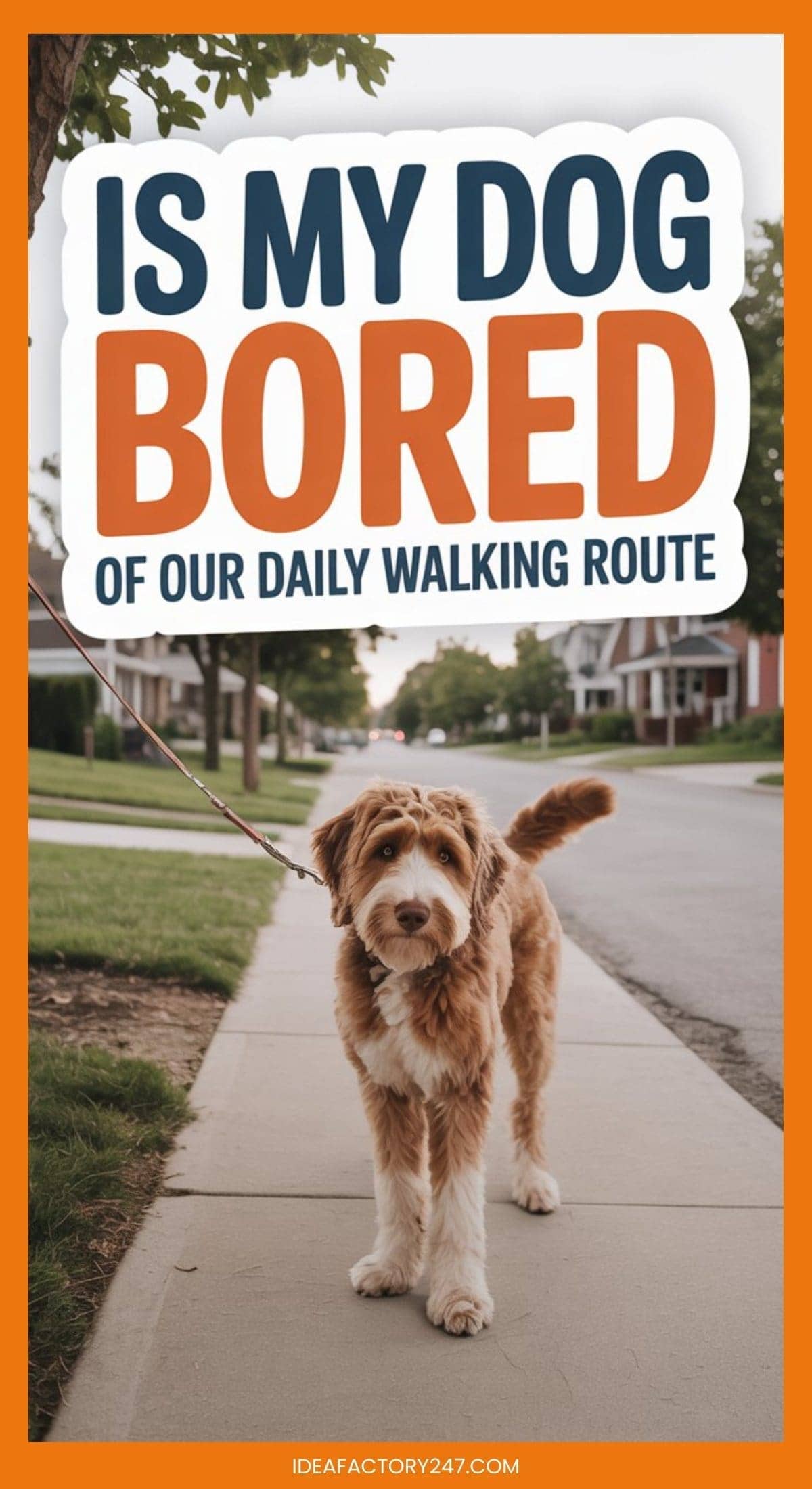
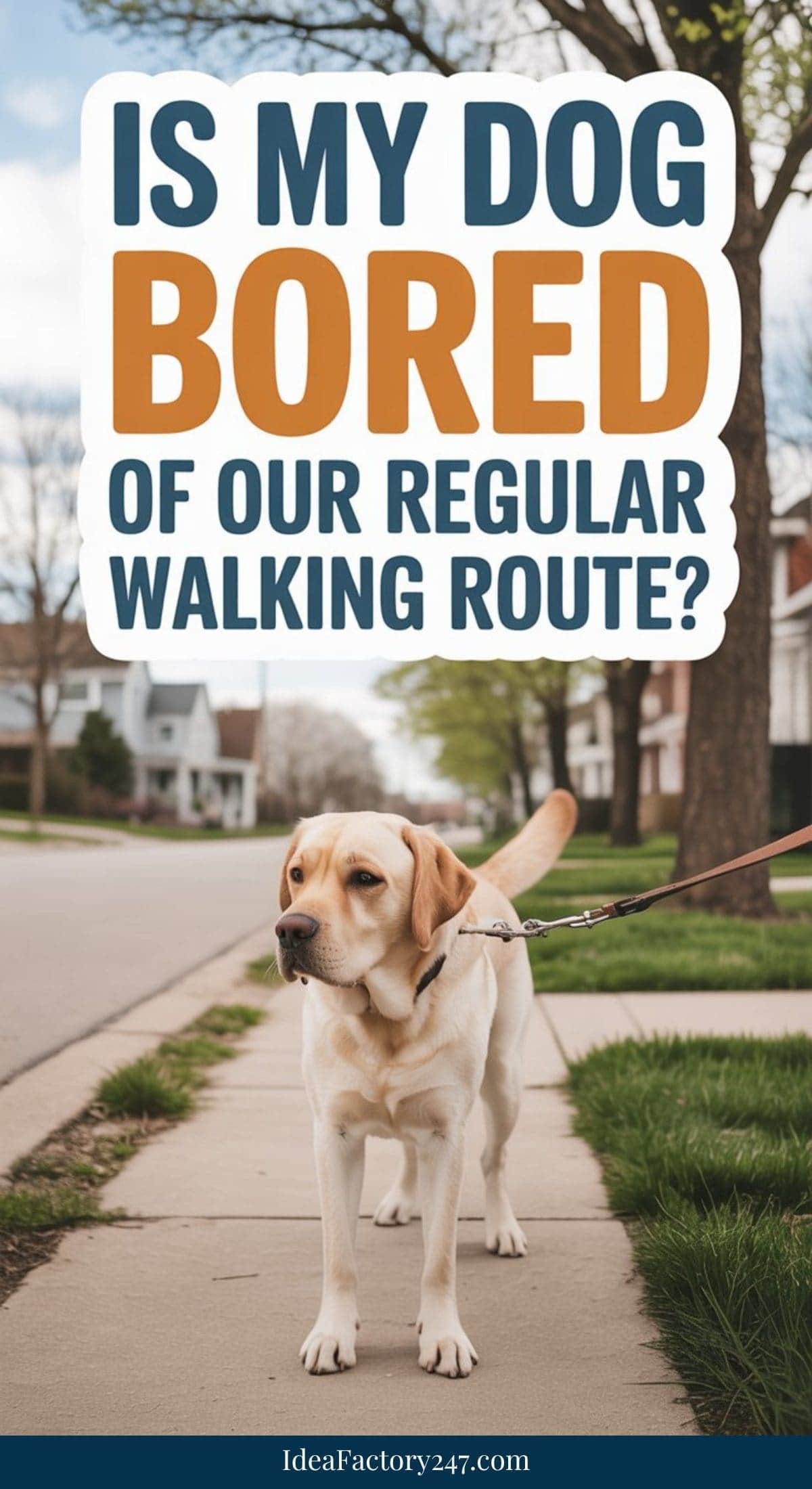
Other days? He drags his feet, stops constantly, sighs (of course), and looks at me like, “We’ve done this before. Many times.”
Which led me to the inevitable question:
Is my dog bored of the same walk every day… or am I projecting? 🙂
Turns out, it’s a little of both — and the good news is, you don’t need to add miles to make walks more exciting.
Short Answer: Yes, Dogs Can Get Bored of Repetitive Walks
But not for the reason most of us think.
Dogs don’t experience walks the way we do. For us, it’s exercise. For them, it’s information.
Every walk is basically your dog scrolling the neighborhood news feed:
- Who was here?
- What did they eat?
- Why does this bush smell emotionally complicated?
When the route never changes, the “news” gets stale.
So if Archie seems underwhelmed, it’s usually not because he hates walking — it’s because he already knows today’s headlines.
Why the Same Walk Can Feel Boring to Dogs
1. There’s Nothing New to Smell
Smell is everything to dogs. When a route doesn’t change, the sensory payoff drops. Same smells, same order, same ending.
To Archie, it’s like rereading the same chapter every day.
2. Your Dog Knows Exactly What’s Coming
Dogs love routine… until it becomes too predictable.
If your dog knows:
- where you’ll turn
- when you’ll head home
- which house has the barking dog
The walk loses its mystery. And dogs love mystery.
3. The Walk Is Physically Easy but Mentally Boring
This one surprised me.
A dog can get plenty of steps and still be under-stimulated. Physical movement doesn’t automatically equal mental engagement — and boredom is often mental, not physical.
How I “Spice Up” Walks Without Walking Farther
Because let’s be honest — sometimes longer walks are not happening.
Here’s what actually works for Archie:
Change the Direction, Not the Distance
Even taking the same route backward can feel brand new. Smells hit differently. The order changes. Suddenly, the walk feels fresh without being longer.
Let Your Dog Lead (Sometimes)
Instead of rushing, I’ll let Archie choose where to stop or sniff longer.
A slow sniffy walk = a mentally tiring walk.
And a mentally tired dog is a happy dog.
Add Tiny “Jobs” to the Walk
I’ll occasionally:
- Ask Archie to sit before crossing
- Practice a quick “look at me”
- Pause and reward calm behavior
These micro-tasks keep his brain engaged without turning the walk into boot camp.
Change the Purpose of the Walk
Not every walk has to be cardio.
Some walks are:
- Sniff walks
- Decompression walks
- “We are just vibing” walks
Once I stopped trying to make every walk productive, Archie seemed way more into it.
Rotate Walk Gear
This sounds silly, but it works.
A different leash, harness, or even time of day changes the experience. Archie absolutely notices — and sometimes that novelty alone boosts enthusiasm.
What Dog Training Experts Say About Daily Walks
I felt much better about my “same walk, different vibes” theory once I realized dog training experts basically agree: there’s no single right way to walk your dog. It really depends on the dog.
Here’s the high-level consensus from trainers and behavior pros.
Variety Can Prevent Mental Boredom
Dog behavior experts explain that dogs experience walks primarily through their noses, not their legs. When dogs walk the same route every day, the sensory experience can become less stimulating over time. Mixing up routes, walking the same route in a different direction, or simply allowing more sniffing can add mental enrichment without increasing distance.
This backs up exactly what I see with Archie — when the smells change, his enthusiasm magically returns.
Familiar Routes Can Be Comforting for Anxious Dogs
Trainers also point out that routine can be incredibly calming, especially for dogs who are anxious, reactive, or easily overwhelmed. Familiar walking routes provide predictability, which helps these dogs feel safe and confident. For some dogs, constantly changing routes can actually increase stress rather than reduce boredom.
In other words, if your dog seems relaxed and happy walking the same route every day, there’s no need to fix what isn’t broken.
Mental Stimulation Matters as Much as Physical Exercise
Many dog training experts emphasize that a walk’s value isn’t measured in miles — it’s measured in engagement. Letting dogs sniff, pause, explore, and even choose parts of the walk provides mental stimulation that can be just as tiring and satisfying as physical exercise. This type of enrichment can help reduce boredom and improve overall behavior.
This explains why some of Archie’s shortest walks — the slow, sniff-heavy ones — leave him more content than longer, faster routes.
The Takeaway (According to the Pros)
Most trainers recommend finding a balance. Stick with familiar routes if your dog thrives on routine or struggles with anxiety, add novelty through sniffing and small changes when boredom shows up, and focus on mental engagement rather than distance alone.
Which basically means your dog isn’t bored because you’re doing something wrong. You just need to adjust the walk to him — not the other way around.
Signs Your Dog Is Bored on Walks (Not Just Tired)
I’ve learned Archie is probably bored if he:
- Drags his feet early in the walk
- Stops excessively without sniffing
- Seems alert but uninterested
- Sighs dramatically mid-walk (classic)
A tired dog looks calm.
A bored dog looks… unimpressed.
You may also like this article: Is Your Dog Bored? 6 Simple Tricks to Keep Them Entertained
When the Same Walk Is Actually a Good Thing
Here’s the balance part.
Some dogs — especially anxious dogs — need predictability. The same walk can:
- Feel safe
- Reduce stress
- Provide comfort
If your dog seems relaxed, engaged, and content, repetition isn’t a problem.
The key is watching their response — not assuming boredom just because you’re bored.
Final Thoughts (From One Repetitive Walker to Another)
Archie doesn’t need longer walks.
He needs more interesting ones.
A little novelty, more sniffing, fewer expectations — that’s usually all it takes to turn a “meh” walk into a good one.
And if all else fails?
We stop.
We sniff.
We dramatically sigh together.
FAQ: Dogs & Walk Boredom
Can dogs really get bored of the same walk every day?
Yes — especially mentally. Dogs thrive on new smells and experiences, and repetition can make walks feel less engaging over time.
How can I tell if my dog is bored or just tired?
A bored dog looks alert but uninterested. A tired dog looks relaxed and satisfied. The vibe is very different.
Do I need to walk my dog farther to fix boredom?
Nope. Adding mental stimulation (sniffing, direction changes, tiny tasks) is often more effective than adding distance.
Are sniff walks better than fast-paced walks?
They serve different purposes. Sniff walks are excellent for mental enrichment and can be more tiring than a brisk walk.
Is it okay to walk the same route if my dog seems happy?
Absolutely. If your dog is engaged and content, there’s no need to change things just for the sake of change.
My dog stops constantly — is that boredom?
Not always. Stopping to sniff is normal and healthy. Stopping with no interest or enthusiasm can signal boredom.
Please note: This website contains affiliate links. As an Amazon Associate, we earn from qualifying purchases at no additional cost to you.
.