
Please note: This website contains affiliate links. As an Amazon Associate, we earn from qualifying purchases at no additional cost to you.
.
Some days you have time for a full wash, blow-dry, and style… and some days you absolutely do not. That’s where dry shampoo quietly saves the day. But store-bought versions can be pricey, overly scented, or leave that chalky residue nobody asked for.
This DIY dry shampoo is simple, customizable, and made with ingredients you probably already have. It absorbs oil, refreshes roots, and helps you stretch wash days — without aerosol cans or mystery ingredients.
Why DIY Dry Shampoo Works So Well
Dry shampoo doesn’t actually clean your hair — it absorbs excess oil at the roots so hair looks fresher. This DIY version works because it:
- Absorbs oil and shine
- Adds light volume at the roots
- Refreshes hair between washes
- Avoids heavy fragrances and buildup
It’s simple, effective, and easy to tailor to your hair color.
DIY Dry Shampoo Recipe (Basic Version)
This is the base recipe for your homemade dry shampoo — you can customize it depending on your hair shade and needs (more below!)
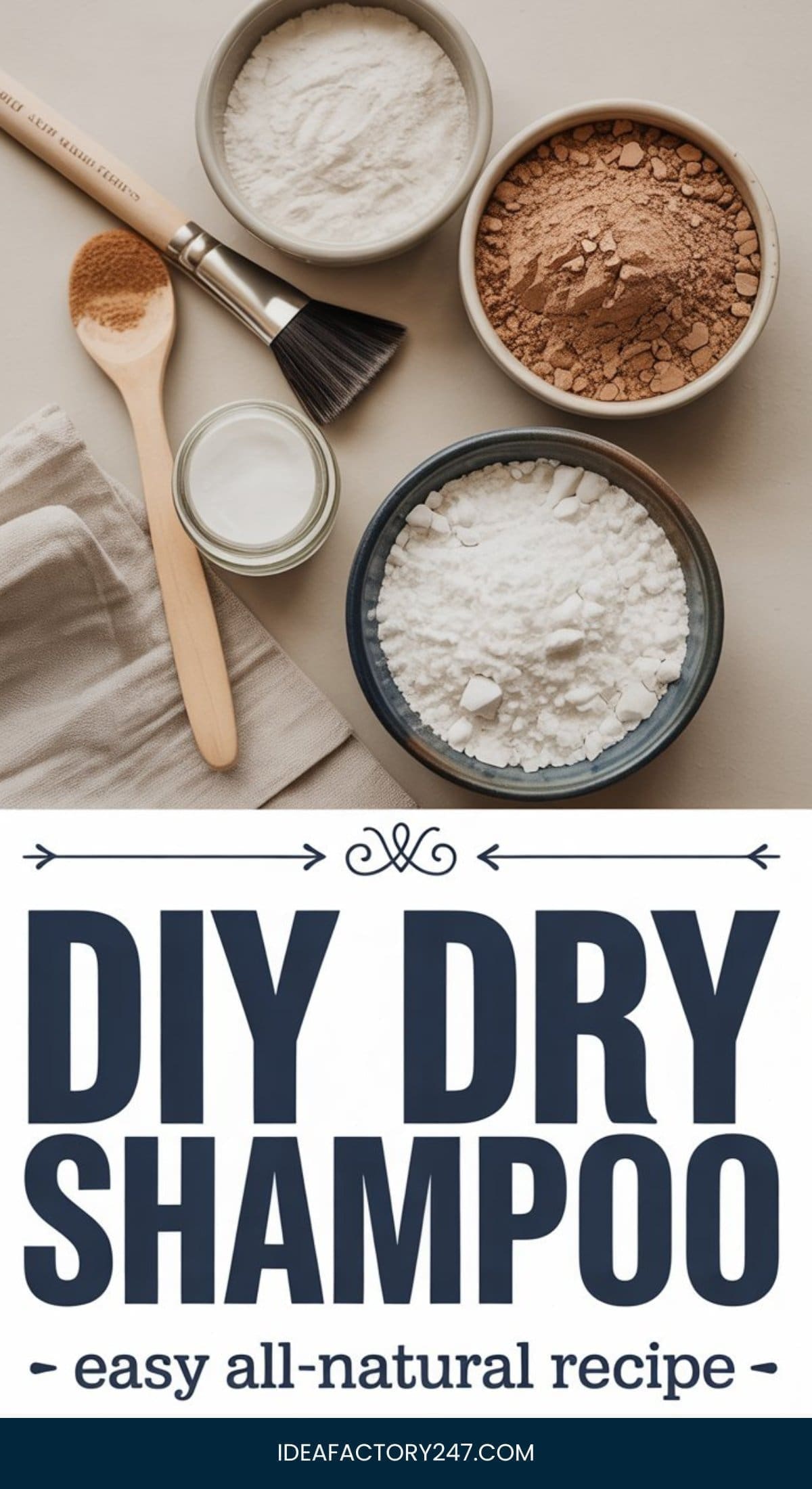
Ingredients
- ¼ cup arrowroot powder or cornstarch
- 1–2 tablespoons cocoa powder (optional, for darker hair)
- 5 drops essential oil (optional)
- Lavender for a clean scent
- Peppermint for freshness
How to Make DIY Dry Shampoo
- Add the arrowroot powder or cornstarch to a bowl.
- If needed, mix in cocoa powder gradually until the color blends well.
- Add essential oils and stir thoroughly.
- Transfer to a small jar or shaker container.
That’s it — no heating, no special tools.
How to Use Your DIY Dry Shampoo
- Apply to dry hair only.
- Dip a makeup brush or fingertips into the powder.
- Tap lightly onto roots where hair gets oily.
- Let sit for 1–2 minutes.
- Massage gently and brush through to remove excess.
Pro tip: Apply before bed and brush out in the morning for extra volume.
Custom Blends for Different Hair Types
For Blonde or Gray Hair
- Use arrowroot or cornstarch only
- Skip cocoa powder entirely
For Brunette Hair
- Add 1 tablespoon cocoa powder
- Increase slowly to avoid dark streaks
For Red Hair
- Use a mix of cocoa powder and cinnamon
- Test on a small area first
For Oily Hair
- Add 1 teaspoon baking soda
(use sparingly to avoid dryness)
How Often Should You Use Dry Shampoo?
- 1–3 times per week is ideal
- Avoid daily use to prevent buildup
- Wash hair thoroughly between uses
DIY or store-bought — moderation matters.
Who Should Be Careful Using DIY Dry Shampoo (And Helpful Tips)
DIY dry shampoo is gentle for most people, but like anything you apply to your scalp, a little awareness goes a long way. Here’s what to keep in mind.
If You Have a Very Sensitive or Reactive Scalp
If your scalp is easily irritated, itchy, or prone to redness, start slow. Apply a small amount the first time and avoid formulas with baking soda or essential oils. Stick to arrowroot powder only and use a soft brush instead of fingertips.
If You Have Active Scalp Conditions
If you deal with conditions like eczema, psoriasis, open sores, or severe dandruff, dry shampoo — DIY or store-bought — may not be the best choice. Powder can sit on the scalp and potentially worsen irritation. In these cases, it’s better to focus on gentle cleansing and treatments recommended by a professional.
If You Use a Lot of Styling Products
Dry shampoo works best on relatively clean hair. If you already use heavy styling creams, hairspray, or oils, adding dry shampoo on top can lead to buildup. Make sure you’re washing your hair thoroughly between uses.
If Your Hair Is Very Dark
DIY dry shampoo can leave visible residue if not blended well. Always add cocoa powder for darker hair and brush thoroughly after application. Less is more — you can always add a bit more if needed.
General Tips for Using DIY Dry Shampoo Safely
- Use small amounts — overapplication causes buildup
- Avoid daily use; aim for 1–3 times per week max
- Always brush out excess powder
- Wash hair regularly to reset your scalp
- Skip essential oils if you have sensitivities
Dry shampoo is meant to support your routine, not replace washing altogether.
DIY Dry Shampoo FAQs
Will this leave white residue?
Not if blended well and brushed through. Cocoa powder helps for darker hair.
Can DIY dry shampoo clog hair follicles or cause hair loss?
DIY dry shampoo itself doesn’t cause hair loss when used correctly, but overuse can lead to buildup on the scalp. Too much powder sitting on the scalp for extended periods may clog follicles or irritate the skin, which is why it’s best to use dry shampoo only a few times per week and wash hair regularly. Gentle application and thorough brushing help prevent issues.
Is this safe for color-treated hair?
Yes, when used gently and not over-applied.
Can I skip essential oils?
Absolutely. They’re optional and only for scent.
How long does it last?
Stored in a sealed container, it lasts 6–12 months.
How can I tell if DIY dry shampoo has gone bad or isn’t effective anymore?
DIY dry shampoo doesn’t spoil the same way food does, but there are a few signs it’s time to replace it. If the powder starts to smell musty, clumps together, or doesn’t absorb oil as well as it used to, it’s best to toss it and make a fresh batch. Moisture is the biggest issue — always keep it in a dry, sealed container and avoid applying it with wet hands or brushes.
When in doubt, it’s inexpensive and easy to remake, so starting fresh is always the safest option.
Can I take this on the go?
Yes — a small jar or shaker is perfect for travel or gym bags.
Can kids use DIY dry shampoo?
Yes, with a few precautions. DIY dry shampoo can be used on kids occasionally, especially for situations like school mornings, sports, or picture day — but it should be very simple. Stick to arrowroot powder or cornstarch only, skip essential oils, and apply a small amount with a soft brush. Avoid using it daily, and always brush out excess powder thoroughly.
For very young children or kids with sensitive scalps, it’s best to use it sparingly and wash hair normally when possible.
Final Thoughts
Homemade dry shampoo isn’t about perfection — it’s about practicality. This DIY version keeps things simple, affordable, and flexible, while still getting the job done.
Whether you’re stretching wash days, refreshing after a workout, or just buying yourself a little extra time, this DIY dry shampoo is one of those low-effort self-care wins that really earns its place.
You may also like these DIY Self Care Recipes:
The DIY Clay Foot Mask That Leaves Feet Baby-Soft (Naturally!)
How to Make Whipped Magnesium Body Butter | Easy DIY Recipe
DIY Coffee Scrub: The Simple Recipe for Radiant, Healthy Skin
Please note: This website contains affiliate links. As an Amazon Associate, we earn from qualifying purchases at no additional cost to you.
.