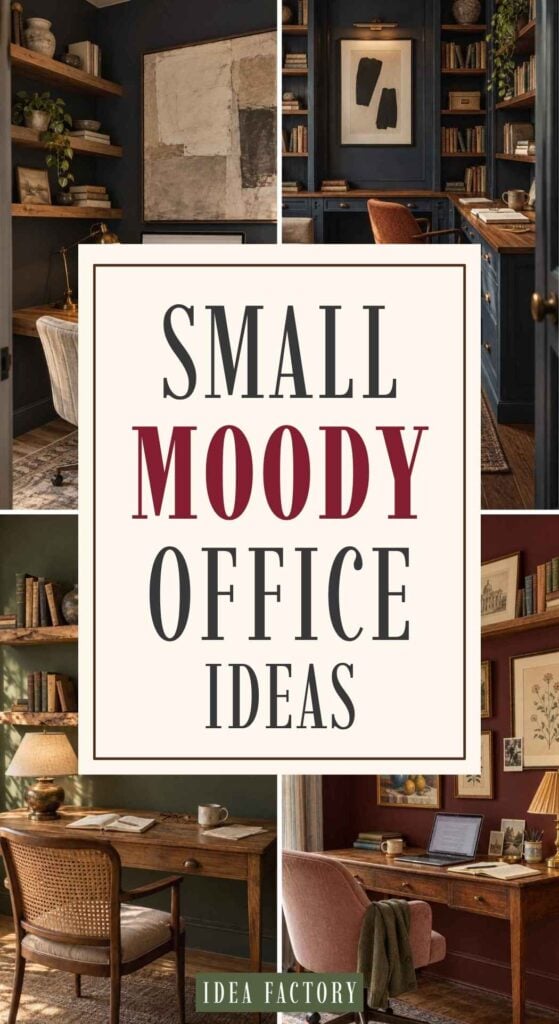
A home office doesn’t have to be bright white to help you focus.
Deep green, inky blue, charcoal, and earthy brown can make a workspace feel calm and tucked away, especially when they’re paired with good lighting and furniture that feels comfortable to use.
The offices below take different routes to that moody look. Some make use of an entire room; others fit a desk into a corner, a bookcase, or a space behind glass doors. You’ll find ideas worth borrowing whether you’re ready to paint the walls or simply want to make your current setup feel more like you.
Get Inspired: Small Moody Office Ideas
An Olive Green Home Office With a Desk That Spans the Wall
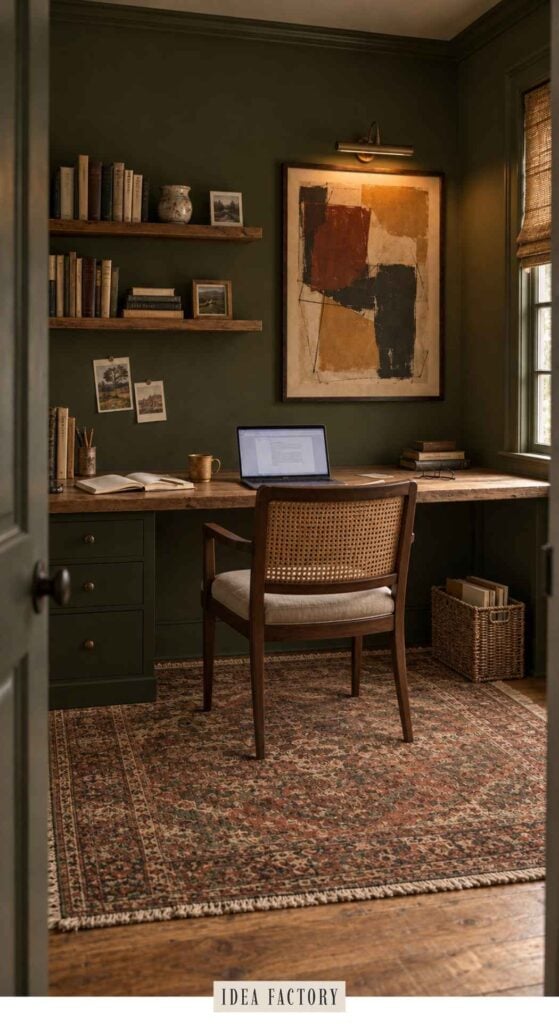
A desktop fitted across one wall gives you room to spread out without filling the floor with furniture. This works especially well in a narrow spare room: drawers handle supplies, and the open space beneath the desk keeps it from feeling crowded. The large abstract adds color, while the cane chair and worn rug make the workspace feel at home with the rest of the house.
If you’re planning a wall-length desk, decide where you’ll sit before placing drawers or supports. Leave the area around your knees open, and put your most-used storage within easy reach. Shelves on one side can hold books without making the whole wall feel busy.
A Moody Blue Workspace That Starts With the Art
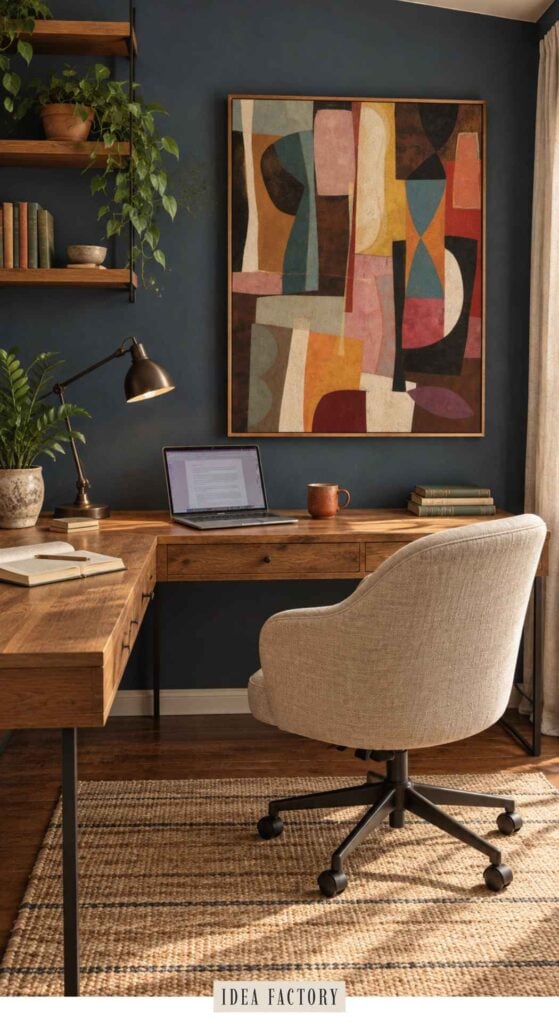
If you love color but struggle to pull a room together, start with one artwork that does the mixing for you. A piece like this offers several directions for paint, textiles, and accessories, so you can build a palette without guessing. The generous corner desktop also suits anyone who needs separate zones for computer work and writing, sketching, or planning.
Designer Tip: Choose one subdued color from the artwork for the wall, then repeat one warmer shade in a small accessory. Keep the chair and rug relatively quiet so the painting holds your attention.
A Warm Brown Office With a Wood-Slat Accent
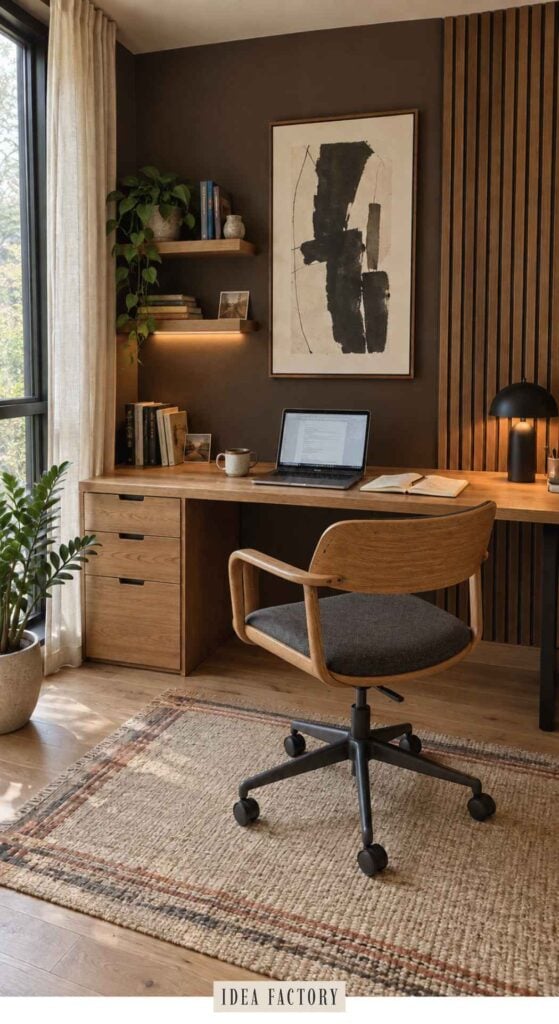
For someone who likes a calm workspace but wants more interest than a plain painted wall, a partial wood-slat feature offers a useful middle ground. The vertical lines create structure, while the brown paint connects the wood tones without requiring an exact match. One large graphic artwork provides a focal point with very little visual fuss.
You can recreate the effect on just one section of wall rather than covering the entire room. Repeat the slat’s wood tone in the desk or chair, and use a few black details to tie everything together. Conceal lighting wires and plan outlet access before fitting the panels.

Add some personality to your walls with these easy to install wood panels.
Cozy & Earthy: Moody Office Where the Wallpaper Does the Work
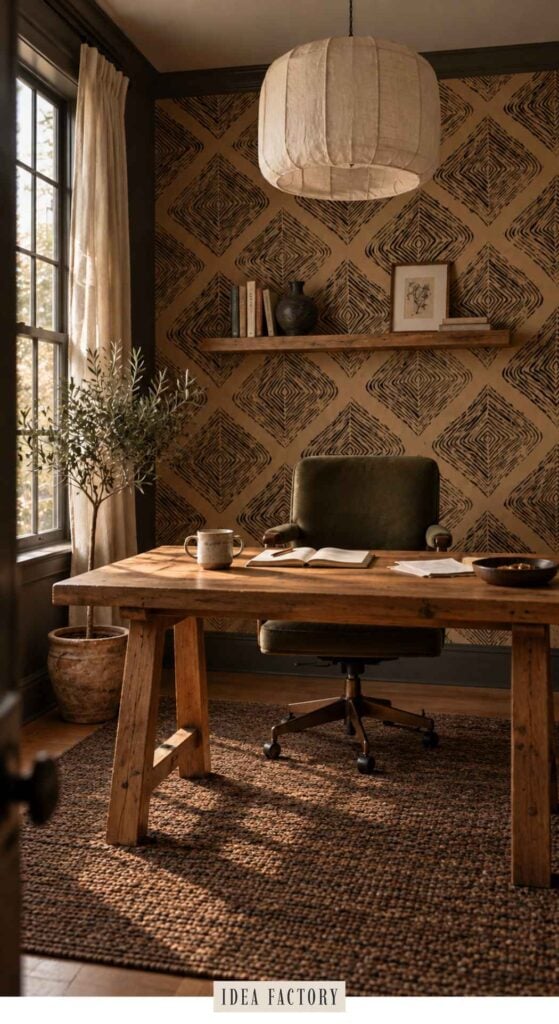
A patterned wall can give a straightforward desk setup a strong point of view. Here, the dark surrounding walls contain the bold print, and the plain, deeply textured rug gives the eye a break. One shelf offers useful storage without hiding the wallpaper that makes the room interesting.
For a similar look, bring a wallpaper sample home and view it beside your desk and rug in daylight and lamplight. Pull a dark shade from the pattern for the other walls, then keep the floor covering low in contrast.
Tip: There are some amazing peel and stick wallpaper options on Amazon, Wayfair and my personal favorite, Spoonflower.
An Aubergine Office Hidden in Plain Sight
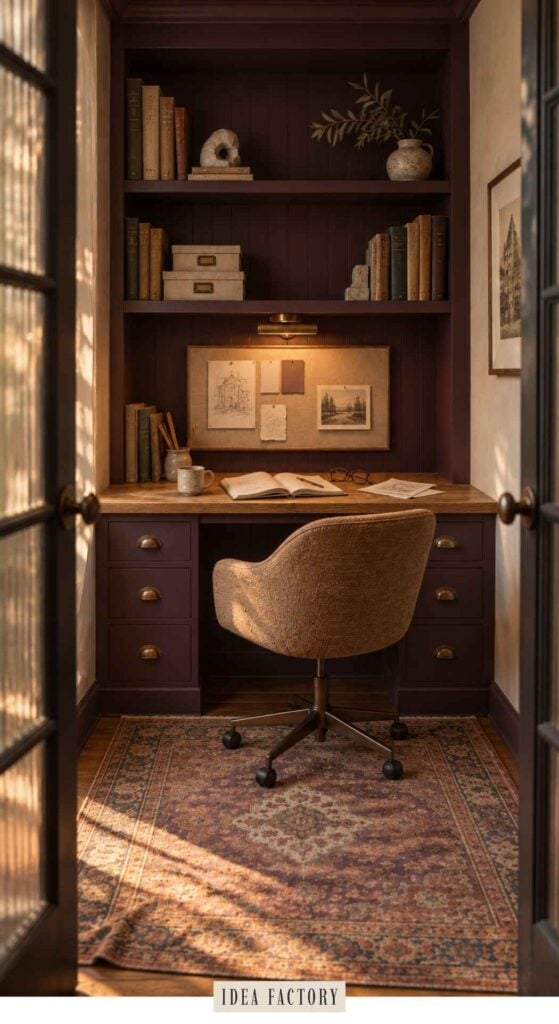
This little office makes a convincing case for using a shallow alcove or oversized closet. The desk, drawers, shelves, and pinboard all fit within one compact footprint, and the glass doors let you close off work at the end of the day. Deep aubergine cabinetry gives the small space a sense of purpose; the oak desktop keeps the work area warm.
Measure your equipment and chair before designing a nook like this. You’ll need comfortable knee space, outlets where you can reach them, and enough clearance for the chair when the doors are shut. A light beneath the shelf frees up the desktop, while a pinboard keeps current notes visible without covering it in paper.
Dark Brown Office Space With Soft Contrast
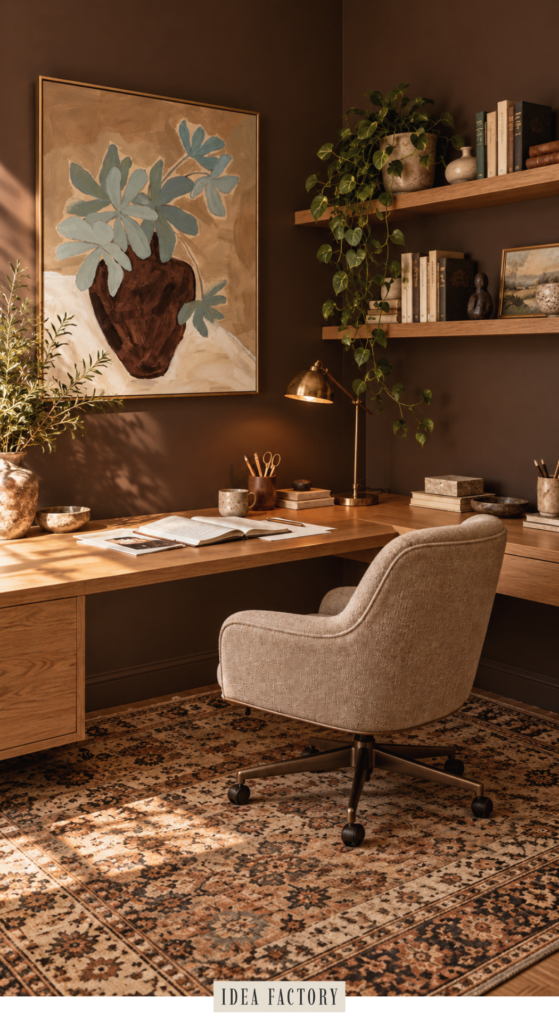
Deep brown walls make this compact office feel grounded and quiet, while the mushroom-colored upholstered chair keeps it from getting too heavy. The oversized botanical artwork brings in faded blue-green and cream, which gives the room a softer focal point than another dark accent would.
To borrow the look, start with one large piece of art that includes a few lighter tones, then repeat those colors through your chair, rug, or desk accessories. Keep the desk wood clean and simple, and use two shelves for books and the things you reach for most so the room stays useful.
A Moody Blue Office With Vintage Warmth
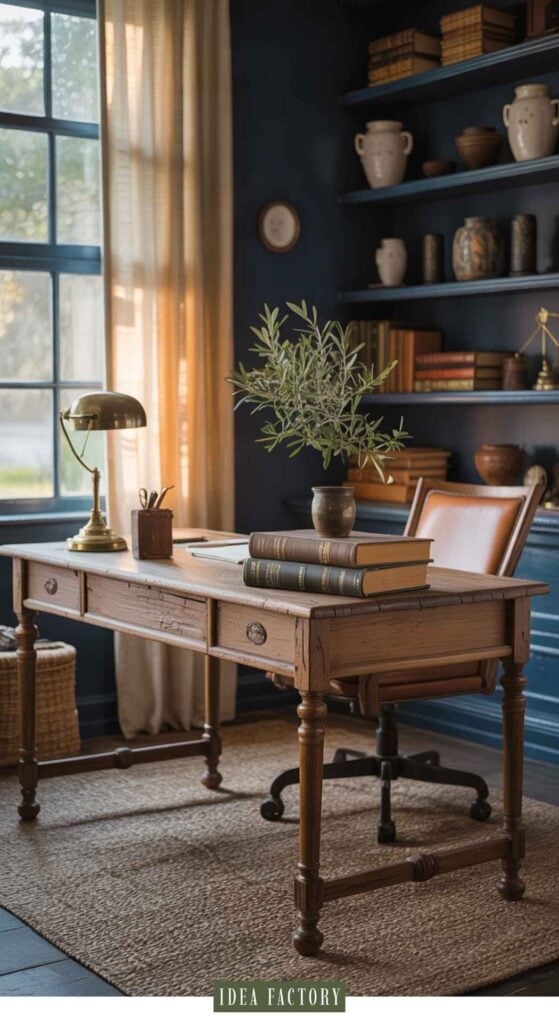
Deep blue walls and built-in shelves give this office a quieter, more tucked-away feel, while the pale wood desk keeps the room from getting too dark. The mix works because the warmer pieces do most of the softening: worn wood, brass task lighting, a neutral woven rug, and a chair with warm leather upholstery.
If you’re considering a dark blue office, pair it with wood that has a honey, oak, or medium-walnut undertone instead of cool gray finishes. A freestanding vintage-style desk is especially useful when you want the room to feel less like a row of built-ins and more like a space that has been gathered over time.
An Inky Blue Office With a Softer Side
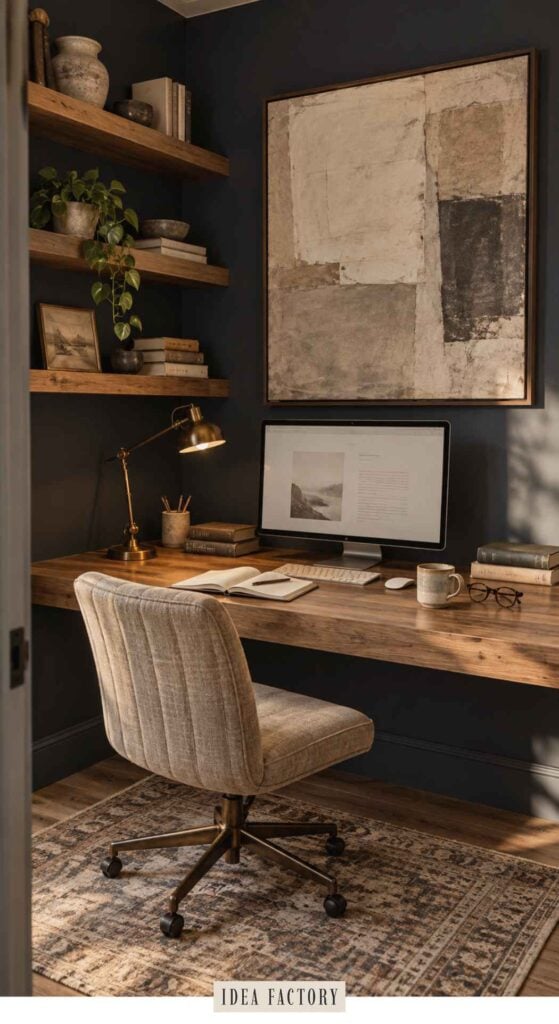
If you’re drawn to dark paint but worry the result will feel severe, give the room a few generous areas of lighter color. A large cream-and-taupe artwork breaks up the dark wall, while an upholstered chair makes the workspace feel more welcoming. You get the drama without needing bright accent colors.
Pro tip: Give the shelves breathing room above the monitor to keep your small space from feeling too crowded.
A Vintage Gallery Wall for a Working Office Space
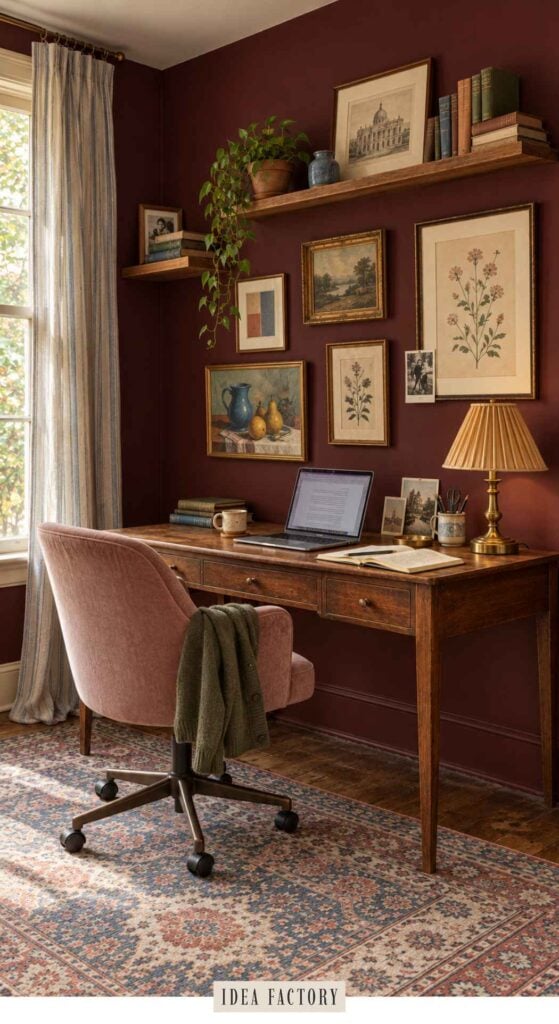
A gallery wall can make an office feel personal without asking the desk to hold every keepsake you own. This one mixes landscapes, botanical prints, and smaller finds, so the collection feels gathered over time. The soft chair and daylight keep the deep wall color from feeling too formal.
Start with two or three pieces you already love and hang them at different heights above the desk. You can add to the arrangement later; matching frames and a perfectly filled grid aren’t necessary. If you work at a screen, sit at the desk before hanging art so the lowest frames don’t crowd your sightline.
A Small Moody Office That Makes the Corner Count
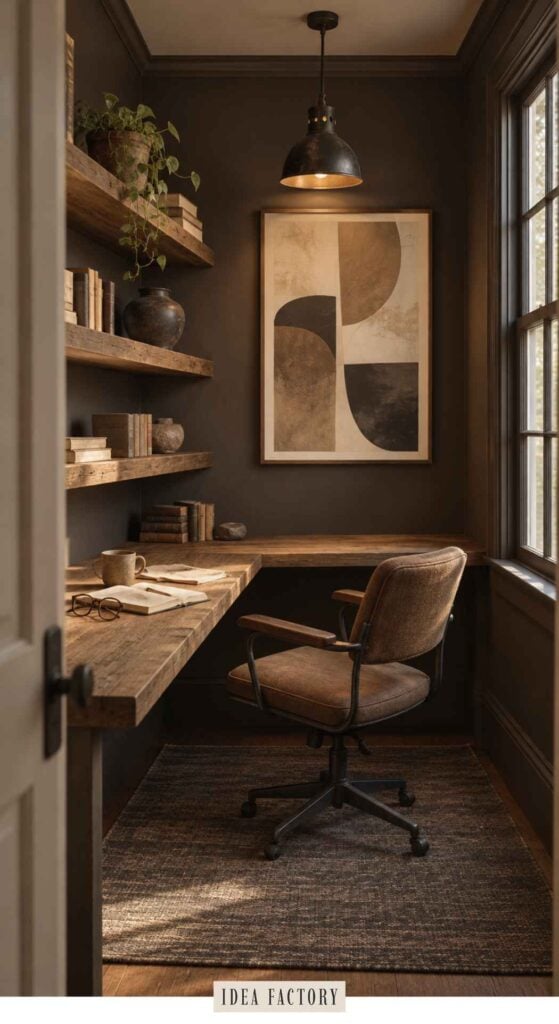
An awkward little room can become a useful office when the furniture follows its shape. A desktop that turns the corner creates space to spread out papers while keeping your main work area clear. Shelves above the return add storage without another piece of furniture competing for floor space.
For a similar setup, plan around how you’ll use each section: computer work on one side, writing or reference materials on the other. Keep the supports clear of your knees and allow room to turn your chair. Painting the window trim and walls the same deep shade helps the small space feel cohesive, while a simple pendant adds personality overhead.
A Moody Office Nook Built Into a Bookcase
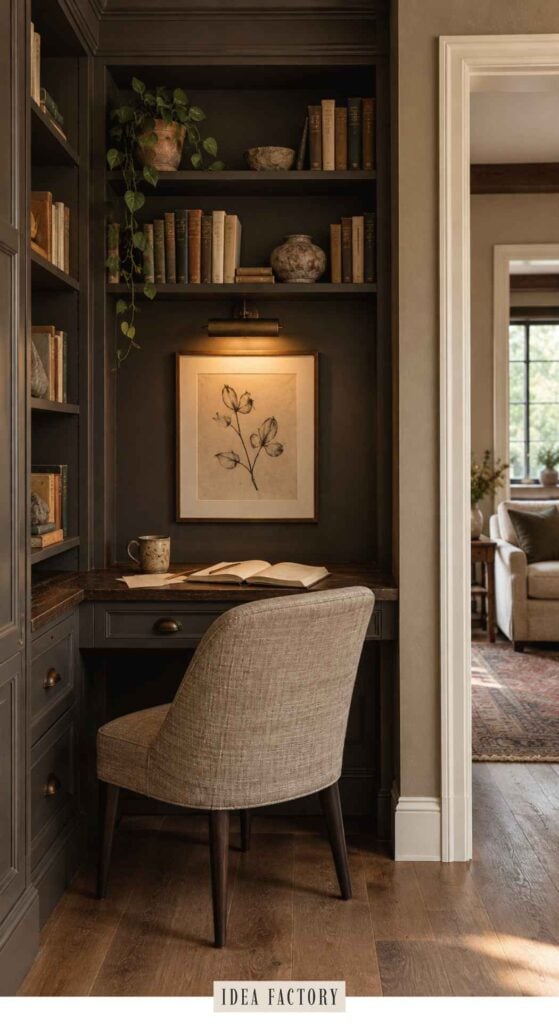
If you don’t have a room to spare, a desk tucked into a bookcase can give you a dedicated place to work without taking over the living area. The surrounding shelves hold books and supplies, while the drawers hide the everyday clutter that’s less pleasant to look at. Painting the cabinetry one deep color makes the nook feel intentional, even when it’s visible from the next room.
To borrow the idea, start with the chair and the work you need to do there: allow enough width to sit comfortably and enough depth for a laptop or monitor. Add a light beneath a shelf to illuminate the desktop, and keep the space directly in front of you relatively clear.
A Dark Feminine Office in Olive and Cream
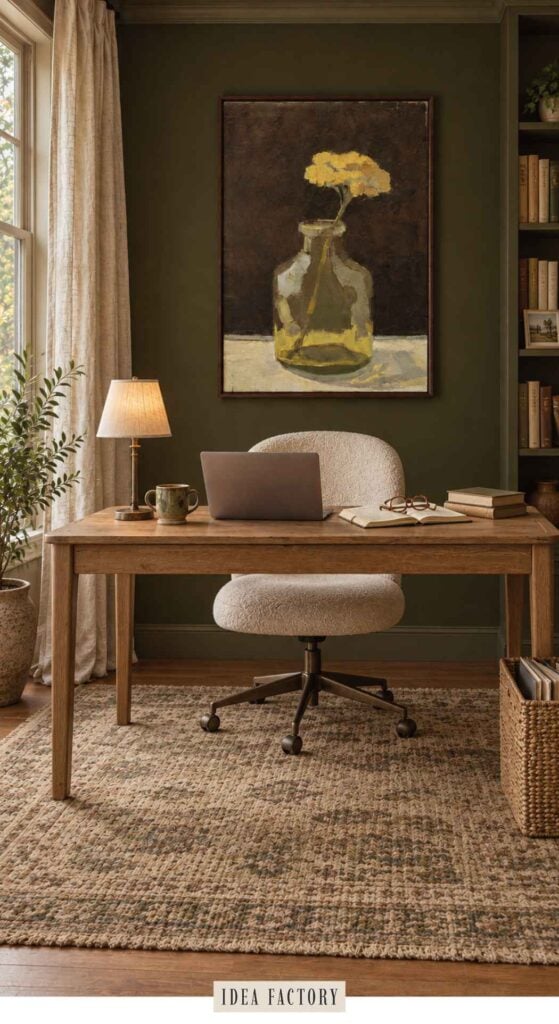
For a softer take on a moody office, pair deep olive with rounded upholstery and relaxed fabrics. The contrast gives the room its appeal: the walls feel enveloping, while the cream chair and linen curtains keep the workspace gentle and inviting. A favorite still life brings personality without requiring a whole gallery wall.
Start with artwork you love, then pull a background color from it for the walls. Choose a simple desk that lets the painting and chair stand out, and use a woven file basket to keep everyday paperwork close. If you float the desk into the room, plan a discreet route for charging cables before settling its position.
Charcoal Grey Home Office With Storage That Works Hard
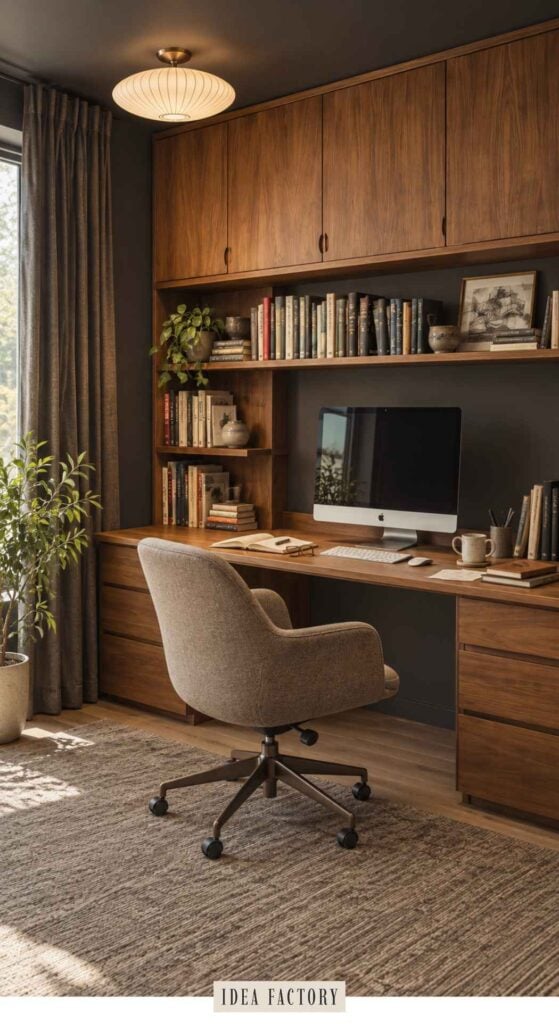
If your work comes with paperwork, equipment, and a collection of things you’d rather keep off camera, this arrangement earns its keep. Closed cabinets handle the less attractive necessities, while open shelves keep books and personal pieces within reach. The charcoal backdrop gives the wood more presence, and the upholstered chair softens all those straight lines.
To borrow the idea, combine drawer units with a wood desktop and add storage above. Check the height of your monitor before positioning the lowest shelf, and leave enough clear desktop for the work you actually do.
A Moody Blue Office With Room to Unplug
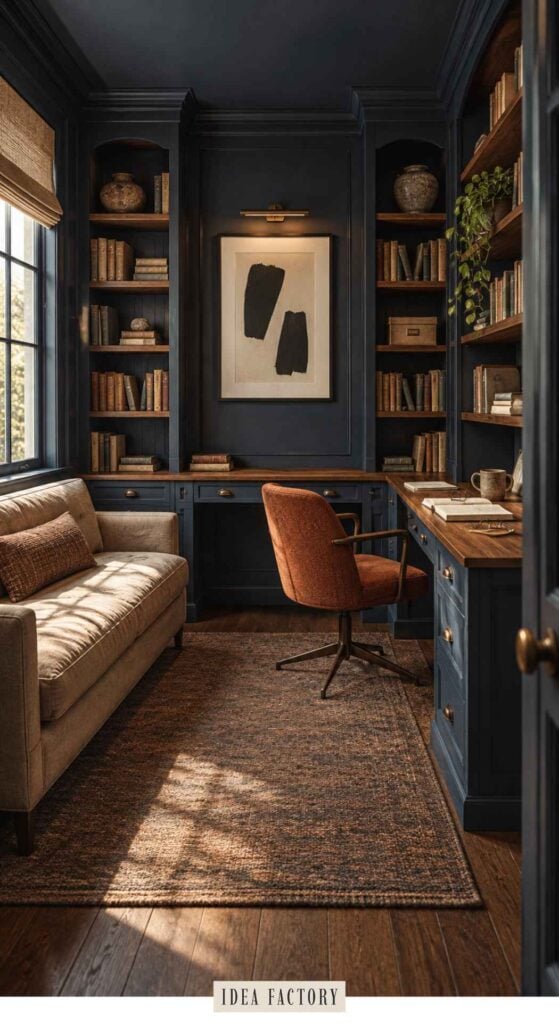
A small sofa gives an office a second purpose: somewhere to read, think through a problem, or take a call away from the desk. Deep blue paint across the walls, cabinetry, and ceiling makes the many shelves feel like part of the architecture. Rust upholstery adds warmth, while the quieter sofa fabric gives your eye somewhere to rest.
For a narrow room, measure the space with the desk chair pulled out before committing to a sofa. A compact loveseat with slim arms can provide useful seating while preserving the walkway. Keep the artwork simple when the surrounding shelves are full.
A Dark Caramel Home Office With a Vintage Map
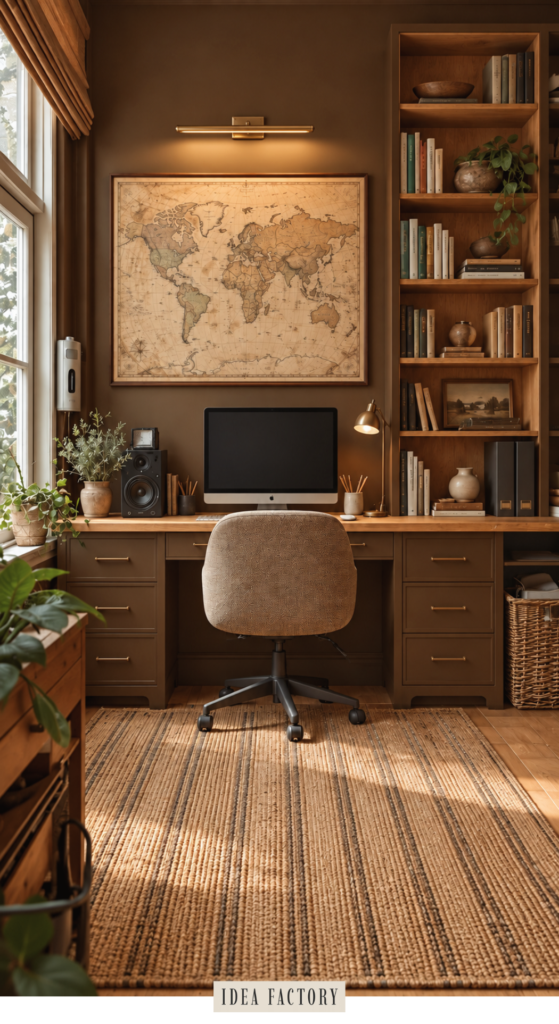
A deep caramel brown gives this office a cozy, wrapped-in feeling without making it look gloomy. The sepia map becomes the main feature, while the bookcase builds in the storage most real workspaces need. A neutral striped jute rug and upholstered chair soften the darker cabinetry and keep the room from feeling too formal.
To recreate the look, use one oversized map or architectural print instead of filling the wall with smaller art. Add a picture light above it for warm evening atmosphere, then keep shelving practical with books, files, and just a few objects you like seeing every day.
An Earthy Green Office With Live-Edge Floating Shelves
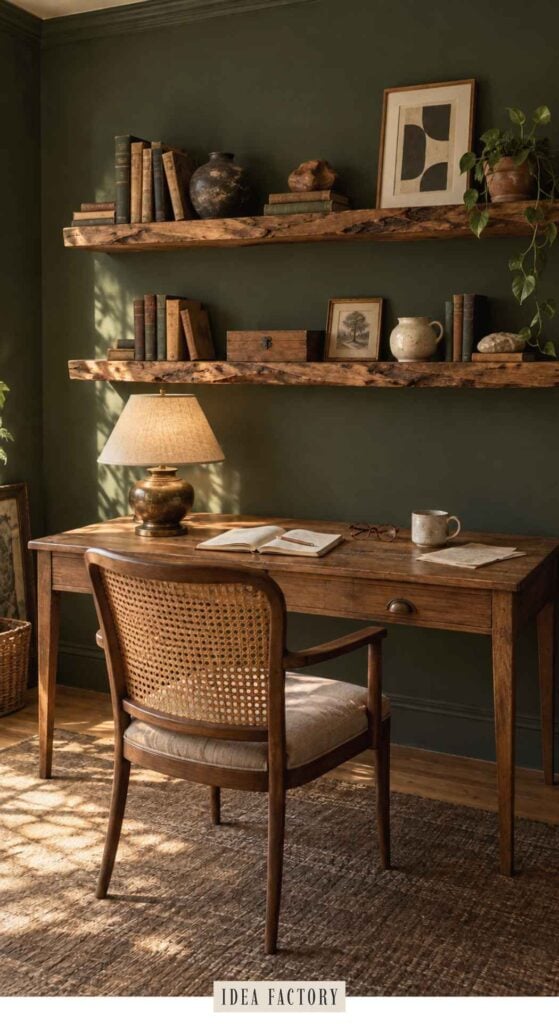
This is an approachable way to give an ordinary wall some character without investing in built-ins. The irregular wood edges bring movement to a simple arrangement, while the cane chair adds texture without making the desk area feel bulky. It’s especially appealing if you enjoy mixing vintage finds with practical everyday furniture.
Let the shelves be the main feature and choose a desk with a quieter silhouette. Group books with objects you actually like or use—a keepsake box, a small print, a favorite pitcher—rather than buying matching shelf decor. Before installing thick wood shelves, check their weight and mounting requirements.
Cozy & Collected: Vintage Home Office With a Gallery Wall
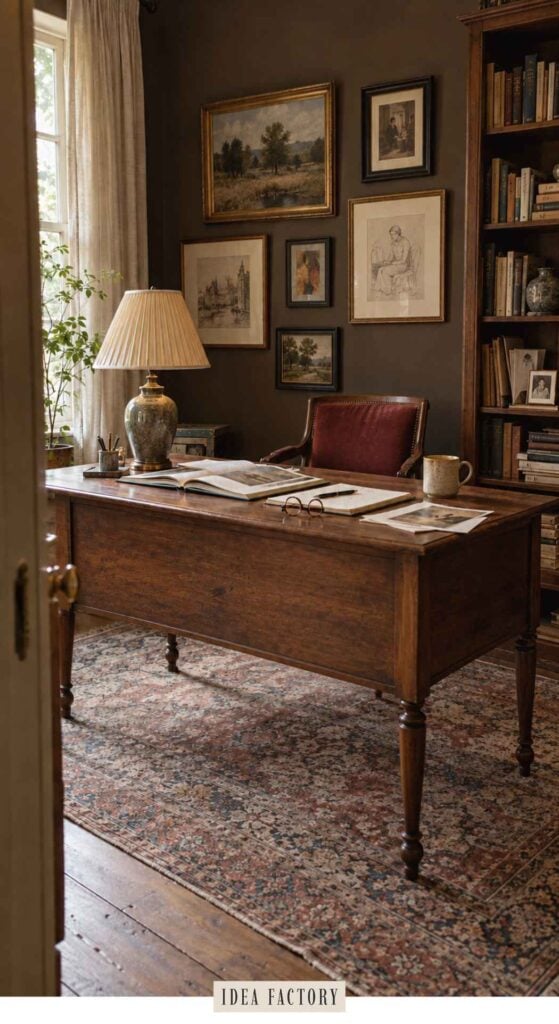
This is the kind of office that can grow with you. A freestanding desk leaves room to rearrange, while a bookcase holds the books and papers you actually use. The gallery wall makes the space personal: begin with a favorite landscape or print, then add smaller pieces as you find them. Mixed frames and subjects will feel more natural than buying a matching set all at once.
If you want the desk to face into the room, look for one with a finished back so it looks good from the doorway. Add a shaded lamp for working after the window light fades, and leave part of the desktop clear enough to open a book or spread out a project.
A Quiet Green Office With Vintage Character
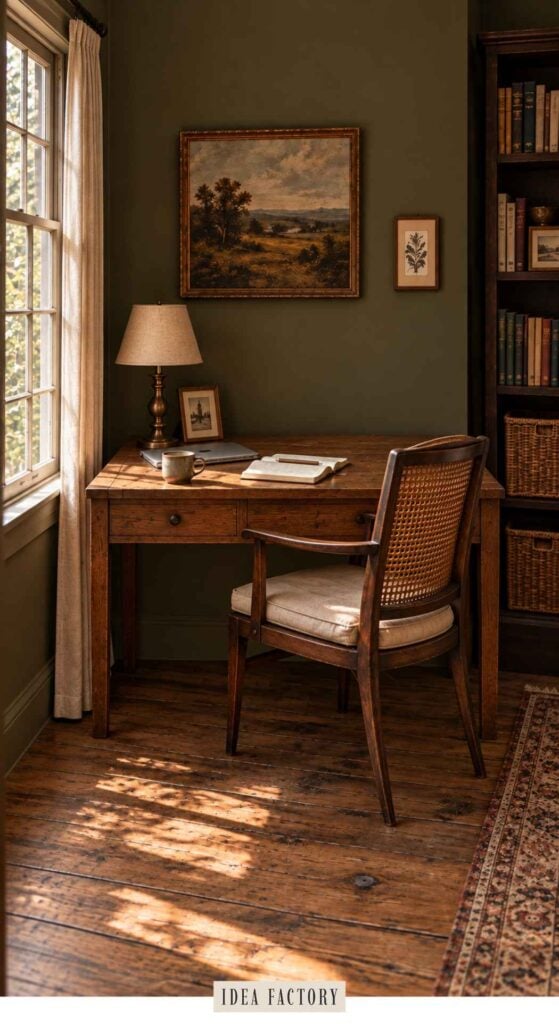
You don’t need built-ins to make a home office feel settled. An older wood desk, a comfortable cane chair, and one painting can give even a simple corner a sense of history. Placing the desk near the window brings daylight to your work, while a table lamp makes the same spot useful after dark.
This is a good direction if you’re furnishing an office gradually. Start with a secondhand desk you genuinely like, then add storage only as you learn what you need to keep nearby. Leave enough space to pull the chair back comfortably, especially if a bookcase sits beside it.
A Colorful Mid-Century Office in Terracotta
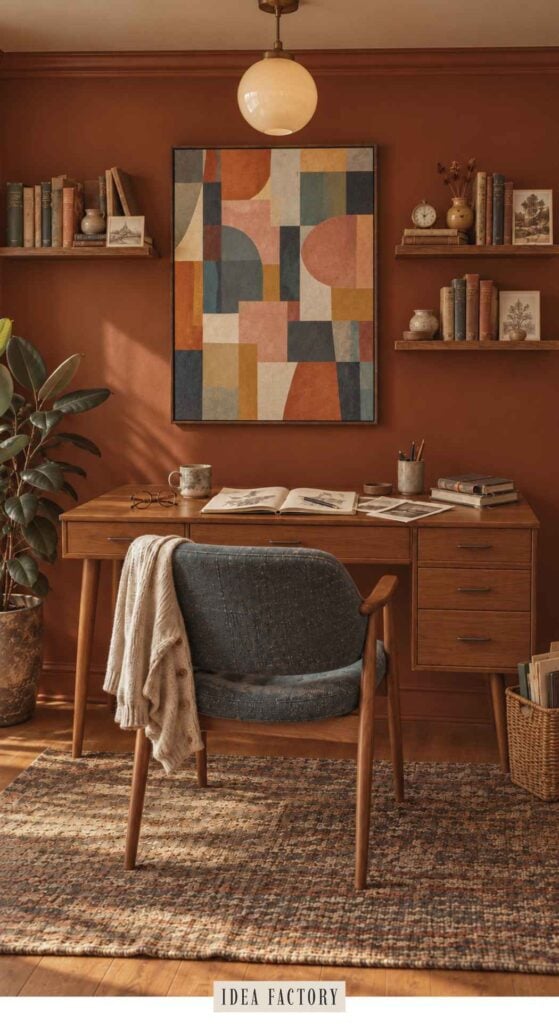
This room is a good option if you want a moody office that still feels playful. The terracotta wall brings warmth, while the artwork introduces cooler colors that you can pick up in a chair or other pieces. A desk with slim legs leaves more of the floor visible, helping the richer paint feel comfortable in a modest room.
Choose your artwork first and use its colors as a loose guide, rather than trying to match every piece exactly. Keep the desk and shelves fairly simple, then add the useful things that make it your workspace: reference books, sketches, and a basket for projects in progress.
A Dark Green Corner Office With Room to Spread Out
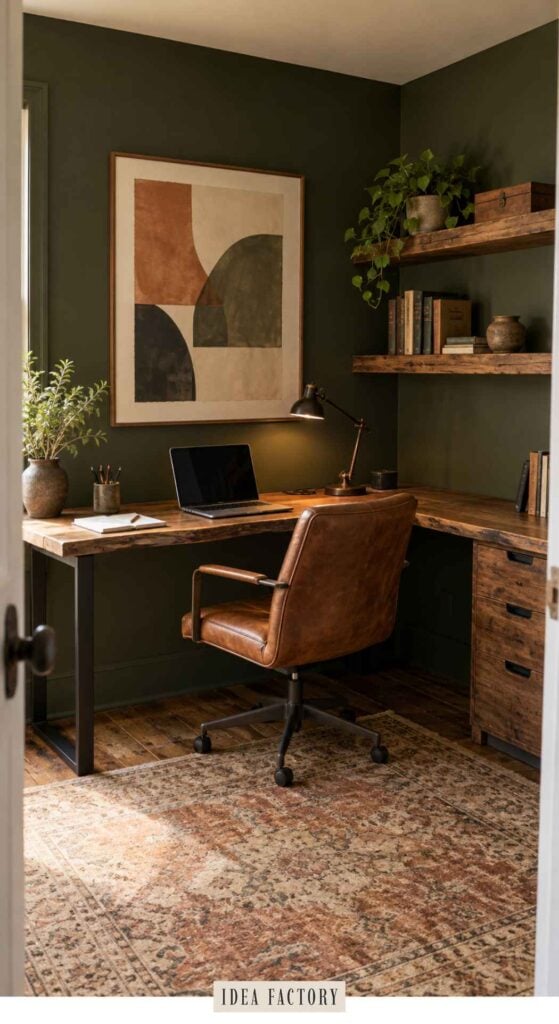
If one small desk leaves you shuffling your laptop every time you open a notebook, a corner workspace may be worth the extra footprint. The second surface can hold papers or supplies while your main work area stays clear. Deep green walls help the desk and shelves feel connected, and one large abstract gives the room a focal point without using up valuable storage space.
Assign a job to each side of the desk before you arrange it. Keep your screen on the side where you can sit comfortably for longer stretches, and put occasional tasks around the corner. Check that the chair can turn freely and that drawers remain accessible when you’re seated.
Cozy Dark Blue Office Built for Real Life
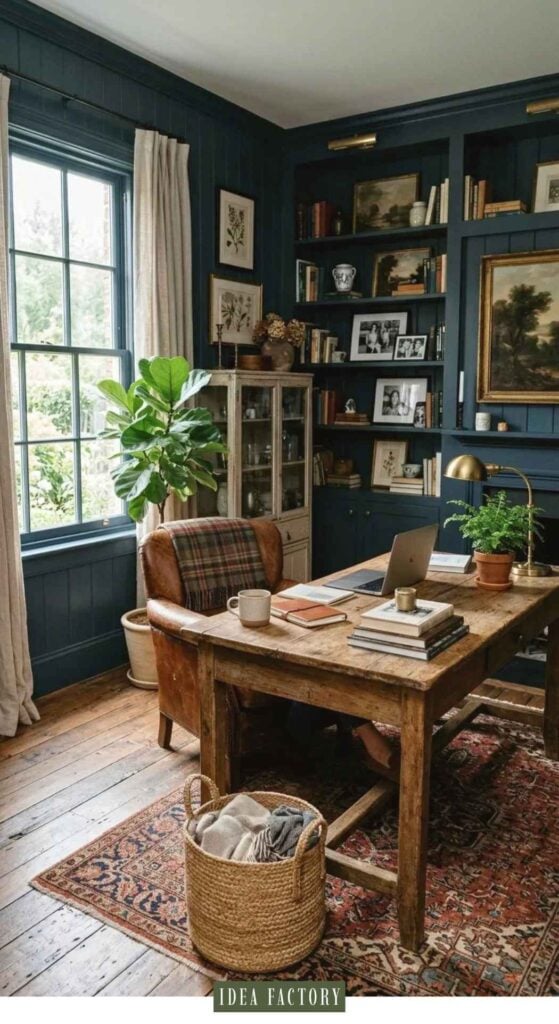
This room shows how much warmth a dark blue home office can hold. The paint makes the built-ins and trim feel like part of the architecture, while the old worktable, leather chair, family photos, and mixed books keep it from reading like a formal library.
Best Dark and Moody Paint Colors for a Home Office
The right dark paint depends on what else is in the room. Look at your flooring, desk, and daylight before choosing a swatch: the same color can feel warm beside aged oak and much cooler beside gray flooring. These are good starting points for the looks in this article:
- For a charcoal office: Sherwin-Williams Iron Ore (SW 7069). Try it with warm wood cabinetry, a mushroom-colored chair, and a lamp that casts light onto the desk.
- For an earthy brown office: Sherwin-Williams Urbane Bronze (SW 7048). Its deep, grounded color suits vintage wood, cream linen, and aged brass.
- For a forest-green office: Sherwin-Williams Rookwood Dark Green (SW 2816). It’s a natural companion to live-edge shelves, cane, and worn leather.
- For an inky blue office: Sherwin-Williams Naval (SW 6244). Warm it up with mustard, rust, walnut, or tobacco-colored textiles.
- For a dark office with vintage character: Benjamin Moore Wrought Iron (2124-10). Consider it alongside an older desk, mixed frames, and a softer rug.
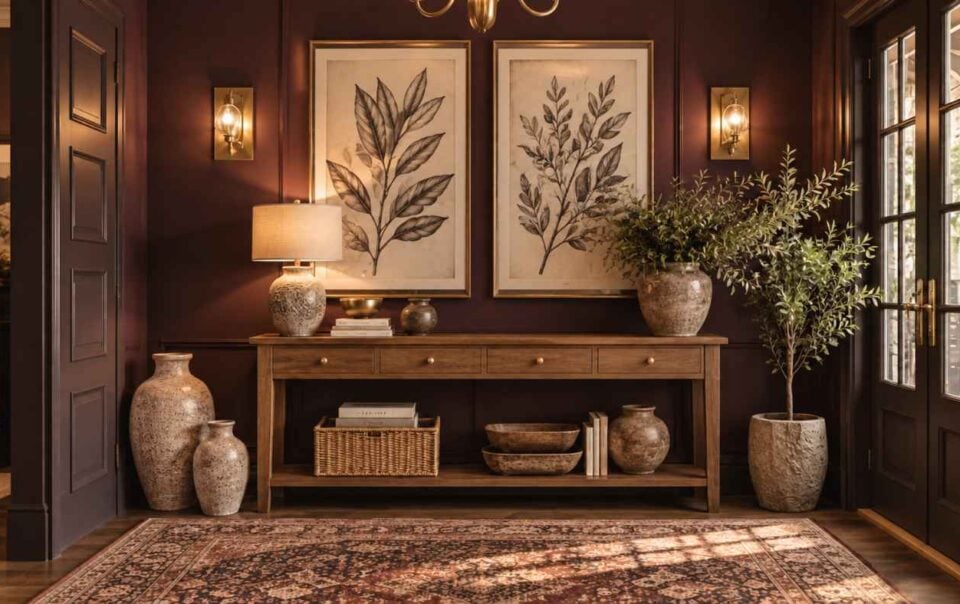
For the aubergine and terracotta rooms, I’d shop by undertone before settling on a paint name. Look for an aubergine with a little brown in it if you want a cozy, vintage feel; choose a clay-based terracotta if you want warmth without drifting into burgundy.
Paint a large sample on more than one wall and look at it throughout the day. Check it again with the lamps you’ll actually use at night. Dark paint can be lovely in a small office, but the amount and direction of light will change how you see the color.
Design Tips for Small Moody Workspaces
Give the desk enough room to be useful
Before choosing furniture, list what needs to live on the work surface: a laptop, monitor, notebook, drawing supplies, or all four. A beautiful narrow desk will become frustrating if you have to clear it every time you change tasks. In a tight room, a wall-length top or a corner return may give you the space you need without adding another piece of furniture.
Plan around the chair
Measure the room with the chair pulled out, then make sure you can turn, reach drawers, and walk behind it. If you use the desk for long stretches, choose the chair for comfort first. Cane, linen, and vintage upholstery can still be part of the look, but they need to suit the way you work.
Put storage where you’ll reach for it
Use drawers or closed cabinets for cables, paper, and supplies you don’t want in view. Open shelves are most helpful when they hold books and materials you use, with a little space for personal pieces. In an especially small nook, a pinboard can keep current notes off the desktop.
Light the work, not just the room
A ceiling fixture alone may leave your desk in shadow. Add a task lamp or a light beneath the shelf above your work surface, then use a softer lamp elsewhere if the room needs warmth in the evening. Keep screens in mind when placing lights and positioning the desk near a window.
Let one feature lead
Dark walls already give a room presence. Choose one more thing to draw the eye—artwork, wallpaper, live-edge shelves, or a collected gallery wall—and give it room to shine. The rest of the space can hold the useful, ordinary things that make it feel like a real office.