Please note: This website contains affiliate links. As an Amazon Associate, we earn from qualifying purchases at no additional cost to you.
.
Why This “Oven Cleaner DIY” Recipe Is Worth Trying
If your oven is currently in that “I’ll deal with it later” stage… you’re not alone.
Oven cleaning is one of those tasks most of us avoid until it feels absolutely necessary. And then when we finally look up solutions, we’re hit with strong chemical cleaners that smell intense, require gloves, and somehow still feel like a whole production.
That’s exactly why this natural oven cleaner is such a game-changer.
It’s simple, effective, and uses ingredients you probably already have at home. No overpowering fumes, no mystery ingredients—just a homemade oven cleaner recipe that actually works.
Why You’ll Love This Homemade Oven Cleaner
- No harsh chemical smells
- Uses simple pantry ingredients
- Budget-friendly (way cheaper than store-bought oven cleaner)
- Works on grease, baked-on food, and grime
- Safe for everyday homes when used properly
💡 If you want to start using more non-toxic, natural DIY cleaners, be sure to check out our natural cleaning starter kit.
Natural Oven Cleaner DIY Recipe
Ingredients
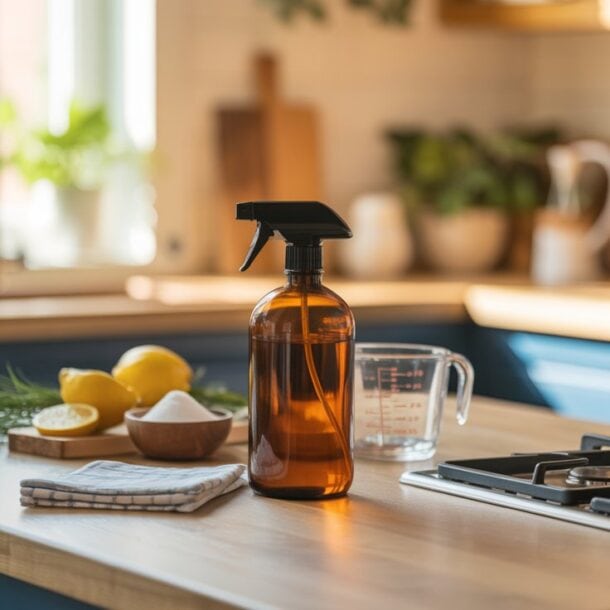
- 1/2 cup baking soda
- 2–3 tablespoons water
- Optional: a few drops of dish soap (for extra grease-cutting power)
For Finishing:
- White vinegar (in a spray bottle)
Instructions
- Remove oven racks
Take out the racks so you can fully access the interior. - Make the paste
Mix baking soda with water until it forms a spreadable paste (think frosting consistency). - Apply generously
Spread the paste over the inside of your oven—especially greasy or stained areas. - Let it sit (this is key)
Leave it for at least 8–12 hours (overnight works best). - Wipe it away
Use a damp cloth to wipe out the baking soda mixture. You’ll see a lot of grime come off with it. - Spray with vinegar
Spray any leftover residue with vinegar—it will fizz and help lift the remaining buildup. - Final wipe down
Wipe everything clean with a damp cloth.
Pro Tips (These Make a Big Difference)
- Don’t rush the soak time—this is where the magic happens
- Use a silicone spatula or scraper for stubborn spots
- Line the bottom of your oven with paper towels during cleaning to catch drips
- Clean racks separately in warm, soapy water
When to Use Your New Natural Oven Cleaner
Oven cleaning doesn’t have to be a once-a-year event. Adding this into your routine every couple of months makes it:
- faster
- easier
- way less overwhelming
While you’re in the DIY mood, you may also want to whip up a few other natural cleaning recipes:
- DIY All Purpose Cleaner That Handles Almost Every Mess (Non-Toxic, All Natural)
- Natural Kitchen Degreaser: Simple, Non-Toxic Recipe
- From Chore Zone to Zen Zone: My Guide to an All-Natural Laundry Room
Oven Cleaner DIY: FAQs
Can I use this DIY oven cleaner on a self-cleaning oven?
Yes—but with a few important notes.
You can safely use this DIY oven cleaner on the interior surfaces of a self-cleaning oven as long as:
- the oven is completely cool
- you are not running the self-cleaning cycle at the same time
This method is actually a great alternative if you prefer to avoid using the high-heat self-cleaning cycle, which can create strong odors and smoke.
Just avoid getting excess moisture near heating elements, and always wipe everything thoroughly before using the oven again.
Should I still use the self-cleaning function after using this?
You don’t need to.
In fact, many people use a homemade oven cleaner specifically to avoid the self-cleaning cycle. The baking soda method is gentler, doesn’t produce fumes, and gives you more control over the process.
If your oven has heavy buildup, you can repeat the DIY method instead of relying on the self-clean setting.
What is the best natural oven cleaner?
A baking soda paste followed by vinegar is one of the most effective natural oven cleaner methods. The baking soda helps break down grease and grime, while the vinegar reacts with it to lift residue and make wiping everything away easier.
Does homemade oven cleaner really work?
Yes, especially for regular maintenance and moderate buildup. The key is letting the baking soda paste sit long enough—ideally overnight—so it has time to soften and break down stuck-on grease and food.
Can I add vinegar directly to the baking soda paste?
It’s better to use vinegar as a separate step. If you mix it directly into the paste, it will fizz immediately and lose some of its cleaning effectiveness. Using vinegar after the baking soda has sat allows it to react with leftover residue and lift it more effectively.
How often should I clean my oven?
For most households, every 2–3 months is a good routine. If you cook frequently or notice buildup sooner, a quick maintenance clean in between can make the deeper clean much easier.
Will this work on really tough, baked-on grease?
Yes, but you may need to repeat the process. For heavier buildup:
- apply a thicker layer of paste
- let it sit longer (12–24 hours)
- use a gentle scraper if needed
The good news is that each round gets easier, so hang in there!
Please note: This website contains affiliate links. As an Amazon Associate, we earn from qualifying purchases at no additional cost to you.
.