
Please note: This website contains affiliate links. As an Amazon Associate, we earn from qualifying purchases at no additional cost to you.
.
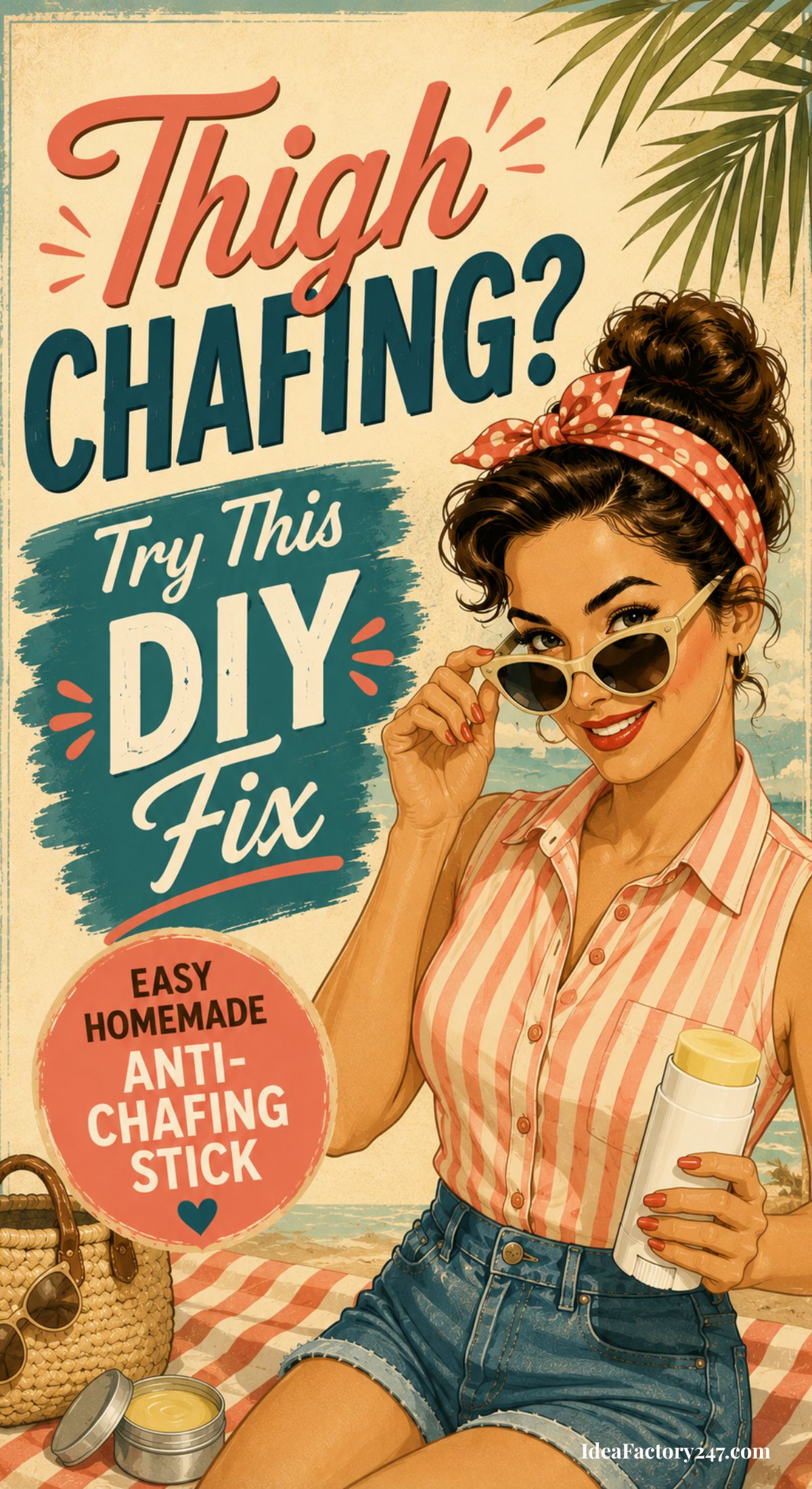
If you’ve ever dealt with chafing in the summer, you already know… it can go from mildly annoying to why is walking suddenly painful real quick.
It usually starts innocently enough. A hot day, a long walk, maybe a festival, vacation, theme park trip, or just existing outside in July. Then suddenly your inner thighs decide they are no longer speaking to each other.
Thigh chafing is incredibly common, but somehow nobody talks about it until they’re frantically googling “chafing remedy thighs” at 11 PM after a beach day.
I’ve tried plenty of store-bought options over the years — powders, creams, anti-chafing shorts, and the famous Body Glide sticks that seem to appear in every runner’s bag. Some worked okay. Some felt greasy. Some were surprisingly expensive for what they were.
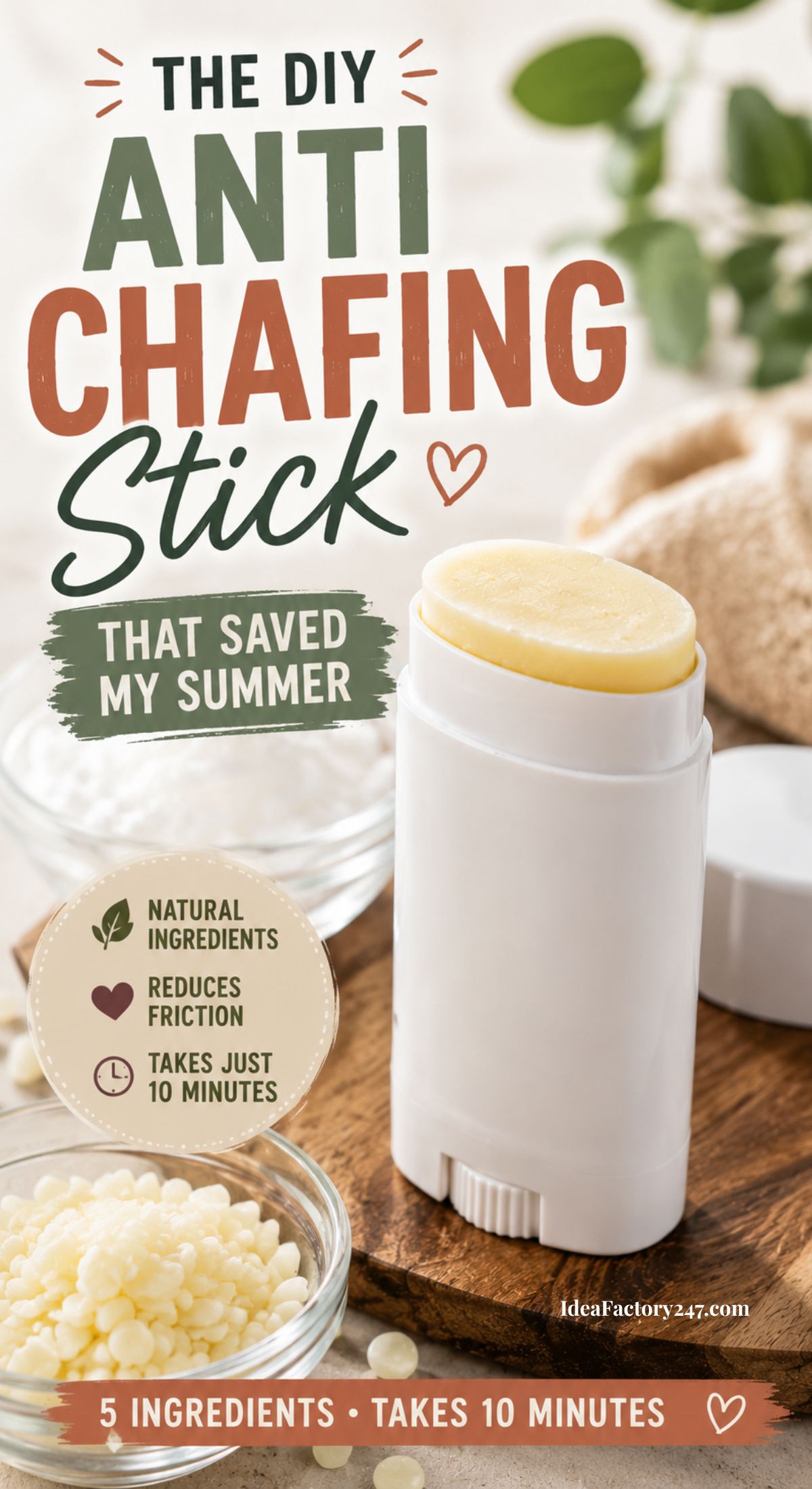
Eventually I started making my own DIY anti chafing stick at home and honestly? I haven’t looked back.
Depending on where you found this article, you might call it:
- a DIY anti chafing stick
- a body balm recipe
- an anti chafing balm
- a chafing cream
- a DIY Body Glide alternative
They’re all basically solving the same problem: creating a protective barrier that helps skin glide instead of rub. And once you’ve experienced a summer day without thigh chafing, it’s difficult to go back.
What This DIY Anti Chafing Stick Actually Does
This isn’t just a moisturizer in a deodorant tube. The goal is to create a lightweight barrier that reduces friction while still feeling comfortable on the skin.
This recipe helps:
- reduce friction between thighs and other skin folds
- soothe skin that’s prone to irritation
- create a breathable moisture barrier
- prevent redness and rubbing before it starts
- survive hot weather better than plain oils alone
I especially love it for:
- summer walks
- vacations and sightseeing days
- theme parks
- running errands
- dresses and skirts
- workouts
- travel days
- festivals and outdoor events
Honestly, if you’ll be walking more than usual, I reach for this.
The DIY Anti Chafing Stick Recipe
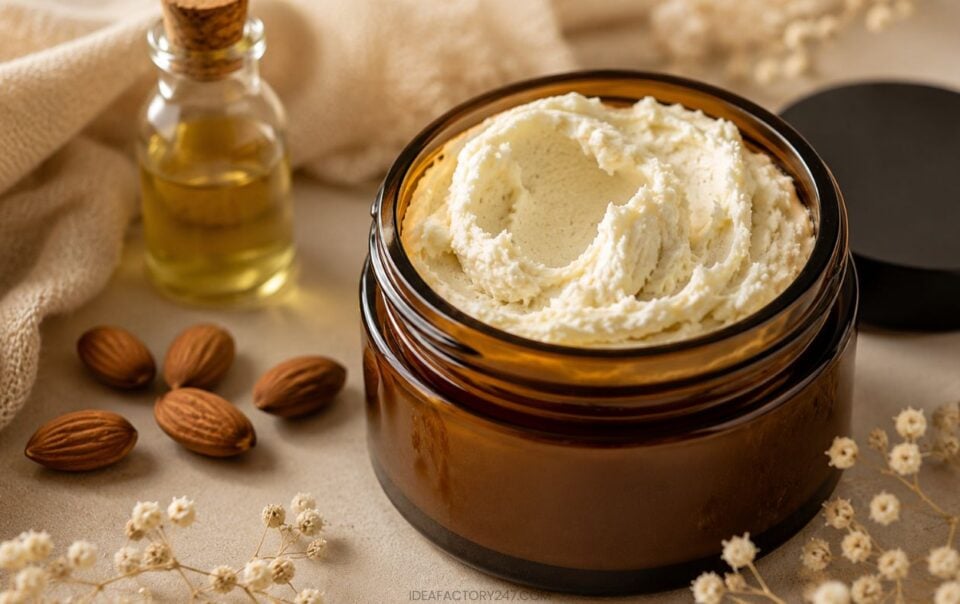
This recipe creates a texture that lands somewhere between a traditional anti-chafing stick and a body balm recipe. It glides easily, doesn’t feel overly greasy, and holds up surprisingly well in hot weather.
This recipe makes approximately:
- 1 standard deodorant-style stick container or
- 2 small 2-ounce tins
Ingredients
- 2 tablespoons coconut oil
- 2 tablespoons shea butter
- 1 tablespoon beeswax pellets
- 1 tablespoon arrowroot powder
- 5–10 drops lavender essential oil or chamomile essential oil (optional)
Optional Upgrades
Depending on your skin type or preferences, you can also add:
- 1 teaspoon jojoba oil for a lighter feel
- 1 teaspoon mango butter for a silkier texture
- 1 teaspoon zinc oxide powder for additional moisture protection in very humid climates
- 5 drops peppermint essential oil for a cooling sensation (avoid sensitive areas)
How to Make Your DIY Anti Chafing Stick
Step 1: Melt the Oils and Wax
Add the coconut oil, shea butter, and beeswax pellets to a double boiler or heat-safe glass bowl over simmering water.
Heat gently until everything has completely melted. Stir occasionally until the mixture is smooth and fully combined.
Step 2: Remove From Heat
Remove the bowl from the heat and allow it to cool for about one minute. You want the mixture to remain liquid, but not so hot that it causes the arrowroot powder to clump.
Step 3: Add the Arrowroot Powder
Whisk in the arrowroot powder slowly while stirring continuously. Keep mixing until the powder is completely incorporated and there are no visible clumps.
This is the ingredient that helps transform the recipe from a greasy body butter into an actual anti chafing product.
Step 4: Add Essential Oils (Optional)
If you’re using essential oils, stir them in now.
Lavender works beautifully if you’re sensitive to fragrance, while chamomile gives it a soft, clean scent that feels very spa-like.
Step 5: Pour Into Containers
Carefully pour the mixture into:
- a deodorant-style twist-up tube for a true DIY anti chafing stick
- small tins for a body balm version
- small jars if you prefer applying with your fingers
A silicone funnel makes this much easier and dramatically reduces mess.
Step 6: Let It Set
Allow the mixture to cool completely at room temperature. Most sticks will firm up within 1–2 hours, although I usually leave mine overnight before using them.
How to Customize the Texture
| If You Want… | Do This |
|---|---|
| A firmer stick for hot climates | Add an extra ½ tablespoon beeswax |
| A softer balm texture | Reduce beeswax by ½ tablespoon |
| Less greasy feel | Increase arrowroot to 1½ tablespoons |
| More glide | Add 1 teaspoon jojoba oil |
| Better summer durability | Increase beeswax slightly |
| More moisturizing feel | Increase shea butter by 1 tablespoon |
Estimated Cost
| Ingredient | Approximate Cost Used |
|---|---|
| Coconut oil | $0.25 |
| Shea butter | $0.45 |
| Beeswax pellets | $0.35 |
| Arrowroot powder | $0.10 |
| Essential oils (optional) | $0.15 |
Estimated total cost per stick: approximately $1.15–$1.50
Compared to many commercial anti chafing sticks that sell for $10–15, it’s surprisingly affordable.
Honestly, the biggest win isn’t even the cost savings. It’s knowing exactly what’s going on your skin and being able to customize the texture for your body and climate. For a beach vacation in Florida, I make mine slightly firmer. For spring and fall, I soften it up a bit with extra shea butter.
That flexibility is something the store-bought versions can’t really compete with.
Why This Combination Works So Well
There isn’t a magical ingredient here. The magic is really in the balance.
- Too much oil and the product feels greasy.
- Too much wax and it drags on the skin instead of gliding.
- Too much powder and it can feel dry or chalky.
This combination lands right in the sweet spot and creates what feels surprisingly similar to expensive store-bought anti chafing sticks.
| Ingredient | What It Does |
|---|---|
| Coconut oil | Creates slip and helps skin glide smoothly |
| Shea butter | Softens and moisturizes irritated skin |
| Beeswax | Creates the protective barrier and gives the stick structure |
| Arrowroot powder | Absorbs excess moisture and helps reduce friction |
| Essential oils (optional) | Adds scent without synthetic fragrance |
The Best Places to Use an Anti Chafing Stick
Most people immediately think of inner thighs, but honestly there are so many places this can help.
| Area | Why It Helps |
|---|---|
| Inner thighs | The classic summer chafing zone |
| Underarms | Helpful during workouts or hot weather |
| Bra band area | Especially useful in humidity |
| Under the bust | Reduces sweat and irritation |
| Along swimsuit lines | Great for beach days and vacations |
| Around backpack straps | Helpful for hiking and travel |
| Along shoe straps | Can help prevent rubbing and blisters |
Thigh Chafing Hacks That Actually Help
An anti chafing stick is probably my favorite solution, but there are a few other thigh chafing hacks worth knowing.
Apply before you need it – Once skin is already irritated, almost anything stings. The trick is applying your anti chafing product before friction starts.
Reapply on very long days – Theme parks, sightseeing vacations, weddings, concerts, and festivals sometimes need a midday touch-up.
Moisture matters – Sweat increases friction dramatically. Breathable fabrics and moisture-wicking shorts can help if you’re prone to severe thigh chafing.
Keep a travel version in your bag – This might be my favorite tip. A mini stick in your purse, beach bag, or carry-on can absolutely save a day.
Stick vs Balm vs Cream vs Body Glide
Pinterest uses all of these terms interchangeably, which honestly makes this more confusing than it needs to be.
| Product Name | Texture | Best For |
|---|---|---|
| DIY Anti Chafing Stick | Firm and portable | Everyday use and travel |
| Body Balm Recipe | Slightly softer | Dry skin or home use |
| Chafing Cream | Spreadable | Larger areas |
| DIY Body Glide Alternative | Similar to commercial sticks | Athletes and walkers |
At the end of the day, they’re all variations of the same idea.
Texture Customization Table
| Want More Of… | Adjust This |
|---|---|
| Firmer stick | Add ½ tablespoon more beeswax |
| Softer balm | Reduce beeswax slightly |
| Less greasy feel | Increase arrowroot powder slightly |
| More glide | Increase shea butter slightly |
| Hot climate stability | Increase beeswax |
| Winter comfort | Increase oils slightly |
Common DIY Anti Chafing Mistakes
The biggest mistake people make is trying to make this too oily.
A slippery product sounds good in theory until you’re sitting in shorts wondering why your legs feel like they’ve been basted for Thanksgiving.
Other mistakes include:
- skipping the arrowroot powder
- overheating ingredients
- adding too much essential oil
- storing the stick in a hot car
- not stirring the powder thoroughly
Other Summer Skin Care DIY Ideas
- DIY Body Oil for Glowing Summer Skin – A lightweight, non-greasy DIY recipe
- How to Make SPF Lip Balm at Home – Simple, natural recipe to protect your lips from the sun
- Homemade Body Scrub for Glowing Skin – 3 Easy Recipes (Lemon, Coffee & Turmeric)
- DIY Body Butter | Summer Shimmer Recipe for Radiant Skin
Chafing Remedies: FAQs
Does DIY anti chafing stick actually work?
For many people, yes. The combination of oils, waxes, and powders creates a protective barrier that reduces friction and helps skin glide more comfortably.
Is this the same thing as Body Glide?
Not exactly, but the purpose is very similar. Many people use homemade anti chafing sticks as a DIY Body Glide alternative.
Can I use this on already irritated skin?
It’s best used before chafing starts. If skin is already broken or severely irritated, allow it to heal before applying.
Can I use this chafing stick every day?
Absolutely. Many people use anti chafing products daily during warmer months and/or if you are traveling to warmer areas.
Does it only work for thighs?
Not at all. Underarms, bra lines, under the bust, swimsuit lines, and backpack straps are all common areas where friction can happen.
Final Thoughts
Chafing might be a normal part of summer… but that doesn’t mean you have to just deal with it.
This DIY anti-chafing stick (or balm, or cream — whatever you want to call it) is one of those simple, practical recipes that actually makes a difference. It’s easy to make, easy to use, and once you have it on hand, you’ll probably wonder why you didn’t try it sooner.
Please note: This website contains affiliate links. As an Amazon Associate, we earn from qualifying purchases at no additional cost to you.
.